Ascolta questo podcast gratuitamente nell'applicazione: Scarica gratuitamente dall'App Store
radio.it
Sleep timer
Radio preferite
168 episodi
Why What You Eat Still Matters on GLP-1 Drugs
26/10/2026 | 21 minQuestions?
📢 Ask Dr. Bikman’s Digital Mind (multilingual):
https://benbikman.com/ben-bikmans-digital-ai-mind
📢 Dr. Bikman’s Community & Coaching Site: https://insuliniq.com
Topic:
GLP-1 medications help reduce appetite, while low-carbohydrate diets help lower insulin and support fat burning, making them potentially complementary approaches to weight loss and metabolic health. Ben explains how combining low-dose medication with better food choices may help preserve muscle, improve metabolic markers, and build lasting habits that make it easier to maintain progress after treatment.
Summary:
In this mini lecture, Dr. Bikman explains why GLP-1 medications and low-carbohydrate diets may work better together than either approach alone. GLP-1 drugs help people feel less hungry and eat less, while reducing carbohydrates—especially refined sugars and starches—helps lower insulin and improve the body's ability to burn stored fat. Ben argues that these approaches address different parts of the same metabolic problem.
He reviews research from his own lab involving patients who combined low-dose semaglutide with a whole-food ketogenic diet and Insulin IQ coaching. Over six months, participants lost an average of approximately 22 kilograms (nearly 50 pounds), with an estimated 92% of that weight loss coming from fat. The study also found improvements in fasting insulin and several metabolic health markers, although Ben emphasizes that the results are preliminary because the study was small and lacked a control group.
Ben also explores how ketones may help protect muscle, how food choices might influence medication side effects and gallbladder health, and why weight frequently returns after GLP-1 treatment ends. His central message is that these medications should be used as an opportunity to develop healthier habits, not simply as a way to eat smaller portions of the same foods. By using the lowest effective dose, emphasizing protein and natural fats, reducing refined carbohydrates, and maintaining regular exercise, people may be better positioned to sustain their progress and eventually reduce their reliance on medication with medical supervision.
References:
For complete show notes and references, we invite you to become an Insider subscriber. You’ll enjoy real-time, livestream Metabolic Classroom access which includes live Q&A with Ben after the lecture, unlimited access to Dr. Bikman’s Digital Mind, ad-free podcast episodes, show notes and references, and Ben’s Weekly Research Review Podcast. Learn more: https://www.benbikman.com
NOTE: The information presented is not intended to be a substitute for professional medical advice, diagnosis, or treatment. Dr. Bikman is not a clinician—and, he is not your doctor. Always seek the advice of your own qualified health providers with questions you may have regarding medical conditions.
Hosted on Acast. See acast.com/privacy for more information.Could Low Potassium Be Raising Your Blood Sugar?
19/10/2026 | 29 minQuestions?
📢 Ask Dr. Bikman’s Digital Mind (multilingual):
https://benbikman.com/ben-bikmans-digital-ai-mind
📢 Dr. Bikman’s Community & Coaching Site: https://insuliniq.com
Summary:
Dr. Ben Bikman explains the surprising relationship between potassium, insulin, and blood sugar control. Potassium is an essential mineral that helps cells maintain their electrical activity, and insulin plays an important role in moving potassium from the bloodstream into cells. But the relationship works both ways: when potassium levels become too low, the pancreas may struggle to release enough insulin, potentially causing blood sugar to rise.
Ben also explores the role of aldosterone, a hormone that tells the kidneys to retain sodium while releasing potassium. When aldosterone levels are too high, potassium loss can increase, insulin production may suffer, and blood pressure can rise. He reviews research linking lower potassium levels—even within the normal laboratory range—to an increased risk of developing type 2 diabetes.
The lecture then examines what happens during fasting and carbohydrate restriction. As insulin falls, the kidneys release more sodium and water, while changes in aldosterone can increase potassium loss. Ben explains why this matters especially when ending a prolonged fast: a sudden insulin spike from a carbohydrate-heavy meal can rapidly move potassium into cells, potentially causing dangerous electrolyte imbalances.
The central takeaway is that potassium deserves more attention in metabolic health. Eating potassium-rich whole foods, maintaining appropriate electrolyte balance, and being thoughtful about how prolonged fasts are ended may help support healthy insulin function and blood sugar regulation.
References:
For complete show notes and references, we invite you to become an Insider subscriber. You’ll enjoy real-time, livestream Metabolic Classroom access which includes live Q&A with Ben after the lecture, unlimited access to Dr. Bikman’s Digital Mind, ad-free podcast episodes, show notes and references, and Ben’s Weekly Research Review Podcast. Learn more: https://www.benbikman.com
NOTE: The information presented is not intended to be a substitute for professional medical advice, diagnosis, or treatment. Dr. Bikman is not a clinician—and, he is not your doctor. Always seek the advice of your own qualified health providers with questions you may have regarding medical conditions.
Hosted on Acast. See acast.com/privacy for more information.Why Your Body Fights to Regain Lost Weight
12/10/2026 | 26 minQuestion?
📢 Ask Dr. Bikman’s Digital Mind (multilingual):
https://benbikman.com/ben-bikmans-digital-ai-mind
📢 Dr. Bikman’s Community & Coaching Site: https://insuliniq.com
Summary:
Dr. Bikman explains why losing a large amount of weight can sometimes cause the body's metabolism to slow down more than expected.
He uses contestants from The Biggest Loser as an example. Six years after their dramatic weight loss, many had regained much of the weight, yet their bodies were still burning approximately 500 fewer calories per day than expected for their size. This phenomenon is called metabolic adaptation.
Ben explains how hormones such as leptin, insulin, and thyroid hormone influence this process. As body fat decreases, leptin falls, signaling the brain to increase hunger and conserve energy. The body may also reduce spontaneous movement and other energy-consuming activities, making it increasingly difficult to maintain weight loss.
The encouraging news is that the way someone loses weight can make a difference. Ben reviews research suggesting that lower-carbohydrate diets may help preserve energy expenditure after weight loss, particularly in people who produce more insulin. He also emphasizes the importance of eating sufficient protein, maintaining muscle through resistance training, and staying physically active throughout the day.
The central takeaway is that successful weight loss isn't just about losing pounds—it's about protecting your metabolism and developing habits that make the new weight easier to maintain.
References:
For complete show notes and references, we invite you to become an Insider subscriber. You’ll enjoy real-time, livestream Metabolic Classroom access which includes live Q&A with Ben after the lecture, unlimited access to Dr. Bikman’s Digital Mind, ad-free podcast episodes, show notes and references, and Ben’s Weekly Research Review Podcast. Learn more: https://www.benbikman.com
NOTE: The information presented is not intended to be a substitute for professional medical advice, diagnosis, or treatment. Dr. Bikman is not a clinician—and, he is not your doctor. Always seek the advice of your own qualified health providers with questions you may have regarding medical conditions.
Hosted on Acast. See acast.com/privacy for more information.Why Micronized Progesterone Is Different
05/10/2026 | 24 minQuestion? 📢 Ask Dr. Bikman’s Digital Mind (multilingual):
https://benbikman.com/ben-bikmans-digital-ai-mind
📢 Dr. Bikman’s Community & Coaching Site: https://insuliniq.com
Dr. Bikman explains why micronized progesterone should not be confused with the synthetic progestins historically used in many hormone therapies. Micronized progesterone is chemically identical to the hormone produced naturally by a woman’s ovaries, while synthetic progestins can also activate cortisol- or testosterone-related receptors, potentially affecting insulin sensitivity, blood lipids, and other aspects of metabolic health.
Ben reviews clinical evidence showing that micronized progesterone can effectively protect the uterine lining when estrogen is used while preserving more of estrogen’s favorable metabolic effects. Oral micronized progesterone is also converted into allopregnanolone, which enhances the brain’s calming GABA signaling and may improve sleep. Better sleep itself can support insulin sensitivity, while progesterone may also reduce hot flashes and night sweats that interfere with sleep.
The safety evidence is also encouraging. Compared with some synthetic progestins, micronized progesterone appears more favorable with respect to blood clots, breast cancer risk, and metabolic markers. Ben’s overall conclusion is that for women using menopausal hormone therapy who need progesterone to protect the uterus, micronized progesterone appears to be a metabolically favorable partner to estrogen.
References:
For complete show notes and references, we invite you to become an Insider subscriber. You’ll enjoy real-time, livestream Metabolic Classroom access which includes live Q&A with Ben after the lecture, unlimited access to Dr. Bikman’s Digital Mind, ad-free podcast episodes, show notes and references, and Ben’s Weekly Research Review Podcast. Learn more: https://www.benbikman.com
NOTE: The information presented is not intended to be a substitute for professional medical advice, diagnosis, or treatment. Dr. Bikman is not a clinician—and, he is not your doctor. Always seek the advice of your own qualified health providers with questions you may have regarding medical conditions.
Hosted on Acast. See acast.com/privacy for more information.Can Your Body Make More GLP-1 Naturally?
21/09/2026 | 26 minQuestion?
📢 Ask Dr. Bikman’s Digital Mind (multilingual):
https://benbikman.com/ben-bikmans-digital-ai-mind
📢 Dr. Bikman’s Community & Coaching Site: https://insuliniq.com
Summary:
Dr. Bikman explains why some people may produce an inadequate GLP-1 response and how insulin resistance could be part of the problem. Because intestinal L cells have insulin receptors, chronically elevated insulin can make these cells insulin resistant, reducing their ability to release GLP-1 and potentially creating a cycle of faster stomach emptying, higher glucose, more insulin, and further impairment of the natural GLP-1 response.
Ben uses this physiology to explain how he believes GLP-1 medications should be used: not simply to produce maximum weight loss, but as a temporary window in which carbohydrate cravings become easier to control. Rather than escalating automatically to the highest tolerated dose, he favors using the lowest dose that makes refined carbohydrates easier to resist while still requiring the person to exercise some choice and discipline. During that window, the goal is to establish meals centered on protein, healthy fats, and whole foods while improving sleep and resistance training.
Ben also addresses concerns about lean-mass loss, explaining that body-composition scans can classify losses of water, glycogen, organ fat, and even the non-fat portion of adipose tissue as “lean mass.” Ultimately, he argues that GLP-1 therapy should have an exit strategy: improve insulin sensitivity, restore the body's own GLP-1 signaling as much as possible, establish sustainable habits, and then work with a clinician to gradually reduce the medication rather than assuming it must be permanent.
References:
For complete show notes and references, we invite you to become an Insider subscriber. You’ll enjoy real-time, livestream Metabolic Classroom access which includes live Q&A with Ben after the lecture, unlimited access to Dr. Bikman’s Digital Mind, ad-free podcast episodes, show notes and references, and Ben’s Weekly Research Review Podcast. Learn more: https://www.benbikman.com
Hosted on Acast. See acast.com/privacy for more information.
Altri podcast di Alimentazione







Podcast di tendenza in Alimentazione







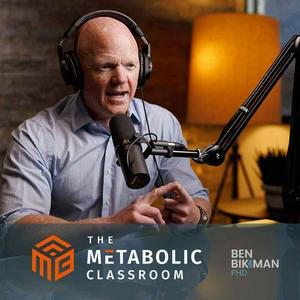
Su The Metabolic Classroom with Dr. Ben Bikman
Welcome to The Metabolic Classroom, a nutrition and lifestyle podcast focused on metabolism, which is how our bodies use energy, and the truth behind why we get sick and fat. Every week, Dr. Ben Bikman shares valuable insights that you can apply in your own life and share with friends and loved ones. The Metabolic Classroom is brought to you by BenBikman.com and InsulinIQ.com. Hosted on Acast. See acast.com/privacy for more information.
Sito web del podcastAscolta The Metabolic Classroom with Dr. Ben Bikman, Low Carb Italia Podcast e molti altri podcast da tutto il mondo con l’applicazione di radio.it
Scarica l'app gratuita radio.it
- Salva le radio e i podcast favoriti
- Streaming via Wi-Fi o Bluetooth
- Supporta Carplay & Android Auto
- Molte altre funzioni dell'app
Scarica l'app gratuita radio.it
- Salva le radio e i podcast favoriti
- Streaming via Wi-Fi o Bluetooth
- Supporta Carplay & Android Auto
- Molte altre funzioni dell'app

The Metabolic Classroom with Dr. Ben Bikman
Scansione il codice,
scarica l'app,
ascolta.
scarica l'app,
ascolta.
 Italia