

Ascolta questo podcast gratuitamente nell'applicazione: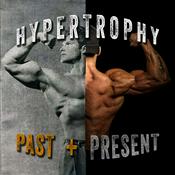 Scarica gratuitamente dall'App Store
radio.it
Sleep timer
Radio preferite
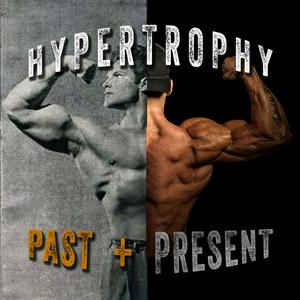
Hypertrophy Past and Present
Chris Beardsley and Jake Doleschal
Ultimo episodio
66 episodi
066 Do you need to feel a muscle for it to grow?
24/08/2026 | 1 h 9 minIn this episode of Hypertrophy Past & Present, Jake and Chris begin with another Leroy Colbert routine, this time examining an over 100 set silver-era routine. The conversation then explores whether you actually need to “feel” a muscle for it to grow, what the pump can tell us about muscle recruitment, and where the mind-muscle connection may or may not be useful.
Key topics include:
Leroy Colbert’s extreme 10-set-per-exercise Silver Era routine
Why “feeling” a muscle and getting a pump are not necessarily the same thing
Why stretch, cramping, and soreness can be misleading indicators of muscle activation
Mind-muscle connection, internal focus, and how they change muscle recruitment
Why exercise selection may be a better solution than trying to force a mind-muscle connection
When mind-muscle connection and isometric contractions may actually be useful
Why constantly using a mind-muscle connection can interfere with progressive overload
Why pre-fatiguing a muscle doesn’t cause the other muscles in a compound exercise to “do more work”
What motor learning research tells us about training and practising skills while fatigued
Join our Hypertrophy Past and Present Training group on TrainHeroic.com065 How anabolics changed the fitness industry
17/08/2026 | 1 h 37 minIn this episode of Hypertrophy Past & Present, Jake and Chris begin with Leroy Colbert’s late-1970s enormous volume training plan. The conversation then explores whether using pre-steroid bodybuilders as a model for natural training is really an “appeal to tradition,” before examining the evidence that anabolic steroids can directly stimulate muscle growth even without resistance training.
Key topics include:
Leroy Colbert’s high-volume late-1970s routine
Why bodybuilding training changed so dramatically after the introduction of anabolic steroids
Forcing Chris into a philosophy conversation: appeal to tradition fallacy, Chesterton’s fence, the Lindy effect, and Occam’s razor
Evidence that anabolic steroids can build muscle without a resistance-training stimulus
Why steroid-induced muscle growth cannot simply be dismissed as water weight or sarcoplasmic hypertrophy
The dose-response relationship between testosterone and muscle growth
Why “replacement” doses of testosterone may still produce supraphysiological effects at the muscle
Join our Hypertrophy Past and Present Training group on TrainHeroic.com064 Is time under tension important for muscle growth?
11/08/2026 | 1 h 6 minIn this episode of Hypertrophy Past & Present, Jake and Chris begin with Reg Park’s 1949 pre-contest routine, which involved training six days per week, twice per day, including the infamous 20-rep breathing squat. This leads into a deep dive on time under tension: Does making a set last longer actually increase muscle growth? Jake and Chris explore why total time under tension may be the wrong thing to measure and whether we should instead be thinking about “time under stimulating tension.”
Key topics include:
Reg Park’s 1949 twice-a-day, six-day-per-week routine
Why total time under tension may be a misleading measure of stimulus
The difference between time under tension and time under stimulating tension
Why the early repetitions of a high-rep set may contribute little to muscle growth
Whether slowing down the concentric can maintain stimulus with fewer repetitions
Why very slow eccentrics may actually reduce the hypertrophy stimulus
Whether the final repetition of a set is really the most stimulating
Using isometrics to replicate the stimulus of a conventional set
Join our Hypertrophy Past and Present Training group on TrainHeroic.com063 Are workouts over an hour killing your gains?
04/08/2026 | 1 h 27 minIn this episode of Hypertrophy Past & Present, Jake and Chris begin with a full-body routine from legendary bodybuilding coach Vince Gironda and the unusual reliance on isolation exercises. The conversation then shifts to workout duration: Is there any truth to the claim that workouts must be kept under 45, 60 or 90 minutes? Jake and Chris examine what actually happens as a workout becomes longer, including declining motivation, cardiovascular fatigue, exercise-order effects, cortisol, and the post-workout MPS elevation.
Key topics include:
Vince Gironda’s beginner full-body routine
Why Gironda avoided conventional bench presses and squats
Can isolation-only training build a complete physique
Whether exercise-induced cortisol interferes with muscle growth
Why muscle growth is regulated at the muscle-fibre level, not across the whole body
When an extremely long workout may stop stimulating the same muscle
Why returning to the same muscle several hours later may be redundant
Whether cardio after resistance training interferes with hypertrophy
Join our Hypertrophy Past and Present Training group on TrainHeroic.com062 How to overcome a hypertrophy plateau
27/07/2026 | 1 h 24 minIn this episode of Hypertrophy Past & Present, Jake and Chris begin with an early 1950s “muscular bulk” routine from Jack Delinger. They discuss the minimalist, barbell-only full-body program and how exercise variety may need to gradually increase as a bodybuilder becomes more advanced.
The conversation then shifts to training plateaus: what actually qualifies as a plateau, why slow progress is often mistaken for no progress, and how to distinguish between plateaus caused by accumulating fatigue and those caused by limitations in exercise selection or motor unit recruitment.
Key topics include:
Jack Delinger’s minimalist full-body muscular bulk routine
What actually qualifies as a training plateau
The difference between fatigue and “stimulus” plateaus
Why changing exercises can create the illusion that a plateau has been solved
How dominant muscle groups can limit the development of other muscles
When to keep an exercise and add another rather than replacing it
Why adding more volume rarely addresses the actual cause of a plateau
Join our Hypertrophy Past and Present Training group on Trainheroic.com
Altri podcast di Fitness
 Perform with Dr. Andy GalpinFitness, Salute e benessere, Scienze
 Skeptical Talks di Skeptical DragoonFitness, Salute e benessere
 Overcoming Proximal Hamstring TendinopathyFitness, Salute e benessere
 Gym MentalityAutomiglioramento, Fitness, Salute e benessere, Scolastico
- Hypertrophy Past and PresentFitness, Salute e benessere
 Fitness e dintorniFitness, Salute e benessere
 ESC - Every Step CountsCorsa, Fitness, Salute e benessere, Sport
 UNTAPPED with Spencer MatthewsAutomiglioramento, Fitness, Salute e benessere, Salute mentale, Scolastico
Podcast di tendenza in Fitness
- Gym MentalityAutomiglioramento, Fitness, Salute e benessere, Scolastico
- Hypertrophy Past and PresentFitness, Salute e benessere
- UNTAPPED with Spencer MatthewsAutomiglioramento, Fitness, Salute e benessere, Salute mentale, Scolastico
 That Triathlon Life PodcastCorsa, Fitness, Nuoto, Salute e benessere, Sport
 Arnold's Pump ClubFitness, Salute e benessere
 Fit & Gesund mit Professor FroböseFitness, Salute e benessere
 Strength Beyond Strength PodcastAutomiglioramento, Bambini e famiglia, Educazione dei figli, Fitness, Religione e spiritualità, Salute e benessere, Scolastico, Spiritualità
 #sekta podcastFitness, Salute e benessere
 GDMI, 30 GIORNI DI ALLENAMENTOFitness, Medicina alternativa, Salute e benessere, Sport
Su Hypertrophy Past and Present
A deep dive into the science of muscle growth. Hosted by Chris Beardsley and Jake Doleschal, this podcast explores hypertrophy training through the lens of pre-steroid era bodybuilding and modern muscle physiology.
Sito web del podcastAscolta Hypertrophy Past and Present, Perform with Dr. Andy Galpin e molti altri podcast da tutto il mondo con l’applicazione di radio.it
Scarica l'app gratuita radio.it
- Salva le radio e i podcast favoriti
- Streaming via Wi-Fi o Bluetooth
- Supporta Carplay & Android Auto
- Molte altre funzioni dell'app
Scarica l'app gratuita radio.it
- Salva le radio e i podcast favoriti
- Streaming via Wi-Fi o Bluetooth
- Supporta Carplay & Android Auto
- Molte altre funzioni dell'app
Hypertrophy Past and Present
Scansione il codice,
scarica l'app,
ascolta.
scarica l'app,
ascolta.
 Italia