Ascolta questo podcast gratuitamente nell'applicazione: Scarica gratuitamente dall'App Store
radio.it
Sleep timer
Radio preferite
371 episodi
S17 E48: Robin Linus in the 1000 BTC Car, Driving to BitDevs Atlanta
24/10/2026 | 1 h 19 minThis episode was recorded while driving to BitDevs in Atlanta. The car belongs to Art (at least 1/3 of it) and is the first vehicle ever bought for bitcoin in 2013: a 2011 Toyota Prius, for which the Mycelium wallet founder paid 1000 BTC.
We talk about cars, Bitcoin development, why the medium of exchange side of BTC matters, and how we can achieve privacy and scalability. Other people join too towards the end: Ekrem Bal from Citrea, Christian from Alpen Labs, Paul Sztorc from LayerTwo Labs, and Rob Hamilton from Anchor Watch.
Time Stamps:
0:45 Riding to the BitDevs barbecue in the 1,000 BTC Prius
2:05 The first car ever bought with bitcoin
11:29 Robin's 1,000 BTC dream car: a VW Beetle?
16:01 BitPay, KYC and why BTCPay Server exists
29:50 Would you pay 1,000 BTC? Shielded CSV vs Visa
32:54 Roger Ver and the block size war revisited
38:01 TABConf highlights: Peter Todd, Paul Sztorc and a 2029 cleanup
45:27 LayerTwo Labs, BIP300 and drivechains
49:31 Cake Wallet, Wasabi and the Spark custody problem
57:30 Arriving at BitDevs: the Taproot annex PR
1:01:09 Ekrem of Citrea and the Bitcoin privacy wars
1:06:24 Bitcoin Spaces and one name for every address
1:10:15 Alpen vs Citrea, then Paul Sztorc joins
1:16:10 BitNames and the Truthcoin relaunchS17 E47: Tabconf 8 Livestream with Kevin Loaec, Ekrem Bal, Spaces Protocol & The Bitcoin Pivot (Bonus: Peter Todd)
17/10/2026 | 3 h 40 minThe second day of TABConf 8, live from Atlanta. Ekrem Bal talks Citrea privacy, Kevin Loaec explains Liana wallet, Spaces Protocol introduces BTC handles, Bitcoin credit unions enter the scene, Peter Todd unboxes his Zcash ceremony laptop 10 years later.
Time stamps:
0:00 Stream warm-up
2:29 Ekrem Bal: Citrea pivots to privacy with Crest
7:22 Privacy and scalability on Citrea
11:30 Privacy as protection from physical attacks
16:00 Lessons from almost a year on mainnet
19:00 User feedback and the Clementine web app
20:13 Alpen, garbled circuits and Clementine v2
21:33 Next use cases: lending, vaults and agent spending limits
22:51 Making Citrea post-quantum
26:21 Great Script Restoration and trust assumptions
29:29 OP_CAT vs CTV vs template hash
31:26 How Crest differs from Tornado Cash
33:12 Railgun and proof of innocence
33:53 Why build on Bitcoin instead of Ethereum
36:23 Favorite fork: Taproot and Zcash envy
38:19 The eCash replay trick
41:24 Skiing and mountaineering
42:51 110 BTC on Citrea
43:34 Kevin Loaec joins
44:31 First and last TABConf and the unconference format
46:21 A bad year: Coldcard, Liquid and Liana
48:00 Stu joins
48:41 Vaults vs Liana’s timelocks
51:59 Most interesting guest and 10 hour episodes
54:02 Forks magazine
55:32 Script emulation on Bark
56:08 Liana videos and Revault
57:32 Favorite covenant and enforced amounts
59:40 Wrench attacks and Liana’s exposure
1:01:07 Ledger leaks and buying hardware online
1:03:41 Coldcard’s RNG bug, license and bounties
1:06:07 Andrew joins: Spaces Protocol
1:10:30 Buffer joins
1:10:55 3,700 spaces and @bitcoin handles
1:11:18 The TABConf name giveaway and delegation
1:14:39 Nacho and payment handles
1:15:39 Burning @tabconf forever
1:17:45 32 bytes on chain and cert relays
1:19:15 Client-side validation and censorship resistance
1:20:18 One click install on StartOS
1:21:14 How Spaces makes money
1:22:17 What stops an alt Spaces?
1:24:01 Namecoin, squatters and 10 auctions a day
1:27:25 Utility: Nacho and social proofs
1:29:37 Don’t reuse your name address: silent payments
1:32:19 Spaces and Bitcoin’s scalability
1:33:39 Do names expire?
1:35:43 One character names
1:37:10 Insight gateways, Nostr and Blossom
1:40:43 The Fabric resolver
1:41:23 Handle pricing
1:44:02 Where to learn more about Spaces
1:47:00 Spaces and the forks
1:53:44 Last call for @tabconf handles
1:55:42 Goodbye Andrew and Buffer
1:57:34 Hallway break
2:00:00 Kevin Loaec returns: Paris, Sparrow and Miniscript
2:05:26 Funding open source without begging users
2:12:33 A horrible year: hacks and forks
2:13:47 Bitcoin follows the crowd
2:28:55 New guest and matching watches
2:29:57 What makes you bullish about Bitcoin?
2:31:05 Closing hallway chatter
2:43:10 Part 2: Back online: The Bitcoin Pivot and the three C’s
2:47:39 How credit unions will custody bitcoin
2:49:28 An advisory firm with vendor-agnostic partners
2:51:47 Why TABConf is welcoming
2:52:26 Feedback and the wave of credit union mergers
2:56:32 Credit unions vs banks: the not-for-profit mission
2:58:32 Lightning and paying with Bitcoin
2:59:10 Credit unions as Lightning service providers
3:00:22 Rehypothecation risk and Aave
3:01:39 NCUA, not FDIC
3:02:07 Where to learn more about The Bitcoin Pivot
3:02:52 Peter Todd arrives and the stream pausesS17 E46: Livestream from Tabconf 8, Part 1 (feat. Paul Sztorc, Andre Beganski, Alex Lewin, Janusz, Christopher Allen, Will & Michael Tidwell)
15/10/2026 | 2 h 39 minLive from TABConf 8 in Atlanta: Paul Sztorc demos a quantum-resistant soft fork, Christopher Allen on Blockchain Commons, Michael Tidwell on TABConf, plus Andre Beganski, Alex Lewin, Janusz and Will on their work in the space. Recorded on Wednesday, October 14th 2026.
Time stamps:
0:00 Stream warm-up
1:55 Welcome to Bitcoin Takeover at TABConf 8 with Paul Sztorc
2:30 CUSF 2 demo: quantum-resistant signatures, OP_VAULT, OP_CTV & OP_CAT
4:30 Sweeping coins into a quantum-resistant UTXO with BitWindow
5:05 Why miners will never run it
5:52 Is quantum FUD? Pascal's Wager & Saylor
7:50 Bitcoin's overconfidence & the competition
8:41 How altcoins took Bitcoin's use cases
10:17 Greg Maxwell & the belief in Bitcoin's infallibility
11:39 Camera dies, webcam to the rescue
12:30 eCash hard fork: free coins later this month
13:08 Soft forks are opt-in, ignorable & reversible
14:35 Kafkaesque: will soft forks become mandatory?
16:01 Live questions: claiming eCash & does Saylor self-custody?
16:46 Mike Belshe, BitGo & custodians
17:48 The war on crypto, PGP & Enigma
18:44 How to claim your eCash coins
19:13 Liquidity pools instead of paying for exchange listings
21:37 Shinobi walks by & the Coldcard trophy
21:50 Paul leaves for the Town Hall
22:34 Spotting Christopher Allen & sponsor thanks
24:14 André Beganski joins: from Decrypt to MARA Foundation
25:25 Decrypt, The Block & trade publications
25:57 DL News & DeFi Llama
26:49 Blockworks' offer & Supply Shock
27:43 BTCTKVR: Forks! magazine
28:10 The Ledger magazine & sourdough bakers
29:43 Going independent: Bitcoin Magazine vs Bitcoin Takeover
30:30 Storytellers vs AI
32:13 Original reporting & journalism as a public good
33:54 Sponsors & transparency
34:36 Camera battery woes & how to follow André
35:50 Orange Rock sponsor break
37:55 Alex Lewin joins: Finite & private AI
38:47 Fedi, Blockspaces & NCR
39:28 Atlanta, BitDevs & Capture the Bitcoin
40:14 Janusz joins: Zark = Zcash + Spark
41:38 Private AI meets private money
43:35 Privacy as an ingredient for liberty
44:03 Fungibility & a universal currency
45:21 Why Zcash-style privacy and not Monero?
47:05 Shielded pools vs ring signatures
49:44 Scaling privacy: Tachyon vs FCMP++
51:18 The first inning of privacy research
53:56 A bearish year: what still makes you bullish?
56:23 AI will make Bitcoin better, not worse
57:46 Why aren't you at the TABConf funeral?
58:50 The hallway track & why showing up matters
1:00:48 AI psychosis & conferences
1:01:36 Coffee, tobacco & AI as a productivity drug
1:03:08 Forks magazine handout
1:03:46 Atlanta's BeltLine
1:04:52 Favorite conferences: Bitcoin++ & Nashville
1:06:12 The Town Hall & the Tabbies
1:06:47 Paul has spoken at all eight TABConfs
1:07:43 Favorite fork? Bitcoin vs Zcash
1:09:22 The Orchard bug & a coordinated soft fork
1:11:29 Only Bitcoin is stubborn enough to invent witness encryption
1:11:59 Two hard forks this year: Luke's coin & eCash
1:12:40 Fork strategy: don't touch cold storage
1:13:43 Zcash as a BIP 300 drivechain
1:14:52 If Bitcoin goes to zero
1:16:13 Christopher Allen joins
1:17:40 Randomness warnings & VeriSign security reviews
1:19:32 LetheKit & dice entropy
1:20:00 Don't rely on any single key: multisig, MuSig & FROST
1:21:00 Wallet companies & the Coldcard victims
1:22:34 Coinkite, open source & closing the code
1:24:15 No single points of failure, compromise or denial
1:25:08 How Coldcard treated security researchers
1:26:36 Bug bounties in the age of LLMs
1:27:51 Cypherpunks who embraced Bitcoin
1:28:45 Netscape, SSL 2 & the RSAREF license
1:30:18 Writing the SSL 3 reference implementation & TLS 1.0
1:30:47 DigiCash & David Chaum
1:31:29 Certicom, micro-currencies & the Merkle patent
1:32:03 Schnorr patents & ECDSA
1:33:10 secp256r1 suspicions vs secp256k1
1:35:44 Discovering Bitcoin in 2013
1:36:08 UTXOs to revoke X.509 certificates
1:37:08 Decentralized identifiers & DPKI
1:37:37 Paul Sztorc returns: Rebooting the Web of Trust
1:38:32 Namecoin
1:38:59 Christopher's beef: key reuse in Ethereum & Nostr
1:40:30 BIP 32 & one key pair per identity
1:41:19 Christopher promises a part two
1:42:46 Paul introduces Will: 21 days before the midterms
1:43:35 Will on six privacy prisoners
1:43:59 Larry Harmon & Ian Freeman
1:44:45 Roman Sterlingov & Bitcoin Fog
1:47:32 Roman Storm & Tornado Cash
1:48:19 Samourai: Keonne Rodriguez & William Hill
1:50:59 The judge switch & the plea deals
1:54:25 The pardon campaign
1:55:42 Aaron Day's StarkFreedom PAC
1:58:52 Michael Tidwell joins
1:59:42 The Tabbies
2:01:29 Why TABConf 8 is the last one
2:02:01 Death by a thousand cuts
2:03:51 My first TABConf & thanking the sponsors
2:05:27 eCash: the calmest hard fork in memory
2:07:16 Will miners steal from drivechains?
2:08:15 TABConf debates: BTC vs BCH vs BSV
2:09:06 Monero, Dash & bringing people into the fold
2:09:51 Amanda B. Johnson & DarkCoin at the monthly meetup
2:11:55 No-shill policy during the ICO craze
2:12:50 Paul Sztorc's TABConf debates & Peter Todd
2:14:08 How TABConf got scammed in 2019
2:17:58 Greg Maxwell, Nick Szabo & who never came
2:19:45 Why the obituary happened a day early
2:20:31 Forks magazine
2:21:20 Top highlights: hardcore trivia & the standing ovation
2:23:40 What will Michael do with his eCash?
2:24:00 Kill Tidwell: Bitcoin comedy
2:25:12 Matt Odell never came
2:26:13 The first Bitcoin car & Rassah's plane
2:27:36 Atlanta lore: Jeff Garzik, Stephen Pair & BitPay
2:29:42 Bitcoin is not my religion
2:31:01 Favorite fork: Taproot
2:32:45 I like all the hard forks
2:35:24 Diversifying into airdrops: the most irrational VC
2:38:47 Goodbye Michael & wrap-upS17 E45: Talking Tari with Naveen Jain, Fox & Marguerite de Courcelle
30/09/2026 | 2 h 56 minAfter seven years of being in development, Tari finally launched in 2025. Why did it take so long and how many of the initial promises were delivered? Naveen Jain, Mr. Fox & Marguerite de Courcelle join the show to offer their best answers.
0:00 - Intro
0:47 - Welcome to S17 E45: Naveen, Mr. Fox & Marguerite
3:02 - What Is Tari? Mimblewimble, Four Mining Lanes & the Oodle
5:21 - Can Tari Compete With Solana?
6:32 - Meme Coins vs. Real Businesses
8:22 - The Ticketmaster Killer That Wasn't
9:18 - Big Neon, the Pandemic & the Spotify Exit
11:20 - How Dependent Is Tari on Monero's Hashrate?
12:26 - Why Four Mining Lanes and Two Tokens?
14:48 - The One-Way Peg: Burning XTM for the L2
15:43 - Tari Script on L1, Full Programmability on L2
16:13 - Sponsors: Layer 2 Labs & Braiins Hashpower
19:24 - The C29 Consensus Bug & How the Lanes Held Up
23:02 - The Beam Question: Great Tech Is Not Enough
26:18 - What Is Tari's Killer Use Case?
29:21 - Programmable Confidentiality: Securities, Escrow & Stigma Markets
30:15 - Fox's Cat Shirt & the $100 Monero Giveaway
31:36 - Sharing Security With Monero: The Underappreciated Part
34:09 - Did the Monero Community Stick Around?
36:52 - From White Papers to Tickers: The Decline of Ideas
39:14 - Naveen's Linkin Park Lesson: The Lowest Common Denominator
43:11 - Build Contests, Encrypted Messengers & Private Voting
44:48 - Learning English From Linkin Park
47:31 - The Meteora Bank Vault Listening Party
49:27 - Mining Q&A: Pool Censorship & RandomX Changes
53:19 - The Pool That Kept the XTM
53:38 - Will Other Privacy Chains Copy the Model?
54:52 - Sponsors: SideShift & Orange Rock
56:31 - Marguerite (Coin Artist) Joins
57:45 - From the Ethereum ICO to MaidSafe to Decred
1:00:45 - The First Crypto Puzzle Ever: Dark Wallet, Amir Taaki & Cody Wilson
1:02:12 - There Is Treasure Hidden in Tari's Blockspace
1:02:55 - What Marguerite Does on the Tari Council
1:05:52 - Building for Humans or for AI Agents?
1:09:09 - Giveaway Mechanics: Three Numbers, One Winner
1:10:00 - Attracting Normies: Blink, Browser Agents & Small Beginnings
1:13:00 - Tari Universe: Mining Without the UX Nightmare
1:14:28 - Where to Buy XTM (Or Just Mine It)
1:16:15 - Mining Monero and Tari at the Same Time
1:17:41 - Satoshi's Email to Laszlo
1:18:11 - Naveen's Number Is 43 & He Has to Go
1:18:31 - Does Gaming Belong on a Blockchain?
1:19:29 - Neon District, Axie & the PFP Ceiling
1:21:40 - Vibe Coding Three Games in One Weekend
1:25:01 - Online Poker, Frozen Accounts & the First Bitcoin Gamblers
1:27:42 - The Winning Number: 40
1:30:00 - If Monero and Tari Were Roommates
1:31:31 - Privacy-First Games: Fog of War & Front-Running
1:39:21 - Skybox, Modding Communities & Creator Royalties
1:43:39 - Mr. Fox Is a Furry (the Third One on This Podcast)
1:45:46 - The Real Use Case: Commissioning Art Without Bank Permission
1:47:46 - The Manicure Question
1:48:37 - Lessons From Neon District & Loot Boxes
1:50:56 - Vlad's Brother, the CS:GO Knife & the Rome Vacation
1:53:40 - Top Three Games of All Time
2:01:45 - John Carmack & the Open Source Doom Engine
2:03:11 - Tim Sweeney: The Cypherpunk Behind Unreal
2:06:59 - Amir Taaki's Lara Croft Origin Story
2:08:01 - Vitalik Rage-Quitting WoW & Colored Coins
2:11:06 - Bringing the Soul Back to Open Source
2:12:55 - What Fox Wants Built First: Payments Without Permission
2:14:55 - The Community Takeover & the Core Contributor Program
2:18:09 - Councils, Leaders & the Decentralization Paradox
2:22:16 - Andreas Antonopoulos, Vitalik & the Need for Faces
2:25:42 - The NATO Problem: Organizations Without a Purpose
2:28:49 - Steemit, Twitter Tip Bots & Make It Rain Doge
2:31:22 - Counterparty, Rare Pepes & NFT Archaeology
2:34:41 - When VCs Discovered OpenSea
2:36:30 - Infinite Fleet & the Game That Never Shipped
2:39:37 - John Romero: Why Play-for-Money Kills Fun
2:43:05 - Cats: Hunter & Salieri
2:46:43 - A Mini-Game for Vlad's Website
2:47:24 - The Trojan Horse Thesis Revisited
2:48:24 - The Builders Never Left
2:49:02 - Different Leaders for Different Eras
2:52:08 - Why Seven Years? And How Long Until the L2 Matters?
2:54:41 - How to Start Mining Tari Today
2:55:41 - OutroS17 E44: Marc De Mesel on Early Bitcoin Investing & Polygamy
25/09/2026 | 4 h 27 minMarc De Mesel talks about on selling BTC for Bitcoin Cash in 2017, funding BCH devs for years, why BCH failed despite being the best big block version of Bitcoin, what's in his privacy coin basket, his Tesla investment & having multiple girlfriends.
0:00 - Intro
0:47 - Welcome: Marc De Mesel, the Guardian Angel of Bitcoin Cash
2:01 - The Trade: Selling BTC for BCH in August 2017
5:00 - $300 Then vs. $300 Now: The Inflation Math
7:39 - From Investor to Benefactor: Funding BCH Development
8:49 - Amaury's IFP: Treasury Model or Dev Tax?
11:54 - Mike Hearn's Prophecy & the Flipstarter Model
14:21 - Bitcoin XT, Bitcoin Classic & the Article That Scared Vlad
16:00 - Sponsors: SideShift & Layer 2 Labs
18:36 - Why Bitcoin Cash Failed: Death by a Thousand Splits
23:03 - Miner Voting vs. Forking Off
25:54 - The Merchant Adoption Mistake
27:39 - Vlad's SegWit Argument: BCH Launched as Only 2x
31:58 - The Spam Attack Theories
34:25 - "Hijacking Bitcoin": The Store of Value Narrative Shift
36:37 - Never Sell, Borrow Against It: The Saylor Doctrine
40:08 - Stablecoins as the Free Market CBDC
41:59 - Saylor's Leverage & the Dot-Com Track Record
45:12 - Weak Hands and Strong Hands
47:30 - Marc's Altcoin Origin: Litecoin, Peercoin & 2012
50:34 - Network Effects: From 90% to 50% Dominance
55:09 - The Bear Market Liquidation Scenario
56:31 - Sponsors: Braiins Hash Power, Orange Rock & Cake Wallet
59:23 - Q&A: If Satoshi Returned and Disowned BCH
1:01:23 - Q&A: A Contrarian Opinion Too Far
1:05:24 - Q&A: Why Hold Tesla Through Five Flat Years
1:09:35 - Giveaway Reveal: The Number Is 69
1:10:55 - CME Bitcoin Cash Futures & the Thesis Update
1:12:22 - Privacy as Crypto's Last USP
1:13:52 - Vlad's Pushback: Transparent Ledgers vs. Bank Privacy
1:20:18 - What BTC Maximalists Missed in 2017
1:25:13 - Marc's First Bitcoin at $13 on Bitcoin-24
1:29:88 - Selling Too Early & Roger's Slower Hand
1:34:21 - Privacy Coins as Today's Bitcoin-at-$1
1:40:06 - The Zcash 40x
1:45:00 - The Privacy Basket: XMR, ZEC, Zano, Firo, ARRR, Dash
1:46:57 - Visiting Roger Ver Under House Arrest in Mayotte
1:51:46 - Zcoin, Firo & the Week Before Zcash
1:54:56 - Cryptonote, Bytecoin & the Monero Lineage
2:03:31 - The Biggest Wrong Assumption: Adoption Speed
2:06:21 - USDT in the Global South
2:10:17 - Conviction vs. Stubbornness
2:16:00 - NFTs on Zcash
2:20:52 - Shielded Zcash Adoption: Vlad Corrects the Record
2:27:03 - Selling Strength: Marc's Zcash Dilemma
2:33:56 - Rebuilding the Portfolio From Zero
2:39:16 - The Holy Grail Portfolio & the 2022 Wipeout
2:44:52 - Bitcoin, Tesla or BCH: Which Taught the Most?
2:47:36 - The Guardian Angel Costume Question
2:50:10 - The Dating Profile Question
2:58:18 - From Dating Sites to Cold Approach
3:07:58 - From Monogamy to Polygamy
3:16:45 - Does Polygamy Go Both Ways?
3:19:00 - Seven Children and Counting
3:20:27 - The Kenya Years & the Court Cases
3:25:42 - What It Costs
3:29:14 - Living Arrangements & Family Structure
3:37:00 - Old-School Fatherhood
3:51:28 - Trust Across Cultures
3:56:02 - The Tesla Model X in Amsterdam
3:58:00 - Buying Tesla in 2019: Sentiment at Rock Bottom
4:02:50 - Robotaxis, Humanoids & Chinese EVs
4:04:30 - Vlad's Toyota Supra Dream
4:08:07 - Eastern European Honesty
4:20:14 - Plan B If Alt Season Never Comes
4:19:37 - The 20% Target & Where to Follow Marc
4:20:00 - Closing Advice: HODL & Spotting the Top
4:24:42 - The Flip Scenario: What If BCH Wins?
4:26:01 - "I Was a Real Whale Once"
4:26:45 - Outro
Altri podcast di Economia





Podcast di tendenza in Economia













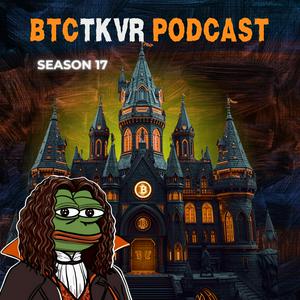
Su Bitcoin Takeover Podcast
Bitcoin Takeover tells the oral history of many OGs and builders such as Roger Ver, Martti Malmi, Vitalik Buterin, Charlie Shrem, as well as hundreds of developers, entrepreneurs, and troublemakers whose work shaped the world's first decentralized money. This is not a show about price predictions or recycled talking points. It is about the technology, the history, the scandals, and the ideas that will decide Bitcoin's future. Seven years and 350+ episodes, with one rule that never changed: the guest did something notable, and the host did the reading. Time to learn!
Sito web del podcastAscolta Bitcoin Takeover Podcast, The Diary Of A CEO with Steven Bartlett e molti altri podcast da tutto il mondo con l’applicazione di radio.it
Scarica l'app gratuita radio.it
- Salva le radio e i podcast favoriti
- Streaming via Wi-Fi o Bluetooth
- Supporta Carplay & Android Auto
- Molte altre funzioni dell'app
Scarica l'app gratuita radio.it
- Salva le radio e i podcast favoriti
- Streaming via Wi-Fi o Bluetooth
- Supporta Carplay & Android Auto
- Molte altre funzioni dell'app
Bitcoin Takeover Podcast
Scansione il codice,
scarica l'app,
ascolta.
scarica l'app,
ascolta.
 Italia