PodcastScienzeShow Me the Science with Luke O'Neill

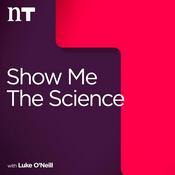
Show Me the Science with Luke O'Neill

Newstalk
Show Me the Science with Luke O'Neill
Ultimo episodio

232 episodi

  • Show Me the Science with Luke O'Neill

    The Science of Transplanted Wombs

    19/03/2026 | 18 min
    This week, Professor Luke O’Neill dives into one of the most remarkable stories in modern medicine: the birth of Hugo, the first child in the UK to be born from a womb transplanted from a deceased donor. His mother, Grace Bell, born without a womb due to MRKH syndrome, calls her baby son “simply a miracle.”
    Luke explores the incredible medical journey behind this milestone. The 10-hour womb transplant took place at The Churchill Hospital in Oxford in June 2024, followed by IVF treatment at The Lister Fertility Clinic in London. Consultant gynaecologist Professor Richard Smith, who has researched womb transplantation for over 25 years and was present at Hugo’s birth, was even honoured in Hugo’s full name.
    Beyond the headline-grabbing story, Luke takes listeners through the broader science of organ transplantation. He explains how immunosuppressant drugs revolutionised transplant success, looks at cutting-edge frontiers like 3D-printed organs and the potential use of animal organs, and considers the ongoing challenge of organ shortages. He also touches on Ireland’s organ waiting list, especially for kidneys, and the recent updates to donor rules.
  • Show Me the Science with Luke O'Neill

    The Science of St Patrick

    12/03/2026 | 14 min
    With St Patrick’s Day just around the corner, Professor Luke O’Neill takes a closer look at the man behind the legend—and the science behind the stories. Drawing on Patrick’s own Confessio, Luke explores how the saint lived a long life, likely thanks to a mix of lifestyle and genetics.
    Could there have been two Patricks, Patricius and Palladius? Luke unpacks this theory and shares its surprising connection to the early days of Ireland’s Dublin Institute for Advanced Studies.
    He also tackles the myth of Patrick banishing snakes, explaining how the last Ice Age shaped Ireland’s landscape and wildlife. And he examines the shamrock, used by Patrick to illustrate the Holy Trinity, and its medicinal properties, from easing menopausal symptoms and asthma to treating wounds and fevers.
    It’s history, myth, and biology all rolled into one festive podcast.
  • Show Me the Science with Luke O'Neill

    The Science of Winter Sports

    05/03/2026 | 14 min
    Winter sports look clean and crystalline on the surface. Snow, ice, precision, courage. But scratch that frozen surface and you find molecular biology doing quiet, mischievous work.
    In this week’s podcast, Professor Luke O'Neill takes us from the ski jump ramp to the veg aisle, via one of the strangest alleged performance hacks of the recent Winter Olympics.
    First stop: hyaluronic acid. A substance your body already makes, found in skin and connective tissue, famous for its ability to hold vast amounts of water. That’s why it appears in skin creams, dermal fillers, and treatments for sore joints — it hydrates, cushions, and plumps.
    Reports suggested some ski jumpers injected it weeks before competition to temporarily enlarge their genitals while being fitted for tightly regulated suits. If the swelling subsided by competition time, the slightly looser fabric could improve aerodynamics. In a sport decided by metres, even tiny changes in airflow can translate into significant gains. That raises an awkward question: if it enhances performance without acting like a traditional drug, does it still count as doping?
    Then there’s broccoli. Many athletes were reportedly using concentrated broccoli juice supplements. Broccoli and other cruciferous vegetables contain isothiocyanates, compounds linked to anti-inflammatory effects. In high-impact, repetitive sports, reducing inflammation may aid recovery between events.
    There’s early research exploring whether these molecules could help in conditions like ulcerative colitis and multiple sclerosis. But while broccoli is unquestionably nutritious, robust clinical evidence for performance-boosting concentrated extracts is limited. A single shot can equal several large heads of broccoli — and tastes predictably grim.
    Winter sports may look like poetry in motion. Underneath, it’s chemistry in motion. And sometimes, it’s broccoli.
  • Show Me the Science with Luke O'Neill

    The Science of Cholesterol

    26/02/2026 | 18 min
    Cholesterol has a reputation problem. We tend to think of it as the enemy, but your body makes it for a reason. Every cell membrane relies on it, and it’s the building block for key hormones like oestrogen, progesterone, and corticosteroids. You also get cholesterol from your diet. The real issue isn’t cholesterol itself — it’s where it ends up.
    In the early 1900s, pathologists examining people who died from heart attacks found arteries lined with cholesterol-rich plaques, complete with visible crystals. By the 1950s and 60s, research confirmed that high cholesterol in the blood is a major risk factor for heart disease. When plaques build up, they trigger inflammation and clotting, potentially cutting off blood supply to the heart.
    Cholesterol doesn’t travel freely in the bloodstream — it’s packaged into tiny particles called lipoproteins. These act like delivery vehicles, carrying cholesterol around the body. Drugs such as statins reduce cholesterol production and improve its clearance, saving millions of lives. Exercise, diet, and blood pressure control are also critical, especially since high blood pressure and high cholesterol together significantly increase risk.
    But there’s more to the story. Around one in 250 people have inherited conditions that leave them with very high cholesterol levels. And as listener Tara asked in her email to the podcast, what about Lipoprotein little a — or Lp(a)?
    Lp(a) is a specialised lipoprotein that can increase inflammation and clot formation. Elevated levels are linked to a greater risk of heart attack — even if your standard cholesterol numbers look normal. That means measuring total cholesterol alone may not tell the full story.
    On this week’s podcast Professor Luke O’Neill explores why cholesterol is essential, how it becomes dangerous, and why particles like Lp(a) could be key to identifying hidden heart risk.
    Have a science question you’d like answered? Email [email protected] and it might feature in a future episode.
  • Show Me the Science with Luke O'Neill

    The Science of Sweat

    19/02/2026 | 18 min
    Why do we sweat? And what secrets does it hold about our bodies? On this week’s podcast, Professor Luke O'Neill dives into the fascinating science of sweat. From keeping our body temperature in check to signalling stress and even potential mate selection, sweat is far more than just water and salt.
    The podcast explores how sweat is made by specialized eccrine glands, originating from plasma in our blood, and why humans are among the sweatiest animals on the planet. Luke explains how the average adult can produce up to four litres a day, and why staying hydrated is crucial.
    But there’s more: stress, exercise, and climate all change how and why we sweat. Sweat itself is odorless, but bacteria, lactic acid, and urea can create the smells we associate with adolescence, gyms, and armpits. And surprisingly, sweat contains proteins that fight bacteria, hinting at a role in our body’s natural defence.
    Could sweat one day be a diagnostic tool for disease? Why do identical twins sweat the same amount? And could it even act as a pheromone signal? Professor O’Neill explains all this and more, in a conversation sparked by a listener question from Siún.
    If you want to ask Luke your own science question, email him at:
    📧 [email protected]

Altri podcast di Scienze

Su Show Me the Science with Luke O'Neill

Have you ever wondered why we laugh or if you can really die of a broken heart? Join Professor Luke O'Neill on ‘Show Me the Science’ as he tackles a different issue each week; from the serious to the silly, all explained through science. This Newstalk production will open the world of science to people of all ages. New episodes every Thursday. Show me the Science is with thanks to B Braun.CONVERSATION THAT COUNTS | Ireland’s national independent talk station for news, sport, analysis and entertainmentListen to Newstalk at http://newstalk.com/listenlive | Download the GoLoud app now, the new home for Newstalk
Sito web del podcast

Ascolta Show Me the Science with Luke O'Neill, Amedeo Balbi | Cosa sappiamo dell'universo e molti altri podcast da tutto il mondo con l’applicazione di radio.it

Scarica l'app gratuita radio.it

  • Salva le radio e i podcast favoriti
  • Streaming via Wi-Fi o Bluetooth
  • Supporta Carplay & Android Auto
  • Molte altre funzioni dell'app

Show Me the Science with Luke O'Neill: Podcast correlati