PodcastBambini e famigliaSecurely Attached

Securely Attached

Dr. Sarah Bren
Securely Attached
Ultimo episodio

402 episodi

  • Securely Attached

    GLP-1s and parenting: Body image, food noise, and talking to your child about changes to your body with Dr. Rachel Goldman

    07/04/2026 | 47 min
    GLP-1 medications like Ozempic and Wegovy are everywhere right now. But behind the headlines and social media debates are real people navigating complicated questions about body image, health, and how to talk about these changes with their families.
     
    Clinical psychologist Dr. Rachel Goldman joins me to unpack the psychology behind GLP-1 medications, the concept of "food noise," and how parents can thoughtfully talk to their children about changes in their own bodies.
     
    Together we explore:
     
    Why obesity is now understood as a chronic, multifactorial disease rather than a simple issue of willpower.
    What "food noise" is and why GLP-1 medications can dramatically quiet the constant mental chatter around food.
    The biggest misconceptions about GLP-1 medications and why they're not simply "weight loss drugs."
    Why significant body changes can bring up complicated identity and emotional shifts.
    How parents can talk to kids about weight loss or body changes without reinforcing shame or diet culture.
    The difference between body positivity and body neutrality and why neutrality may be more realistic and helpful for many families.
    Small language shifts that help children focus on what their bodies do, rather than how they look.
    Why it's never too late for parents to shift the way they talk about bodies and health.
     
    This conversation will help you understand the science and psychology behind GLP-1 medications and give you practical tools and language to navigate your own health journey and talk about it with your kids in thoughtful, supportive ways.
     
     
    LEARN MORE ABOUT MY GUEST:
    🔗 Dr. Rachel 
    📚 When Life Happens: The Mindset Shift You Need to Manage Stress, Build Confidence, and Break Free
     
     
    FOLLOW US ON INSTAGRAM:
    📱@drrachelnyc
    📱@drsarahbren
     
    ADDITIONAL REFERENCES AND RESOURCES:
    👉 Want extra support in your parenting journey? Upshur Bren Psychology Group offers therapy and parenting coaching to help you feel more grounded and confident as you support your child's emotional development and navigate challenges like body image, big emotions, anxiety, and family dynamics. Visit upshurbren.com to explore our services and schedule a free 30-minute consultation call to find the support that's right for your family.
     
     
    CHECK OUT ADDITIONAL PODCAST EPISODES YOU MAY LIKE:
    🎧 Listen to my podcast episode about navigating their effects on body image from early childhood to teen years with Dr. Miriam Steele
     
    🎧 Listen to my podcast episode about empowering girls to navigate media, body image, and societal pressures with Dr. Jo-Ann Finkelstein
     
    🎧 Listen to my podcast episode about youth sports and body image with Zoë Bisbing
  • Securely Attached

    Q&A: Are time-ins better than time-outs?

    02/04/2026 | 25 min
    Beyond the Sessions is answering YOUR parenting questions! In this episode, Dr. Rebecca Hershberg and I talk about...
     
    What a time-in actually is and how it's different from a time-out.
    How to tell if your child's behavior is coming from dysregulation, a skill gap, or deliberate behavior.
    How to know which discipline tools will work best in each unique situation.
    The difference between co-regulating during a meltdown and teaching a behavioral boundary (and how to know when to use each).
    How to use time-outs as a teaching tool, not a punishment.
    How developmental stages affect behaviors like hitting, tantrums, and defiance—and what realistic expectations to set.
    Why trying to find the "perfect parenting script" often makes discipline harder.
    The one question to ask yourself that will help you decide what to do in the moment.
     
    If you've ever found yourself wondering whether you should comfort your child, correct the behavior, or step away entirely, this episode will help you zoom out, understand what's really going on underneath the behavior, and respond more intentionally.


    REFERENCES AND RELATED RESOURCES:
     
    🔗 Longitudinal Relationship Between Time-Out and Child Emotional and Behavioral Functioning
     
    👉 Feeling confused about discipline strategies like time-ins, time-outs, and consequences? Visit drsarahbren.com/timeout to download my ✨FREE✨ Discipline Guide to learn when and how to use these tools in a way that actually supports your child's development while reducing power struggles at home. This guide breaks down how to respond to common behaviors like tantrums, hitting, and defiance so you can feel more confident in the moment. 
     
    📚The Tantrum Survival Guide: Tune In to Your Toddler's Mind (and Your Own) to Calm the Craziness and Make Family Fun Again by Rebecca Schrag Hershberg, PhD
     
     
    CHECK OUT ADDITIONAL PODCAST EPISODES YOU MAY LIKE:
     
    🎧 Listen to my podcast episode about using your child's brain, body and nervous system to guide your parenting Dr. Mona Delahooke
     
    🎧 Listen to my podcast episode about the psychology behind dysregulation with founder of Parenting Translator Cara Goodwin
     
    🎧 Listen to my podcast episode about how to integrate effective discipline that prioritizes emotional and mental health with Sarah R. Moore
     
     
    WE WANT TO HEAR FROM YOU:
     
    Go to https://drsarahbren.com/question to send us a question or a topic you want to hear us answer on Securely Attached - Beyond the Sessions!

  • Securely Attached

    Back by popular demand: Attachment theory and fostering secure attachment relationships

    31/03/2026 | 26 min
    Let's revisit the foundation of raising securely attached kids! I'm bringing back one of my first ever episodes to help parents understand the basics of how a secure attachment bond impacts children's resilience, confidence, and overall well-being.
     
    Tune in to hear:
     
    What secure attachment is and how it plays a key role in nurturing a child's confidence, curiosity, and ability to handle life's ups and downs.
    The powerful influence of feeling safe and seen on a child's ability to be honest, adaptable, and resilient.
    Practical strategies for fostering secure attachment, no matter the age of your child.
    How attachment affects a child's development into a compassionate, kind individual who can build meaningful relationships throughout their life.
     
    This episode offers science-backed insights and actionable tips and is a must-listen for all parents!
     
     
    INTERESTED IN LEARNING MORE ABOUT ATTACHMENT SCIENCE?
    Click HERE to download my free guide, The Four Pillars of Fostering Secure Attachment, helping you parent with a focus on attunement and trust.
     
    LEARN MORE ABOUT DR. SARAH:
    https://drsarahbren.com/
     
    FOLLOW DR. SARAH ON INSTAGRAM:
    https://www.instagram.com/drsarahbren/
     
     
    CHECK OUT ADDITIONAL PODCAST EPISODES YOU MAY LIKE:
    🎧 Breaking the cycle of insecure attachment: How to support your child's secure attachment even if you didn't grow up with it with Dr. Miriam Steele
     
    🎧 Secure attachment is optimal, but insecure attachment may not be as bad as we think with Dr. Or Dagan
     
    🎧 Can my kid be securely attached to me if I'm insecurely attached in my adult relationships?
  • Securely Attached

    Q&A: How do I handle sibling rivalry when my baby keeps touching my toddler's toys?

    26/03/2026 | 14 min
    Beyond the Sessions is answering YOUR parenting questions! In this episode, Dr. Rebecca Hershberg and I talk about...
     
    Whether it's developmentally realistic to expect a baby and a toddler to "work together" during play.
    If separating siblings in certain moments is helpful parenting… or something we're supposed to avoid.
    The concept of "territory" in child development and why young children often need spaces and projects that feel protected.
    Why pushing young children to share too early can sometimes make cooperation harder later on.
    How helping a toddler trust that their creations and belongings will be respected can actually reduce sibling rivalry over time.
    The difference between communal family spaces and personal spaces for kids' toys and projects.
    Simple ways to set boundaries that support both children's needs without turning every moment into a negotiation.
    Where kids actually learn to get along with siblings — so you can focus on the moments that matter and release some of the pressure around the rest.
     
    If you're parenting siblings close in age and feel like you're constantly refereeing fights over toys, this episode will help you better understand what's developmentally normal and give you practical ways to support both children without feeling like you have to force sharing or cooperation before they're ready.
     
     
    REFERENCES AND RELATED RESOURCES:
     
    👉 Want extra support in your parenting journey? Upshur Bren Psychology Group offers therapy and coaching to give parents the tools to feel more grounded and confident as they navigate parenthood and learn how to most effectively support their child. Visit upshurbren.com to explore our services and schedule a free 30-minute consultation call to find the support that's right for your family.
     
     
    CHECK OUT ADDITIONAL PODCAST EPISODES YOU MAY LIKE:
     
    🎧 Listen to my podcast episode about encouraging sibling empathy without making them responsible for each other's feelings
     
    🎧 Listen to my podcast episode about how to get your toddler to share
     
    🎧 Listen to my podcast episode about soothing your baby and encouraging a closed sibling bond with Dr. Golly
     
    WE WANT TO HEAR FROM YOU:
     
    Go to https://drsarahbren.com/question to send us a question or a topic you want to hear us answer on Securely Attached - Beyond the Sessions!

  • Securely Attached

    Why kids remember more when they write by hand: What screens might be costing your child's brain with Dr. Audrey van der Meer

    24/03/2026 | 1 h 2 min
    Dr. Audrey van der Meer, developmental neuroscientist and Professor of Neuropsychology at NTNU, joins me to talk about what's happening inside our children's brains when they write by hand versus type on a keyboard and what the shift toward fully digital classrooms may be costing their learning, memory, and focus.
     
    Together we explore:
     
    What gross motor development is and why its sequential nature is so essential for a child's development.
    The research that illustrated that handwriting activates larger neural networks linked to memory, attention, and deeper learning compared to typing.
    Why taking notes by hand improves memory retention and comprehension.
    The "use it or lose it" principle of brain development and what that means for cognitive growth.
    What studies reveal about reading on paper versus reading on screens.
    How screens can be beneficial too, so you can make informed, intentional decisions about when to incorporate technology and when to set limits.
    Practical, realistic ways parents can strengthen brain development at home without banning screens or rejecting technology altogether.
     
    This conversation isn't about rejecting technology or going back to the Stone Age. It's about being intentional. And when we understand how the brain evolved to learn, we can make small shifts that serve to strengthen our children's development.
     
     
    LEARN MORE ABOUT MY GUEST:
    🔗Dr. Audrey van der Meer 
    🔗NuLab 
     
    FOLLOW US ON INSTAGRAM:
    📱@audreyvandermeer
    📱@drsarahbren
     
    CHECK OUT ADDITIONAL PODCAST EPISODES YOU MAY LIKE:
    🎧 Listen to my podcast episode about the hidden dangers of EdTech with Andy Liddell
     
    🎧 Listen to my podcast episode about how to keep your child safe in a world of AI, algorithms, and social media with Imran Ahmed
     
    🎧 Listen to my podcast episode about parenting with the "whole-brain" with Dr. Dan Siegel
     
    🎧 Listen to my podcast episode about rewiring the way our kids interact with screens with Alé Duarte

Altri podcast di Bambini e famiglia

Su Securely Attached

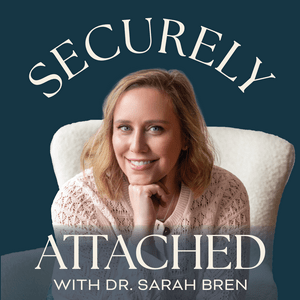
Securely Attached is your go-to parenting podcast, supporting moms and dads from pregnancy all the way through their child's adolescence and every stage in between. Join us every Tuesday as clinical psychologist and mom of two Dr. Sarah Bren shares her expertise and interviews top experts in the field, simplifying complicated concepts and pulling back the curtain on the brain science and psychology that drives and shapes the parent-child relationship. And now, every Thursday, Dr. Sarah Bren is joined by Dr. Emily Upshur and Dr. Rebecca Hershberg for a special segment, Beyond The Sessions. We're answering YOUR parenting questions from the perspective of clinical psychologists highly trained in developmental science and real-life moms who get that parenting is messy, and sometimes we have to laugh, cry, and throw out the "rules." From toddler tantrums, to effective discipline strategies, to leaning into the principles of respectful parenting, and to managing your own mental wellness as a parent—this podcast is your ultimate resource for judgment-free, research-backed information you know you can trust. About Sarah Bren, PhD Dr. Sarah Bren is a licensed clinical psychologist and mom of two who helps parents understand the building blocks of child development and how secure relationships form and thrive. Her work is focused on helping parents find their inner confidence so they can respond to any parenting problem that comes along and raise kids who are healthy, resilient, and kind.
Sito web del podcast

Ascolta Securely Attached, Educare con calma e molti altri podcast da tutto il mondo con l’applicazione di radio.it

Scarica l'app gratuita radio.it

  • Salva le radio e i podcast favoriti
  • Streaming via Wi-Fi o Bluetooth
  • Supporta Carplay & Android Auto
  • Molte altre funzioni dell'app