Ascolta questo podcast gratuitamente nell'applicazione: Scarica gratuitamente dall'App Store
radio.it
Sleep timer
Radio preferite
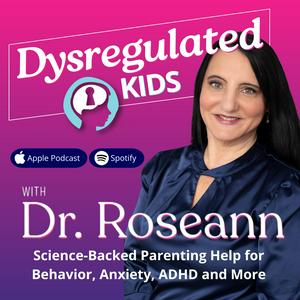
Dysregulated Kids: Science-Backed Parenting Help for Behavior, Anxiety, ADHD and More
Dr. Roseann Capanna Hodge
Ultimo episodio
458 episodi
What If Your Child’s Diagnosis Isn’t the Whole Story? | Regulation First Parenting® | E455
26/10/2026 | 15 minWhat if your child’s diagnosis isn’t the whole story? Discover how nervous system dysregulation can affect behavior, attention, and anxiety. Dr. Roseann Capanna-Hodge, an expert in Regulation First Parenting™ and emotional dysregulation in children, shows parents a path forward.
Your child has a diagnosis, but you still feel like something is missing. What if the key to helping your child isn’t another label, but understanding their nervous system?
In this episode, you’ll discover how regulation can help you uncover behavioral patterns and support your child’s unique needs.
Why Can a Child’s Diagnosis Be Right but Not Tell the Whole Story?
A diagnosis like ADHD, anxiety, or OCD can explain symptom patterns, guide treatment, and help children access services. But it doesn't explain everything about how your child responds to stress or why everyday tasks sometimes feel impossible.
Your child's diagnosis is one layer of understanding, not the whole picture. Nervous system dysregulation can intensify existing challenges without making the diagnosis any less valid.
Look beyond symptoms to understand what makes them worse.
Consider your child's environment, stress, and daily demands.
Remember that behavior communicates something about your child's capacity.
How Does Nervous System Dysregulation Affect ADHD, Anxiety, and OCD?
Dysregulation doesn't look the same in every child. One child may struggle to start homework, another may need constant reassurance, and another may respond to frustration with anger, refusal, or shutdowns.
These behaviors may reflect different diagnoses, but stress can make each child's challenges harder to manage.When the nervous system is overwhelmed, children may have less access to the attention, flexibility, and problem-solving skills they're learning.
Real-life example: A child who usually completes homework independently might struggle after a demanding school day. Instead of assuming they're being lazy or defiant, consider whether they're overwhelmed and need help regulating first.
Notice changes in capacity: A difficult day doesn't erase the skills your child has learned.
Look for hidden signs: Avoidance, rigidity, frequent questions, and refusal can signal distress.
Support regulation first: Help your child settle before expecting them to tackle a difficult task.
How Can I Tell What Is Triggering My Child’s Behavior?
Become a dysregulation detective by tracking one recurring challenge instead of focusing only on whether it happens. Patterns can reveal factors you might otherwise overlook.
Ask yourself three questions:
When does it happen? Notice whether struggles increase after school, before tests, at bedtime, or during transitions.
What came before? Consider social stress, sensory overload, a demanding day, poor sleep, or missed meals.
What helps my child regulate? Observe whether movement, quiet, connection, food, rest, or time outdoors helps.
A child who refuses homework every evening may be struggling with accumulated stress rather than the assignment alone. Identifying the pattern gives you a more practical starting point for support.
The CALMS Dysregulation Protocol offers a regulation-focused framework to help you understand your child's needs and respond more intentionally. Explore it at drroseann.com/calms.
How Can Nervous System Regulation Help My Child’s Treatment Work Better?
Regulation doesn't replace a diagnosis, medication, therapy, or educational support. It helps create a better foundation for children to access the skills and interventions they're working on.
When children are better regulated, they may find it easier to engage in learning, practice coping skills, tolerate frustration, and connect with others. Regulation doesn't erase every challenge, but it can help children navigate those challenges with greater capacity.
Remember, this isn't about fixing who your child is. It's about helping them feel more comfortable in their body and better supported in everyday life.
🗣️ “Regulation doesn’t erase every challenge. It gives your child’s brain a better foundation to handle whatever comes their way.”— Dr. Roseann
When your child is dysregulated, it’s easy to feel helpless.
The Regulation Rescue Kit gives you the scripts and strategies you need to stay grounded and in control.
Become a Dysregulation Insider VIP at www.drroseann.com/newsletter and get your free kit today.
What Can Parents Do When a Diagnosis Doesn't Explain Everything?
Start by getting curious instead of assuming the diagnosis is wrong or searching for another label. Ask what your child's behavior might reveal about their current capacity and what support could help.
The goal is to understand the child behind the diagnosis. In The Dysregulated Kid, I share practical tools, including a tracker, to help parents recognize patterns and use a nervous-system-informed approach to everyday challenges. Move beyond guessing and understand what helps your child function at their best.
Takeaway & What’s Next
Your child's diagnosis matters, and so does their nervous system. By noticing patterns, supporting regulation, and staying curious about what your child needs, you can find new ways to help them thrive. The road may be bumpy, but progress is possible—and you can take it one step at a time.
If you want to look beyond your child's diagnosis and better understand what drives their struggles, The Dysregulated Kid offers practical tools, strategies, and guidance to help you recognize dysregulation patterns and support your child’s unique needs.
Get your copy of The Dysregulated Kid and start building a more regulation-first approach to everyday challenges.
FAQs
Can stress make ADHD symptoms worse in children?
Yes. Stress and nervous system dysregulation can make attention, impulsivity, and executive functioning challenges harder to manage. Noticing when symptoms intensify can help you identify where additional support may be needed.
Can anxiety cause a child to refuse homework or new activities?
Anxiety and overwhelm can contribute to avoidance, rigidity, and refusal. Look for patterns around transitions, uncertainty, and demanding situations to better understand what your child may be experiencing.
Does nervous system regulation replace my child's diagnosis or treatment?
No. Regulation complements appropriate diagnoses, treatment, and educational support. It can help children access skills and interventions while addressing stress that may intensify their challenges.
How can I recognize nervous system dysregulation in my child?
Look beyond meltdowns. Frequent reassurance-seeking, shutdowns, avoidance, difficulty starting tasks, and increased rigidity can also signal overwhelm. Track when these behaviors occur and what helps your child recover.
Can parents help their children regulate their nervous systems?
Yes. Parents can observe triggers, model coping strategies, offer connection, and identify helpful supports such as movement, rest, and reduced stimulation. Progress looks different for every child.
Every child’s journey is different. That’s why cookie-cutter solutions don’t work.
Take the free Solution Matcher Quiz and get a customized path to support your child’s emotional and behavioral needs—no guessing, no fluff.
Start today at www.drroseann.com/helpWhy Correcting Your Child in the Heat of the Moment Backfires | Regulation First Parenting® | E454
21/10/2026 | 12 minWhy Correcting Your Child in the Heat of the Moment Backfires comes down to timing. Learn how to hold boundaries without escalating meltdowns. Dr. Roseann Capanna-Hodge, an expert in Regulation First Parenting™ and emotional dysregulation in children, shows you how.
The more your child screams, refuses to listen, or slams a door, the more you may feel compelled to correct the behavior immediately. But the reason why correcting your child in the heat of the moment backfires comes down to one crucial factor: timing.
In this episode, you’ll learn how to regulate first, reconnect, and teach your child without giving up boundaries.
Why does correcting a dysregulated child make behavior worse?
When your child is overwhelmed, their brain prioritizes protection over reasoning. Access to impulse control, flexibility, and problem-solving can drop, making it much harder for them to process instructions or learn from consequences.
Adding lectures, questions, threats, or demands can intensify the conflict. Before you know it, the issue is no longer about the original behavior. It's two nervous systems caught in a fight.
Remember: Behavior is communication. Your child still needs boundaries, but they may not be ready to learn when emotions are running high.
Regulate in the moment; correct when calm.
Reduce verbal demands instead of adding more.
Focus on helping your child settle before discussing what happened.
Real-life example: Your child refuses to turn off a video game and screams when you take the device. Instead of arguing about disrespect, keep the boundary in place and give your child space to regulate.
How can I discipline my child without yelling during a meltdown?
Start with the LOVE Pause®. Pause for three seconds, breathe, and choose a response rather than reacting from frustration. Your response can be verbal or nonverbal, depending on what helps your child settle.
Use fewer words. You might say, “I see this is hard,” or “I'll be over here when you're ready to join me.” You can hold the limit without turning it into a power struggle.
Pause before responding to your child's behavior.
Keep your voice and body as calm as possible.
Avoid lectures and repeated demands during the meltdown.
Maintain the boundary without negotiating in the heat of the moment.
Yelling less doesn't mean giving in. It means choosing a response that supports regulation instead of escalating the situation.
🗣️“You can hold boundaries without turning them into a battle.”—Dr. Roseann
How long should I wait before correcting my child?
Don't watch the clock. Watch your child's nervous system. Some children settle within a minute, while others may need five minutes or much longer. The goal isn't to wait a fixed amount of time but to recognize when your child is ready to engage.
Look for slower breathing, a more typical voice, and the ability to answer a simple question without immediately escalating. Never force eye contact.
Your child doesn't need to be perfectly calm, but they should be regulated enough to participate in a conversation.
Give your child space to settle.
Notice changes in breathing, voice, and irritability.
Avoid taking teenage moodiness personally.
Wait until your child can listen and reflect before discussing consequences.
CALMS Dysregulation Protocol offers parents a practical framework for understanding dysregulation and responding with greater calm and confidence.
What should I say to my child after a meltdown?
Once your child is calmer, keep the correction short and focused. Dr. Roseann recommends three steps: name it, hold the boundary, and plan for next time. This approach allows your child to reflect and learn without adding shame.
For example, after a difficult screen-time transition, you might say:
Name it: “That was really hard when the screen ended.”
Hold it: “Being angry is okay. Screaming at me isn't.”
Plan it: “What can we do differently next time?”
You don't need a 20-minute lecture. Self-regulation is a learned skill, and children need opportunities to practice it. When you teach after regulation, you're helping your child build skills rather than simply demanding better behavior.
Yelling less and staying calm isn’t about being perfect—it’s about having the right tools.
Join the Dysregulation Insider VIP list and get your FREE Regulation Rescue Kit, designed to help you handle oppositional behaviors without losing it.
Download it now at www.drroseann.com/newsletter.
How can I stop power struggles without becoming permissive?
Delayed correction is not permissive parenting. It's a strategic parenting move. You can maintain expectations, screen limits, and consequences while choosing a better time to discuss behavior.
You can prevent power struggles by staying consistent without getting pulled into an argument. Repeat the expectation calmly, follow through without unnecessary discussion, and allow your child time to settle before addressing their reaction.
When everyone is regulated, talk about what happened and what needs to change next time. You can be both calm and firm—your child learns accountability through clear boundaries, not escalating conflict.
Takeaway & What’s Next
The next time your child loses it, pause and ask yourself: Is my child ready to learn, or am I just ready to lecture? You don't have to choose between staying calm and holding boundaries. When you regulate, connect, and then correct, you give your child a better chance to learn, grow, and handle hard moments differently.
Parenting is hard, but you aren't failing because a difficult moment gets the best of you. Small changes in how you respond can make room for meaningful progress.
If correcting your child seems to trigger bigger meltdowns, The Dysregulated Kid can help you understand why timing matters and how to respond without giving up boundaries. Discover practical, regulation-first strategies to reduce power struggles, build self-regulation skills, and make discipline more effective. Get your copy at drroseann.com/dysregulatedkid.
FAQs
Does waiting to discipline a child encourage bad behavior?
No. You can maintain boundaries and consequences while waiting until your child is regulated enough to understand the correction. Timing helps make teaching more effective.
Should I talk to my child during a meltdown?
Keep words to a minimum. A calm, brief response and some space can help prevent further escalation. Save the discussion for when your child is ready to listen.
What if my child knows better but still screams?
Knowing a rule doesn't mean a child can follow it when dysregulated. Regulation supports the reasoning and impulse control needed to use skills they've learned.
How do I correct disrespectful behavior without yelling?
Pause, regulate yourself, and hold the boundary without arguing. Once your child is calmer, explain what was unacceptable and plan a better response for next time.
What is regulation-first parenting?
Regulation-first parenting means helping your child settle, connecting with them, and then correcting or teaching. It supports accountability while recognizing that children learn best when they're ready to engage.
Feel like you’ve tried everything and still don’t have answers?
The Solution Matcher helps you find the best starting point based on your child’s symptoms, behaviors, and history.
It’s fast, free, and based on decades of clinical expertise.
Get your personalized plan now at www.drroseann.com/help.Stop Collecting Parenting Tips. Do This Instead. | Regulation First Parenting® | E453
19/10/2026 | 14 minWhen parenting advice starts to feel overwhelming, it may be time to stop collecting parenting tips and focus on what matters first. Dr. Roseann Capanna-Hodge, an expert in Regulation First Parenting™ and childhood emotional dysregulation, shows parents how to simplify.
Parenting can feel overwhelming when every hard moment sends you searching for another script, strategy, or expert tip. But what if more information is actually making things harder?
In this episode, I explain why it’s time to stop collecting parenting tips and start focusing on what matters first: your child’s nervous system, your own regulation, and a simple sequence you can actually remember when things fall apart.
Why do I still feel like I don’t know what to do when my child melts down?
You can know about attachment, sensory needs, executive functioning, validation, boundaries, and behavior strategies—and still freeze when your child is screaming, refusing homework, or completely overwhelmed.
That doesn’t mean you’re failing. It may mean you have too many strategies and no clear order for using them.
More information doesn’t automatically create confidence.
A collection of parenting tips is not the same as a parenting framework.
Stress affects your thinking brain, too.
One parent knew practically everything about parenting but still felt lost when her child dysregulated. The missing piece wasn’t another strategy. She needed to know what mattered first.
What should I do when my child is too dysregulated to listen?
Before correcting, teaching, or explaining, ask: Is my child regulated enough to learn right now?
If your child is screaming, shutting down, raging, or overwhelmed, the answer is probably no. In that state, correction and connection may not land because the brain doesn’t have the capacity to use the information.
Red: Stop trying to teach. Regulate first.
Yellow: Use co-regulation and connection.
Green: This is where learning, correction, problem-solving, and repair happen.
Regulation first does not mean permissive parenting. It means putting expectations in an order the brain can actually access.
How can I stop feeling like I need a parenting strategy for every behavior?
Instead of remembering 47 scripts, I highly recommend returning to three simple questions:
Is my child regulated enough to learn?
What do they need before they can meet this expectation?
What still needs to be taught once they’re regulated?
Your child might need connection, movement, stimulation, less stimulation, or simply a moment to settle. The expectation doesn’t necessarily need to disappear. The biological order may need to change.
Real-life example: Your child screams, “I’m not going to school!” while everyone is already late, immediately demanding compliance may escalate everyone. Makre sure to regulate first. Get close. Say less. Connect. Then figure out the next step.
You don’t have to figure this out alone.
Become a Dysregulation Insider VIP and get your FREE Regulation Rescue Kit:
How to Stay Calm When Your Child Pushes Your Buttons and Stop Oppositional Behaviors.
Head to www.drroseann.com/newsletter and start your calm parenting journey today.
What is the Regulate, Connect, Correct approach?
Regulate. Connect. Correct. That’s the sequence to remember when your brain is scrambling.
You can use the CALMS Dysregulation Protocol to better understand what is driving dysregulation and what your child’s nervous system needs.
🗣️ “You don’t need to become a parent who knows everything. You need to become a parent who knows what matters first.”
— Dr. Roseann
How can I stop collecting parenting tips and actually help my child regulate?
Try a seven-day audit. Don’t add another strategy. Notice what you instinctively do when things go wrong.
Do you correct?
Lecture?
Threaten?
Rescue?
Explain?
Try to fix everything immediately?
Don’t judge yourself. Just notice.
If you keep correcting and nothing sticks, that’s information. Your child may need regulation before more teaching.
The goal isn’t to know everything. It’s to understand your child’s nervous system well enough to know where to start.
Takeaway & What’s Next
You don’t need another folder full of saved reels or another parenting script. Start with regulation, remember what matters first, and trust that small shifts can create meaningful change. You’ve got this.
When you understand that regulation comes before correction, you can stop scrambling for the perfect response and start responding in a way your child’s nervous system can actually receive.
The Dysregulated Kid is designed to help parents stop guessing and move from collecting disconnected strategies to using a practical, regulation-first approach. It gives you guidance for real-life challenges like meltdowns, screens, volatility, and crises so you can feel more confident about what to do when things go sideways.
Remember: The goal isn’t to know everything. It’s to know what matters first.
FAQs
What does “regulation first” mean in parenting?
It means helping the nervous system become ready for connection and learning before correcting behavior. Regulate first, then connect, then correct.
Does regulation-first parenting mean I shouldn’t have expectations?
No. You can hold boundaries and maintain expectations. Regulation first means giving your child access to the skills needed to meet those expectations.
Why do parenting tips stop working during meltdowns?
Stress reduces access to the thinking brain. When you and your child are activated, complicated strategies become harder to remember and use effectively.
What should I do instead of collecting parenting advice?
Choose a simple framework you can remember under pressure. Start by asking whether your child is regulated enough to learn, then identify what they need before moving into correction.
How do I know if my child needs regulation before correction?
Look at the behavior and the nervous system state. If your child is screaming, raging, shutting down, or overwhelmed, focus on regulation and connection before teaching.
Not sure where to start?
Take the guesswork out of helping your child.
Use our free Solution Matcher to get a personalized plan based on your child’s unique needs—whether it’s ADHD, anxiety, mood issues, or emotional dysregulation.
In just a few minutes, you'll know exactly what support is right for your family.
Start here: www.drroseann.com/helpWhy “We’ve Tried Everything” Is a Signal to Simplify, Not Try Harder | Regulation First Parenting® | E452
14/10/2026 | 12 minWhen “Why ‘We’ve Tried Everything’ Is a Signal to Simplify” becomes your reality, the answer may be less, not more. Dr. Roseann Capanna-Hodge, expert in Regulation First Parenting™ and childhood emotional dysregulation, shows parents how consistent regulation can move the dial.
When you’re parenting a dysregulated child, it’s easy to believe you just haven’t found the right strategy yet. So you keep searching, adding therapies, reading parenting tips, and trying one more thing.
But what if trying everything is actually getting in the way?
In this episode, I share why regulation is built through repetition, not information overload, and why the 167 hours outside of therapy may matter more than parents realize.
Why does “we’ve tried everything” sometimes mean we need to simplify?
Sometimes parents aren’t doing anything wrong. They’re simply doing too many things without enough consistent practice for the nervous system to learn what to do.
I call this “sprinkle therapy”: trying a little of this, a little of that, while constantly searching for the next solution.
Keep the supports your child needs.
Stop collecting new strategies for a week.
Choose one foundational tool and practice it consistently.
Focus on progress, not perfection.
Real-life example: A parent might spend Monday in therapy, Tuesday doing exercises, Wednesday at OT, Thursday tutoring, and Friday searching online for another solution. The effort is enormous, but the nervous system may not be getting enough repetition to build a reliable pathway.
How can parents help a dysregulated child learn regulation?
Therapy can be incredibly valuable, but regulation cannot live inside one therapy hour. A child has 168 hours in a week, which means there are 167 other hours when the nervous system is practicing.
Think about the ordinary moments: breakfast, homework, the car, spilled milk, repeated questions, or running late.
Notice what happens in your own nervous system.
Practice regulation during low-stakes moments.
Repeat the same tool instead of constantly adding new ones.
Notice whether recovery becomes faster or reactions become less intense.
This is where the CALMS Dysregulation Protocol can help parents focus on foundational regulation rather than chasing endless strategies.
What is the Love Pause, and how can it help with parenting?
One simple practice I teach is the Love Pause: pause, breathe, respond.
Imagine your child screams, “I hate you!” Your nervous system may immediately want to fire back. Instead, three seconds can create enough space to respond differently.
You can still hold the boundary without reacting while both brains are activated.
Pause.
Breathe.
Respond.
Practice it when things are calm, not only during meltdowns.
🗣️ “The nervous system doesn’t learn regulation from what you know. It learns what you repeatedly do.”— Dr. Roseann
When your child is dysregulated, it’s easy to feel helpless.
The Regulation Rescue Kit gives you the scripts and strategies you need to stay grounded and in control.
Become a Dysregulation Insider VIP at www.drroseann.com/newsletter and get your free kit today.
How do you build regulation skills without overwhelming your child?
You don’t need 100 calming strategies. One tool practiced consistently may be more powerful than knowing dozens of strategies but rarely using them.
I highly encourage parents to practice when the stakes are low so the nervous system has a better chance of accessing the skill when things get hard.
For the next seven days, try not adding another parenting strategy. Instead, practice pause, breathe, respond three times a day when you’re relatively regulated.
Notice: Did you activate less quickly? Recover faster? Keep your voice calmer? Create more space before responding?
Doing less consistently can move the dial. You don’t have to become an Olympic figure skater overnight. You just need to practice.
Takeaway & What’s Next
Sometimes doing less is what finally helps things move forward. Instead of constantly adding another therapy, strategy, or parenting tip, focus on one foundational regulation tool and practice it consistently in everyday moments. The nervous system learns through repetition, not information overload.
If you’re tired of trying everything and still feel like you’re spinning your wheels, The Dysregulated Kid offers a practical, science-backed parenting playbook for simplifying your approach, calming the nervous system first, and turning regulation strategies into everyday habits. It’s designed to help you stop collecting more information and start using tools that can actually fit into real family life.
FAQs
What should I do if I feel like I’ve tried everything with my child?
Give yourself permission to simplify. Keep necessary therapies and supports, but choose one foundational regulation tool and practice it consistently.
Why isn’t therapy alone enough for a dysregulated child?
Therapy may provide important skills, but children need opportunities to practice those skills throughout everyday life. The nervous system learns through repetition.
How can I help my child regulate during a meltdown?
Start with your own nervous system. Pause, breathe, and respond rather than trying to teach or correct while both brains are highly activated.
How often should I practice regulation strategies?
Practice during calm, everyday moments rather than waiting for a crisis. Repetition when the stakes are low can make skills easier to access when things get hard.
What is the Love Pause?
The Love Pause is a simple regulation practice: pause, breathe, respond. It creates a small space between activation and reaction so you can respond more intentionally.
Every child’s journey is different. That’s why cookie-cutter solutions don’t work.
Take the free Solution Matcher Quiz and get a customized path to support your child’s emotional and behavioral needs—no guessing, no fluff.
Start today at www.drroseann.com/helpWhy Your Child Can Handle It One Day and Completely Lose It the Next | Nervous System Regulation | E451
12/10/2026 | 13 minTrying to find out why your child can handle it one day and completely lose it the next can leave parents confused and frustrated. Learn why nervous system capacity changes—and how to respond differently. Dr. Roseann Capanna-Hodge teaches Regulation First Parenting™ and helps parents understand emotional dysregulation.
If you’ve ever thought, “But you did this yesterday!” you’re not alone. It can be incredibly frustrating when your child seems flexible and capable one day, then melts down over the smallest demand the next.
The key is understanding the difference between having a skill and having access to that skill under stress. In this episode, I share how nervous system capacity changes from day to day—and how parents can respond without personalizing behavior.
Why does my child handle things one day but melt down the next?
Your child’s ability to regulate depends on what their nervous system is carrying right now. A demand that felt manageable yesterday may exceed their available capacity today.
The skill may still be there.
Stress can reduce access to that skill.
Yesterday’s nervous system isn’t today’s nervous system.
Real-life example: A teenager may get ready for school independently one morning, then have a full explosion when asked to grab their backpack the next. Looking at sleep, stress, and sensory load can reveal what changed.
What can cause a child to suddenly lose their ability to cope?
Before assuming your child is being defiant or uncooperative, check their body, load, and demand. These three areas can help you become a dysregulation detective instead of getting pulled into the behavior.
Body: Poor sleep, hunger, illness, or sensory overload can reduce flexibility.
Load: Learning challenges, social stress, masking, busy schedules, or too many transitions can fill the stress cup.
Demand: Homework, transitions, stopping screens, accepting “no,” or changing plans may exceed capacity at that moment.
The demand itself may not be unreasonable. The demand may simply be bigger than the capacity available right now.
How can I stop saying “But you did it yesterday”?
That phrase is understandable, but it doesn’t help a dysregulated nervous system. Instead of focusing on what your child could do yesterday, ask what is different about their capacity today.
Check body, load, and demand.
Look for patterns instead of isolated incidents.
Add support before adding pressure.
Regulate before correcting.
This doesn’t mean lowering expectations or bubble-wrapping your child. It means changing the support so they have a better chance of accessing the skills they already have.
You don’t have to figure this out alone.
Become a Dysregulation Insider VIP and get your FREE Regulation Rescue Kit:
How to Stay Calm When Your Child Pushes Your Buttons and Stop Oppositional Behaviors.
Head to www.drroseann.com/newsletter and start your calm parenting journey today.
How can I help my child build more nervous system capacity?
Start by noticing what happens before the behavior. Look beyond the meltdown and ask what may have already drained your child’s capacity that day. Movement before homework, natural resets, connection, and predictable support can help your child stay regulated and access the skills they already have.
The CALMS Dysregulation Protocol gives parents and professionals a practical framework for understanding what is driving dysregulation:
Co-Regulate
Avoid Personalizing
Look for Root Causes
Model Coping
Support With Structure
Instead of reacting to the behavior, you become a dysregulation detective who looks for what the nervous system needs first.
🗣️ “A lot of what looks like inconsistency in kids is actually inconsistencies in capacity.”— Dr. Roseann
What should I remember when my child suddenly struggles?
Your child didn’t forget how to regulate. Their available capacity changed. When you check body, load, and demand, you can respond to the nervous system instead of getting stuck reacting to the behavior.
And there is hope: nervous system capacity can grow. With the right support, kids can become more flexible, tolerate frustration, handle transitions, and recover faster.
Takeaway & What’s Next
When your child can handle something one day and completely lose it the next, remember: the skill probably didn’t disappear—their capacity to access it changed. Check the body, load, and demand before assuming your child is being defiant or refusing to cooperate.
You don’t have to lower the bar. Change the support before increasing the pressure. When we regulate first, we create the conditions for kids to build flexibility, access coping skills, and recover more easily. Yesterday’s capacity isn’t today’s capacity, but capacity can grow.
If you want to understand what’s happening beneath your child’s behavior and have practical tools for responding, The Dysregulated Kid offers a parenting playbook for building regulation, flexibility, and coping skills.
FAQs
Why is my child suddenly having more meltdowns?
Changes in sleep, stress, sensory input, illness, transitions, or overall load can reduce nervous system capacity and make ordinary demands harder to handle.
Why can my child do something at home but not at school?
Different environments create different levels of stress and sensory or social load. The skill may be present while access to it changes with capacity.
Should I lower expectations when my child is dysregulated?
Not necessarily. Instead of removing expectations, increase support before pressure so your child has more capacity to access the skills they already have.
How do I help my child regulate better?
Start with regulation and look for patterns in body, load, and demand. Movement, natural resets, connection, and consistent support can help build capacity over time.
What does “skill versus access” mean?
Your child can possess a skill without being able to use it when stressed. Having the skill and accessing the skill under stress are two different things.
Tired of not knowing what’s really going on with your child?
The Solution Matcher gives you a personalized recommendation based on your child’s behavior, not just a label.
It’s free, takes just a few minutes, and shows you the best next step.
Go to www.drroseann.com/help
Altri podcast di Bambini e famiglia










Podcast di tendenza in Bambini e famiglia






















Su Dysregulated Kids: Science-Backed Parenting Help for Behavior, Anxiety, ADHD and More
Are you tired of the daily battles, the problems with listening and focus, meltdowns over minor frustrations, and the constant feeling of walking on eggshells in your own home? If you're a parent who feels overwhelmed, stuck in a cycle of reactivity, and utterly exhausted from trying to manage your child's challenging behaviors, you are not alone. You've tried everything—the sticker charts, the timeouts, the endless negotiations—but nothing creates lasting change.
The answer isn't more discipline. The secret is understanding the brain. Welcome to Dysregulated Kids: Science-Backed Parenting Help, the podcast that is revolutionizing the way we parent.
Hosted by Dr. Roseann Capanna-Hodge, a licensed therapist, school psychologist and author with over 30 years of experience in children's mental health and recognized by Forbes as a thought leader in children's mental health, this podcast is your lifeline. Dr. Roseann pulls back the curtain on why your child or teen is struggling, whether they have a clinical diagnosis like ADHD, Anxiety, Autism, OCD, Depression, Dyslexia, Executive Functioning challenges, Lyme, or PANS/PANDAS, or are simply navigating the ups and downs of everyday life.Her revolutionary Regulation First Parenting™ approach teaches that calming the nervous system is the first step before you can connect, teach, or help your child learn.
In short, actionable episodes, Dr. Roseann gives you proven tools like the CALMS Protocol™, quick nervous system reset tools and co-regulation strategies to move your child (and yourself!) from stress and reactivity to calm, connection, and resilience. You'll learn what to say and do to de-escalate meltdowns in the moment, how to build your child's emotional regulation skills, and how to improve their executive functioning and attention so they can succeed at home, at school, and in life.
Imagine shifting your entire perspective from seeing "defiance" to understanding "dysregulation." Picture yourself feeling confident and equipped, knowing exactly how to respond in those tough parenting moments. This is the transformation that awaits you. Parents discover how to break free from the reactivity cycle and build a more connected, joyful family—going from helpless and frustrated to empowered and hopeful.
Here's what you can expect from Dysregulated Kids:
Real Solutions for Real Problems – Whether you're dealing with ADHD, anxiety, sensory overload, meltdowns, or everyday struggles, Dr. Roseann brings strategies that actually work.
Science-Backed Parenting Tools – Learn how to understand your child's nervous system and apply research-driven calming strategies to create a peaceful, happy home.
Practical Advice You Can Use Today – Each episode delivers focused, actionable content without the fluff—just pure wisdom you can apply to your family right away.
Empowerment and Hope – Dr. Roseann blends expert knowledge with deep empathy for the challenges parents face, helping you feel confident that you can make positive change.
This podcast is for parents of the "reactive" kid or the child who feels more, reacts to little things more, and just needs more from you. It's for parents of neurodivergent children or kids struggling with mental health challenges. Really this show is for all parents dealing with typical stressors who want to raise emotionally intelligent, resilient kids in a world that is more demanding and chaotic than ever.
If you've seen Dr. Roseann on TV, you know she doesn't shy away from real talk about real problems. She brings that same authenticity and expertise to every episode, combining hope with science to help you calm the brain and create a happier family.
Are you ready to stop just surviving and start thriving? Subscribe now and start your journey toward a calmer brain and a happier family today.
For more resources, show notes, and to connect with Dr. Roseann, visit drroseann.com.
Sito web del podcastAscolta Dysregulated Kids: Science-Backed Parenting Help for Behavior, Anxiety, ADHD and More, Storie per bambini – il podcast di racconti per bimbi dai 2 ai 5 anni e molti altri podcast da tutto il mondo con l’applicazione di radio.it
Scarica l'app gratuita radio.it
- Salva le radio e i podcast favoriti
- Streaming via Wi-Fi o Bluetooth
- Supporta Carplay & Android Auto
- Molte altre funzioni dell'app
Scarica l'app gratuita radio.it
- Salva le radio e i podcast favoriti
- Streaming via Wi-Fi o Bluetooth
- Supporta Carplay & Android Auto
- Molte altre funzioni dell'app

Dysregulated Kids: Science-Backed Parenting Help for Behavior, Anxiety, ADHD and More
Scansione il codice,
scarica l'app,
ascolta.
scarica l'app,
ascolta.
 Italia