

Ascolta questo podcast gratuitamente nell'applicazione: Scarica gratuitamente dall'App Store
radio.it
Sleep timer
Radio preferite
475 episodi
#215 After Dark: Sean Bonilla on Building Predictability, Leading from the Front, and Cleaning Up Your House Before You Call in a Third Party
02/10/2026 | 2 h 35 minI sat down with Sean Bonilla, founder of Ready and Able Defense and a law enforcement officer who came up through the fight world, and we dig into a question that doesn't get asked enough: are you even cleaning up your house before you try to fix it?
Sean lays out a framework that cuts through the noise, starting with the one thing competitive fighting taught him that most cops never get: frequency of consequence. When you fight, you feel the cost of skipping training. In law enforcement, you can go years without that wake up call, and that gap is where complacency lives. The conversation moves from there into how to actually structure team training, why bringing in a third party before you have consistent SOPs just adds mud to a muddy plate, and why the frontline supervisor is the most important training role in any agency.
This one is not about gear, and it is not about tactics. It is about the process of building people who think, move predictably, and keep getting better. Whether you are a TL, a shift sergeant, a new patrol officer trying to spark something in your squad, or just a serious practitioner trying to get the most out of your range time, there is something here that is going to make you rewind the tape and take notes.
Sean is the same guy in person as he is online: organized, patient, genuinely invested in the people he is talking to, and blunt enough to call out the problems without making it personal. That comes through in every minute of this conversation.
In this episode:
• Fighting creates frequent, high consequence feedback loops that law enforcement rarely replicates naturally, and that infrequency of real testing is the root cause of complacency, not laziness or bad character
• Before bringing in a third party instructor, a team must first have consistent, written SOPs and TTPs so that outside training reinforces the foundation rather than layering confusion on top of an already dirty plate
• The frontline supervisor is the most critical training position in any agency: one sergeant who pays out of pocket, shows up, and brings his whole shift along does more for culture than any top down mandate
• Confusing preference with policy is one of the most damaging things an instructor can do: if two instructors are contradicting each other on how to run a structure, the new guy has nowhere solid to stand
• Predictability is the actual goal of team training, not novelty or complexity: if your guys cannot predict what each other will do, you have not earned the right to complicate the problem yet
• The debrief is where the real teaching happens: pulling the answer out of the student instead of telling it to them forces the brain to work harder, sticks better in long term memory, and leaves the person knowing they can succeed, not just that they failed
• Setting the expectation that missing is part of training and that 100 percent speed must be tested regularly removes the fear of failure that keeps shooters locked into safe, slow, improvement resistant habits
• Identifying the deficiency first and then constructing a specific plan to address it applies equally to a two person private lesson, a SWAT team training cycle, and a sales organization, the process is the same at every level
Chapters:
0:01 Intro: The Capable Standard and The Brief
2:33 How Scott Found Sean and Why He Wanted This Conversation
6:40 Sean's Background: Fighting, Faith, and the Road to Law Enforcement
8:45 What Fighting Taught Sean That Law Enforcement Can't Replicate
19:32 Military Rejections and the Persistence That Led to a Badge
23:44 Full Circle: Working for the Department That Once Arrested Him
40:31 Early Exposures, Academy Culture, and the Gap Nobody Talks About
50:50 Why the Frontline Supervisor Is the Most Important Training Role
1:38:18 SOPs, Consistency, and Not Confusing Preference for Policy
1:58:27 Earning the Right to Complicate: Building Predictability First
2:10:05 Debriefing the Right Way: Extraction Over Instruction
2:30:24 Where to Find Sean and Ready and Able Defense
Mentioned:
Sean Bonilla — Guest on this episode, founder of Ready and Able Defense, law enforcement officer, MMA fighter, and firearms trainer based in South Florida.
Chris Kuras — Scott's original connection to South Florida, runs Good Dude Concepts and provides CQB training, which brought Scott down to the area for this episode.
Zack Harrison — Referenced by Scott as a recent Iron Sights guest whose conversation about early exposures and training investment directly connected to themes in this episode.
Chris Palmer — Scott credits him with introducing the phrase 'knee jerk reaction machine' to describe how law enforcement agencies respond reactively to critical incidents.#214 After Dark: How Austin PD SWAT Built a Team That Measures Everything, Argues About Nothing, and Keeps Getting Better With Ryan Nichols
25/09/2026 | 2 h 24 minRyan Nichols doesn't talk about what his team used to do. He talks about what they're doing right now, why they do it that way, and exactly how they got there. That's rare. I sat down with the Austin PD SWAT team leader after months of back channel conversations, TTPOA matches, and a long overdue calendar alignment, and the result is one of the best practitioner conversations yet.
You'll hear how a 21-officer full-time team turned a reserves program into a defined developmental pipeline, built a codified amendment process so team members can formally challenge tactics without blowing up training days, and drove a culture where teammates train in secret because they want to be better, not because they have to. Ryan walks through the entire selection architecture, the hit-factor scoring system that replaced a gameable qual, and the logic behind measuring everything from operations attendance to PT scores before anyone gets a shot at the full-time team.
Beyond the SWAT structure, Ryan lays out the blueprint for the off-duty BJJ compensation program he designed from scratch, including how he navigated the city attorney, the liability question, the tracking mechanism, and the executive presentation, all without anyone above him doing the work for him. It is a masterclass in being the one person willing to carry a problem from idea to yes. The same framework applies whether you are pitching a department, a commander, or your dad for the car keys on a Friday night.
The episode closes with a full breakdown of the SWAT Team Leader School Ryan and his teammates run through TTPOA, including who it's for, what five days actually looks like, why the curriculum materials go home with every student, and how one regional team used what they learned to execute a hostage rescue they say they would not have been ready for six months earlier. If you want to know what separates teams that evolve from teams that just argue about tactics or talk about being ready, this is the conversation.
In this episode:
• The part-time Gold Team is not a reserve unit, it is a scored developmental pipeline: applicants are tracked on operations coverage, training attendance, PT scores, and hit-factor firearm assessments, and the most ready person on that specific day gets the full-time vacancy, regardless of seniority
• Ryan's team replaced a gameable qual with an objective hit-factor test scaled to role: 4.5 for part-time, 5.5 for full-time, and 6.5 for firearms instructor, so expectations stair-step with responsibility instead of staying flat
• The amendment process gives every team member, including day-one guys, a formal path to recommend a tactic change: vet it with an experienced member, test it in a controlled environment separate from training days, document the result, and then either adopt it with a mandatory train-up or record why it was rejected so future members know
• The off-duty BJJ compensation program pays officers one hour of overtime plus one hour of comp time per session, attaches to a broad approved-gym list with no agency contact with the gym, and requires only a photo at the gym and a fillable training log, making the cost zero when no one shows up and efficient when they do
• Running scenarios for your entire training day is the equivalent of scrimmaging every practice: Ryan's team leader school dedicates a full day to breaking tactics into component skills, running half the class on firearms while the other half runs entries, and then swapping, so no one stands around between reps
• Sharing is the operating model: the team leader school gives students the lesson plan, grading rubrics, and all supporting materials for every subclass taught, including the firearms assessments, so agencies can run the content on their own with their agency name on it
• To pitch a big program to executive staff, walk in with answers to every objection before they can ask: identify the liability question, the tracking question, and the value proposition yourself, pre-answer each one, and force the conversation past the surface layer to the real reasons a no might happen
• Austin PD is actively recruiting laterals through a condensed academy starting in April, with immediate eligibility for SWAT school after FTO rather than the standard two-year wait, and pay bumping to the six-year step at graduation
Chapters:
0:01 Intro: The Capable Standard and The Brief
2:25 Guest Intro: Ryan Nichols and the BRB Gift
4:37 Ryan's Background and the Road to SWAT
6:04 Austin PD SWAT: Team Structure and Agency Overview
15:10 Competitive Shooting as a Culture Driver on the Team
24:21 Selection Metrics and the Objective Firearms Test
27:04 The Gold Team: A Developmental Pipeline to Full-Time
42:09 Op Tempo: Warrants, Barricades, and the Rapid Warrant Service
56:56 Solving the DT Problem: The Off-Duty BJJ Program
1:36:31 The Amendment Process: How the Team Affects Change
1:48:43 The SWAT Team Leader School: Origins and Curriculum
2:19:55 Lateral Academy and SWAT Recruiting Opportunity
Mentioned:
Ryan Nichols — Austin Police Department SWAT team leader and guest on this episode, discussed team culture, selection processes, training methodology, and the SWAT Team Leader School he co-developed.
Chris Kuras — Founder of Good Dude Concepts and maker of the BRB breacher bar, mentioned as a friend and resource who provided the BRB gifted to Ryan during the episode.
Matt Pranka — Instructor and content creator whose videos the team shares in their group chat to reinforce the culture of hard-skills excellence.#213 After Dark: From SMU to Law Enforcement Training: Zack Harrison on Building Real Capability
18/09/2026 | 2 h 13 minThis time I sit down with Zack Harrison, founder of Ascension Training and Consulting, and the conversation goes exactly where you'd hope: deep, honest, and unfiltered. Zack's name had been popping up for years across ranges and in conversations with law enforcement officers, always attached to the same kind of feedback. This guy cares. He slows down and makes sure you understand the why.
Zack walks through the whole arc: growing up, the call of service after 9/11, navigating the 18 X-ray pipeline into Special Forces, deploying to Afghanistan in the early years of the war, and then making the gut-wrenching decision to step away after a decade in. The transition wasn't clean. There were real and unexpected challenges and no plan waiting on the other side. What came out of it was a training company built on the same principles that made him effective in uniform: know your curriculum cold, show up prepared, and never let a student leave without understanding the why behind everything.
The back half of this episode is where it gets really good. We dig into the real friction points in law enforcement training culture: the failure to share lessons learned across agencies, the emotional attachment to tactics that blocks honest evaluation, the cop out of 'we can't do what you guys did,' and the uncomfortable truth that commitment, not resources, is often the actual limiting factor. We talk about what separates the people that elevate themselves with from the ones who stay exactly the same year after year, and why piecemealing instructors works for shooting but absolutely does not work for tactics.
This is one of those Iron Sights conversations that earns a second listen. Whether you are in law enforcement, transitioning out of the military, or just trying to understand what serious training culture actually looks like, Zack Harrison is exactly the kind of practitioner this show exists to put in front of you.
In this episode:
• The 18 X-ray pipeline explained.
• Why Ascension's curriculum starts with a diagnostic on day one.
• The cop out of 'we can't do what you guys did': Zack argues this is usually a protection mechanism for an underlying skills gap, not a genuine policy concern.
• One battle drill, not two speeds: Ascension training philosophy and methodology.
• Why piecemealing tactics instructors backfires: Zack contrasts a team he has worked with for five years against teams that swap companies every time leadership changes, and explains why continuity of instruction builds SOP integrity that a rotating cast of trainers cannot
• Commitment as the real variable: the officers who are genuinely capable all made personal sacrifices of time and money beyond what their agency provided.
• Teaching people how to teach is the missing investment: both agree that a fraction of the budget spent on ammo or equipment, redirected toward instructor development, would produce compounding returns across an entire department's capability
• Standards are what make trust possible: shooting standards, PT standards, and tactical standards give teams an objective frame to evaluate themselves honestly rather than defending the baby when it's ugly
Chapters:
0:01 Intro: The Capable Standard teaser
2:25 Episode opens: introducing Zack Harrison
3:02 How Scott and Zack connected at TTPOA
10:40 Ascension Training and Consulting: what they do
15:22 Zack's background: Richmond to the 18 X-ray program
21:12 Breaking down the 18 X-ray pipeline
28:49 Transition out of the Army: the hard truth
44:12 Military vs. law enforcement: the 'you can't do what we did' myth
57:50 One battle drill: why Ascension teaches one aggressive standard
1:13:13 Five years with one team: the case against piecemealing
1:30:25 Academy training culture and changing the system from within
2:01:40 Ascension's future: West Coast, Texas, and what's next
Mentioned:
Zack Harrison — Owner and founder of Ascension Training and Consulting, former 18B Green Beret and SMU operator, and the primary guest of this episode.
Matt Pranka — Was on the live TTPOA podcast with Scott Howell and fielded questions from the audience alongside Brandon Hernandez.
Brandon Hernandez — TTPOA figure who Zack Harrison recognized from the live podcast recording at the TTPOA conference.
Kim Pastore — Referenced as 'Kim Pastore from the Jorge Pastore Foundation,' credited alongside TTPOA for the hard work of making the TTPOA conference event happen.
Tom Spooner — Described by Zack Harrison as a friend whose quote about drinking reflected Zack's own experience; Tom was also involved in training that helped Zack transition into the private-sector training world.
Kyle Lamb — Described by Zack Harrison as 'the godfather of this whole industry,' credited as a pioneer in both gear and firearms training.#212 After Dark: The No-Knock Debate: NTOA, Dynamic Entry, and The Conversation You Haven't Heard
11/09/2026 | 2 h 34 minJoin the waitlist: https://thecapablestandard.com/waitlist
I sat down with four veteran tactical professionals at the National Tactical Officers Association Conference in Nashville to have the conversation that needed to happen two days after that 2022 NTOA position paper on no-knock warrant service dropped.
At the table: Steve Mescan, Director of Training and Education for the NTOA and a 27-year Pittsburgh Bureau of Police SWAT veteran. Chris Eklund, NTOA senior instructor and retired training coordinator and team leader from the Orange County Sheriff's Office in Florida. Matt Smith, Senior Corporal and 21-year SWAT operator with the Dallas Police Department. And Brandon Hernandez, longtime SWAT team leader, TTPOA Region VII Director, and the guy who first wanted this conversation to happen. Between them, these four men have run thousands of warrant services, trained countless officers across the country, and lived every part of this debate from the inside.
What unfolds is one of the most direct and nuanced conversations the Iron Sights Podcast has ever hosted. The group tears apart why the word 'dynamic' means something completely different depending on which team, which region, or which instructor you learned it from. They dig into why the Dallas SWAT data on officer-involved shootings tells a story that the position paper never addressed, and how and why teams across the country interpreted and responded to the position paper in the way they did. Most importantly, they agree on more than they disagree, and that agreement points to the real problem: terminology confusion, broken communication chains, and agencies running operations outside their actual capability with nobody willing to say the hard thing.
This episode is essential listening for anyone inside law enforcement, for the civilians and professionals who want to actually understand the job, and for anyone who has ever watched a news story about a warrant service and assumed they knew what happened. You didn't have the context. Now you will.
In this episode:
• A 'no-knock' warrant is a judicial exception obtained by an investigator, not a tactic: it gives a team options but does not dictate how entry is made. Teams can and should still announce presence, purpose, and authority even when holding that exception.
• The word 'dynamic' has no universal definition across U.S. SWAT teams: some teams use it to mean speed-surprise-violence-of-action with no processing, while others use it to mean continuous deliberate movement with throttle control, and the same team will sometimes split on the term mid-operation.
• The Dallas SWAT team data inverts the assumption that dynamic entry is categorically more dangerous.
• The NTOA position paper was intended to address teams running no-knock exceptions as a direct trigger for immediate silent entry, a practice seen causing 'biblical disasters' nationally, but the marketing and framing created a blanket interpretation that affected capable teams who were never the intended audience.
• A centering step, a threshold assessment, a center step, and pie-ing the door can all describe the same physical movement at different speeds: the failure is not in the movement but in instructors teaching the label without teaching the 'why,' leaving officers to follow a tick list instead of solving the actual problem in front of them.
• Selection is the upstream problem nobody wants to address: tactics get watered down or abandoned not because the tactic is wrong but because leadership refuses to have the hard conversation that a specific operator or team is not capable of executing it safely.
• The LEOKA data used to support arguments about entry method risk is so vague and inconsistently reported, with a five-percent response rate on NTOA member surveys, that drawing hard-line scientific conclusions from it is inherently problematic, and both sides of this debate are operating with incomplete data.
• Announcing presence, purpose, and authority on every warrant, even with a no-knock exception in hand, is compulsory.
Chapters:
0:01 Pre-roll: The Capable Standard and The Brief
1:33 Show intro and mission statement
2:25 Nashville NTOA Conference context and guest introductions
4:59 Steve Mescan bio: Pittsburgh SWAT to NTOA Director of Training
6:44 Chris Eklund bio: Orange County SO to NTOA senior instructor
9:49 Matt Smith and Brandon Hernandez introductions
14:03 What the NTOA is, what it does, and how it fits into LE
24:51 Content without context: how social media distorts incident debriefs
27:44 Terminology breakdown: no-knock, dynamic, and why words matter
30:13 What 'dynamic' actually means across different teams and regions
33:01 Deliberate vs. dynamic: centering steps, threshold assessments, and the tick-list trap
49:29 Selection, capability, and the hard conversation nobody wants to have
Mentioned:
Steve Mescan — Director of Training and Education for the NTOA and retired 27-year Pittsburgh Bureau of Police SWAT operator, appearing as a guest at the NTOA Nashville conference.
Chris Eklund — NTOA senior instructor and retired Sergeant and SWAT training coordinator from the Orange County Sheriff's Office in Florida, appearing as a guest at the NTOA Nashville conference.
Matt Smith — Dallas Police Department Senior Corporal and 21-year SWAT operator who provides Dallas-specific data on warrant service outcomes and challenges the framing of the NTOA position paper.
Brandon Hernandez — Garland Police Department SWAT team leader and TTPOA Region VII Director who initiated the conversation and pushes back on how the NTOA paper affected capable teams.
John Kolman — Founder of the NTOA in 1983, described as having written approximately 200 letters with his wife to gauge interest in a national tactical officers organization.
Ron McCarthy — Deceased LAPD SWAT pioneer and one of the NTOA's original figures, credited with both advocating for hostage-rescue-style tactics as a readiness tool and later raising early concerns about risk mitigation in their application.#211 After Dark: Jason "Jabo" Long: Mindset, Identity, Culture Shifts And Maintaining Humanity In Law Enforcement
04/09/2026 | 2 hJoin the waitlist: https://thecapablestandard.com/waitlist
Jabo Long is a 25-year law enforcement veteran, Director of Training at Guild Solutions Group, and one of the most honest voices in law enforcement. The conversation kicks off right after the Guild team wraps a breaching course in Sacramento, and the energy from the classroom and range is still in the room. If you've ever wondered what it costs a cop to show up, stay sharp, and keep their humanity through a career that was never designed to protect it, this episode is for you.
Jabo does not sugarcoat it. He walks through going from a kid who told his academy class he wanted to drive fast and kick ass, and into SWAT nearly losing his spot because he couldn't shoot, to an instructor who eventually had to unlearn everything he thought made him good at the job. The through line in all of it? The failure process. The ego that has to die before the real growth starts. And the identity crisis that waits for almost every cop, operator, and first responder on the back end of a career they gave everything to.
The conversation goes deep on culture, and what it actually takes to change one that has calcified around unacceptable behaviors that everyone stopped questioning. We talk trust, tribalism, accountability, physical fitness standards, and why law enforcement as an institution keeps setting its people up to struggle.
If you're in law enforcement, military, or any performance culture where identity gets tangled up in a patch or a title, this one is going to land. Jabo says the quiet part out loud: what you did is not who you are. And that cuts both ways.
In this episode:
• Jabo failed his first SWAT weapons qualification in front of the whole team, was declared non-deployable, and had to fix himself alone because the culture at the time treated any weakness like blood in the water. The breakthrough came from removing the target entirely, focusing on the sensations of the process rather than the outcome, and letting go of the performance anxiety by training on the berm with his eyes closed.
• The 'what you did is not who you are' principle runs in both directions: it applies to elite operators who define themselves by a single career achievement AND to people who cannot forgive themselves for past mistakes. Jabo uses this explicitly in his resiliency programs.
• Jabo's framework for culture: a culture is a group of people with agreed-upon acceptable and unacceptable behaviors, and unacceptable behaviors that go uncorrected become acceptable behaviors. He applies this to law enforcement agencies, SWAT teams, and even to himself, noting he accepted behaviors from himself for years that he now considers unacceptable.
• On changing a culture: the people most resistant to change are the ones most comfortable with how things are. Jabo's practical answer is to bring the group back to WHY, and to install a formal process for presenting new ideas so that feedback can be reviewed, discussed, put to bed, and moved past, rather than recycled endlessly.
• The 'blind spot buddy' principle from two-man patrol cars: when you are driving with lights and sirens, you trust your partner to clear what you cannot see. Jabo argues that same trust is the exact thing missing in most law enforcement cultures, and that you cannot have genuine accountability or culture change without it.
• Duration does not equal dedication. Jabo's line: just because you managed not to get fired for twenty-five years does not mean you were awesome. He uses this in classes to challenge the assumption that tenure is the same thing as competence or commitment.
• On physical fitness standards in law enforcement: Jabo's position is that when you take the oath, your body becomes a tool of the public you serve. He draws a straight line from a cops physical readiness to their ability to perform life-saving duties, and argues that unions pushing back against voluntary fitness tests are moving in exactly the wrong direction.
• The facilitator vs. instructor distinction: Jabo does not call himself an instructor. He calls himself a facilitator for learning, whose job is to arrange the date between the student and the learning. The measure of success is not whether he taught well, it is whether the student eventually knows more than he does.
Chapters:
0:01 Intro: The Capable Standard and The Brief
1:45 Iron Sights intro
2:51 Setting the scene: Guild Solutions Group in Sacramento, CA
5:40 Jabo's background in his own words
10:06 Entry into law enforcement and early patrol
21:24 Defining moment: losing a friend and growing up fast
23:32 SWAT selection, shooting struggles, and learning to fail
35:19 Identity, ego death, and life after the badge
44:03 Setting new cops up for long-term success
54:54 Physical fitness as professional responsibility in law enforcement
1:06:13 From operator to facilitator: the coaching philosophy
1:38:17 Culture change, trust, and the blind spot buddy
Mentioned:
Shane Foster — Founder of Guild Solutions Group, whose Iron Sights episode had just been released when this conversation was recorded, and whose approach to flat organizational culture and the 'all ins, not ins, and half ins' framework Jabo references throughout.
Rich Diviney — Author of 'The Attributes,' recommended by Jabo for its concept of human attributes as dials on a mixer, specifically to explain how traits like compartmentalization that help cops on duty can hurt them at home.
Sean Silvers — Described by Jabo as one of his heroes and one of the lead instructors at Guild Solutions Group, credited with coining the 'all ins, not ins, and half ins' framework and the phrase about going from probable cause to prosecution.
Josh Hood — Former teammate of Jabo's and now a published author, credited with the line 'knowledge is knowing that a tomato is a fruit, experience is knowing it would taste like shit in a fruit salad.'
David Allen — Owner of MBS Fitness, the gym where Jabo trains back home, given a shout-out in the context of clients expecting ten years of results without ten years of process.
Altri podcast di Economia
 STORIE DI BRANDEconomia, Imprenditorialità, Storia
 Marco Montemagno - Il PodcastEconomia
 The Diary Of A CEO with Steven BartlettCultura e società, Economia, Scolastico
 Black Box - La scatola nera della finanzaEconomia, News - Affari, Notizie, Tecnologia
 The Bull - Il tuo podcast di finanza personaleEconomia, Investimenti
 Marco Casario - Finanza Personale, Investimenti ed EconomiaAutomiglioramento, Economia, Imprenditorialità, Investimenti, Scolastico
 BRANDY | Storie di Brand Daily ShowEconomia, Marketing, News - Affari, Notizie
 ChapeauEconomia
 justETF Italia - PodcastEconomia, Investimenti
 GURULANDIAEconomia, Imprenditorialità
Podcast di tendenza in Economia
 Fineconomy - il PodcastEconomia
 HBR On StrategyEconomia, Gestione, Imprenditorialità
 The Economics ShowEconomia, News - Affari, Notizie, Notizie: approfondimenti
 Take on TomorrowCarriere, Economia, Gestione
 Selling TimeEconomia, Imprenditorialità, Marketing, Tecnologia
 Working Hard with Grace BeverleyAutomiglioramento, Economia, Marketing, Salute e benessere, Scolastico
 Confidenze ImprenditorialiEconomia, Imprenditorialità
 Project Management On The GoCarriere, Economia
 Good Bad BillionaireCultura e società, Documentari, Economia, Imprenditorialità
 声动早咖啡Economia, Imprenditorialità, Investimenti, Tecnologia
 The Economics of Everyday ThingsEconomia
 30 Minutes to President's Club | No-Nonsense SalesCarriere, Economia
 The Blue Corner: il business di hotel e ristoranti tra le strategie e gli errori dei migliori.Carriere, Economia
 FoundersEconomia, Imprenditorialità, Storia, Tecnologia
 无人知晓Economia, Religione e spiritualità
 The Startup Ideas PodcastEconomia, Imprenditorialità
 La via virtuosa del risparmioEconomia
 How I Built This with Guy RazEconomia
 Cronache di Intelligenza ArtificialeEconomia, Marketing
 Masters of ScaleEconomia, Gestione, Imprenditorialità
 Prof G MarketsEconomia, Investimenti
 Inside the Strategy RoomEconomia, Gestione, News - Affari, Notizie
 Business DailyEconomia
 Merita Business PodcastEconomia, Gestione, Marketing
Su Iron Sights
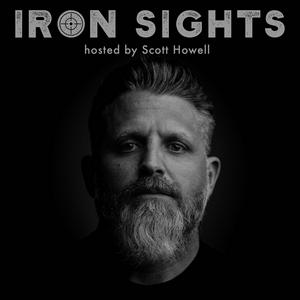
Welcome to Iron Sights podcast hosted by Scott Howell. This podcast candidly seeks to create opportunities and deliver impact by sharing the experiences and wisdom of successful entrepreneurs and thought leaders who unapologetically aim to WIN in health, fitness, business, and life. Welcome to old school meets new school, tradition meets innovation, and imperfection meets excellence. Thanks for listening and enjoy the show.
Sito web del podcastAscolta Iron Sights, STORIE DI BRAND e molti altri podcast da tutto il mondo con l’applicazione di radio.it
Scarica l'app gratuita radio.it
- Salva le radio e i podcast favoriti
- Streaming via Wi-Fi o Bluetooth
- Supporta Carplay & Android Auto
- Molte altre funzioni dell'app
Scarica l'app gratuita radio.it
- Salva le radio e i podcast favoriti
- Streaming via Wi-Fi o Bluetooth
- Supporta Carplay & Android Auto
- Molte altre funzioni dell'app
Iron Sights
Scansione il codice,
scarica l'app,
ascolta.
scarica l'app,
ascolta.
 Italia