Ascolta questo podcast gratuitamente nell'applicazione: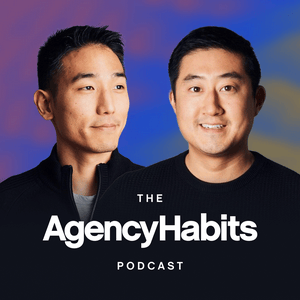 Scarica gratuitamente dall'App Store
radio.it
Sleep timer
Radio preferite
24 episodi

The Six Levers of Profitable Client Engagements | EP20
30/12/2025 | 35 min
Running an agency is an exercise in risk management. In this episode, hosts Peter Kang and Sei-Wook Kim break down the most significant threats that can jeopardize an agency's survival. They move beyond daily annoyances to focus on the high-impact risks that can truly put a business in danger. Using a simple risk matrix framework, Peter and Sei-Wook categorize and explore nine critical vulnerabilities, from founder burnout and partner conflict to client concentration and strategic misalignment. They provide actionable advice on how to identify, prepare for, and mitigate each risk, sharing hard-won insights from their own experiences and their work with Barrel Holdings agencies. Whether you're a solo founder or lead a large team, this episode is an essential guide to building a more resilient, durable business that can withstand the unexpected. Key Moments 1. Defining risk in an agency context and introducing the impact vs. likelihood matrix. 2. Founder Burnout: How the leader's wellbeing directly impacts business stability. 3. Partner Misalignment: The catastrophic potential of unresolved conflict between owners. 4. Key Person Dependency: The danger of over-relying on a single individual or team. 5. Client Side Legal and Delivery Exposure: Navigating scope disputes and liability. 6. Employee Side Legal and Compliance Exposure: Preventing lawsuits and managing HR risk. 7. Strategic Misalignment: Ensuring your agency's direction matches market realities. Real Talk Takeaways 1. The number one priority for any founder is simply staying in business; risk management is the tool to get you there. 2. Founder burnout isn't just about long hours; it's tied to financial stress, isolation, and feeling trapped without options. 3. A poorly defined operating agreement between partners is an invitation for disaster; treat it like a business prenup. 4. Key person risk isn't just about founders; it's any single point of failure in sales, delivery, or client relationships. 5. Your master service agreement is your first line of defense against catastrophic client disputes; never accept unlimited liability. 6. Proactive, documented performance management is the best insurance against wrongful termination lawsuits. 7. Strategic risk is a slow burn; constantly test new directions through small experiments before making big bets. Timestamps 00:00 – Introduction to Agency Risk and the Risk Matrix 02:30 – Founder Burnout: The Invisible Threat to Stability 06:08 – Partner Conflict and the Path to a Shutdown 10:45 – Key Person Dependency and the Value of "Key Man" Insurance 14:31 – Client Legal Exposure and the Art of the MSA 20:11 – Employee Lawsuits and the Importance of EPLI Insurance 24:02 – Business Continuity: Cyber Attacks and Natural Disasters 27:47 – Insolvency: Why Profit Doesn't Equal Cash 30:00 – Client Concentration: The Danger of a Single Anchor Client 32:30 – Strategic Misalignment: Are You Chasing a Fading Trend? Notable Quotes "Individual buyers… are in many instances buying a job. I think it might be somebody who worked in the corporate environment for many, many years… they wanted something where they had more control, autonomy over their time." — Peter Kang on the motivation of individual acquirers. "Strategic buyers… think it's a one plus one equals three situation… they're willing to pay higher multiples. And usually, this might be another agency that's bigger or maybe even a network." — Peter Kang on why strategics pay a premium. "Private equity firms… their job is to acquire, grow, and sell within a three to seven year time horizon. So their intent is to grow value and sell. And I think that's an important distinction here." — Sei-Wook Kim on the private equity model. "In a HoldCo… there's no fund, there's no investors, there's nothing that forces actions in one way or another." — Sei-Wook Kim on the flexibility of independent holding companies. Links & Resources Peter Kang on LinkedIn: https://www.linkedin.com/in/peterkang34/ Sei-Wook Kim on LinkedIn: https://www.linkedin.com/in/seiwookkim/ AgencyHabits Website: https://www.agencyhabits.com/ AgencyHabits on LinkedIn: https://www.linkedin.com/company/agencyhabits/ Barrel Holdings Website: https://www.barrel-holdings.com/ Barrel Holdings LinkedIn: https://www.linkedin.com/company/barrel-holdings/
Learning From Other Agency Owners | EP19
24/12/2025 | 21 min
Great agencies are not built in isolation. In this episode, Peter Kang and Sei-Wook Kim explore the transformative power of community and peer learning for agency founders. The hosts share their personal journey from working in a silo to actively seeking mentorship and joining dedicated communities, revealing how these connections helped them avoid blind spots, gain crucial perspective, and accelerate their growth. Peter and Sei-Wook break down specific communities that have been instrumental to their journey, including Bureau of Digital, Society of Digital Agencies (SoDA), and Collective 54. They discuss the unique value of both agency-specific and cross-industry networks, and offer practical advice on how to get the most out of being a member. Crucially, they also warn against the "cargo cult" mentality of blindly copying what seems to work for others, emphasizing the importance of understanding the underlying principles and adapting ideas to your own unique context. For any agency owner feeling stuck or curious about what's beyond their own four walls, this episode is a compelling case for seeking out your peers. Key Moments 1. The shift from isolation to seeking external perspective and mentorship. 2. The surprising generosity and transparency found in early one-on-one meetings with admired agency owners. 3. How structured communities like Bureau of Digital and SoDA provide exponential learning and relationship-building opportunities. 4. The value of cross-industry networks like Collective 54 for broader strategic insights. 5. Actionable ways to get the maximum value from any community you join. 6. Understanding and avoiding the dangerous "cargo cult" mentality in business. 7. The long-term benefit: building real, lasting relationships that provide support and perspective for years. Real Talk Takeaways 1. Early in your journey, you may think you have all the answers, but seeking outside perspective is a sign of strength, not weakness. 2. Most successful agency owners are remarkably open and willing to share their knowledge if you reach out with genuine curiosity. 3. Communities accelerate learning by exposing you to dozens of perspectives and solutions to problems you're currently facing. 4. Cross-industry professional groups can provide unexpected and highly valuable insights applicable to your agency. 5. To get the most from a community, come with a curious mindset, contribute your own experiences, and focus on building real relationships. 6. Never blindly copy a tactic or model from another agency without understanding the "why" behind its success. 7. Treat new ideas as hypotheses to test in small ways within your own context, rather than mandates to implement immediately. Timestamps 00:00 – Intro: The Power of Learning from Peers 00:28 – Our Early Days: Working in a Silo vs. Seeking Mentorship 02:48 – The Value of Joining a Community 04:00 – Spotlight: Bureau of Digital and Owner Camp 04:39 – Spotlight: Society of Digital Agencies (SoDA) 07:02 – Spotlight: Collective 54 and Cross-Industry Learning 10:23 – How to Get the Most Value from Any Community 13:19 – The Critical Lesson: Avoiding the "Cargo Cult" Mentality 17:03 – Personal Story: Falling into the Copy Trap and Learning From It 19:50 – Evolving Your Approach: Treating Peer Ideas as Hypotheses 21:03 – Final Takeaway: Growth Happens in Community Notable Quotes "Early on… the fact that they would, number one, respond. But also set aside time, in some cases, several hours to just sit down with us and talk to us about their business and be super transparent." — Sei-Wook Kim on the surprising generosity found when reaching out to other agency owners. "In a room with a lot of people who throw around ideas and experiences, it's easy to jump onto things. So I think that's something to be mindful of." — Sei-Wook Kim on the danger of latching onto surface-level tactics without understanding the context. "Oftentimes, if you're just in your own world, you're siloed and that's all you see. It's hard to have perspective." — Peter Kang on why external learning is critical for agency founders. "I remember the team would just groan like, 'Oh God, Peter went to another one of these things.' It's gonna be more slew of ideas." — Peter Kang on his early tendency to bring back too many unfiltered ideas from peer meetings before learning to adapt them. Links & Resources Peter Kang on LinkedIn: https://www.linkedin.com/in/peterkang34/ Sei-Wook Kim on LinkedIn: https://www.linkedin.com/in/seiwookkim/ AgencyHabits Website: https://www.agencyhabits.com/ AgencyHabits on LinkedIn: https://www.linkedin.com/company/agencyhabits/ Barrel Holdings Website: https://www.barrel-holdings.com/ Barrel Holdings LinkedIn: https://www.linkedin.com/company/barrel-holdings/ Bureau of Digital: https://bureauofdigital.com/ Society of Digital Agencies (SoDA): https://sodaspeaks.com/ Collective 54: https://collective54.com/
Why Agencies Rely on Referrals But Few Treat It as a System | EP18
17/12/2025 | 17 min
Most agencies say they rely on referrals, but few treat them as a system. In this episode, Peter Kang and Sei-Wook Kim dismantle the "hope-based" approach to referrals and lay out a strategic framework for building a consistent pipeline. Drawing from the book The Referral Code, they redefine referrals as a transfer of goodwill and share actionable tactics for intentional referral generation. Peter and Sei-Wook cover how to identify the right people to ask, the critical importance of timing your ask within a "state of appreciation," and how to craft effective, open-ended questions. They also discuss managing referral relationships long-term, staying top of mind, and when a transactional referral partnership might make sense. For any agency owner ready to transform sporadic referrals into a predictable engine for growth, this episode provides the blueprint. Key Moments 1. Redefining Referrals: Moving from hope-based belief to an intentional system. 2. The Golden Rule: Never ask for a referral outside a state of appreciation. 3. Avoiding Common Mistakes: Vague asks, poor timing, and automated blunders. 4. Building Your Referral List: Identifying former clients, peers, and affinity networks. 5. The Art of the Ask: Using open-ended phrasing and framing it as helping others. 6. Cultivating a Shortlist: Focusing on quality relationships over volume outreach. 7. Managing the Engine: Following up, showing appreciation, and staying top of mind. Real Talk Takeaways 1. A referral is a transfer of goodwill, not a favor. It's built on the positive emotions someone felt working with you. 2. Only 5% of people are natural referrers. The other 95% need to be reminded, which means you must ask—and keep asking. 3. Timing is everything. The worst time to ask is when a client is unhappy; the best is when they are actively reflecting on your positive impact. 4. Be specific. Instead of "anyone who needs marketing," define your ideal client profile and the specific situations they face. 5. Your network is a multiplier. A first-degree connection may not be the direct referrer but can connect you to someone who is. 6. Referral management is relationship management. Always keep your referrer in the loop and show genuine appreciation. 7. For super-connectors, a formal, incentivized partnership might be appropriate, blurring the line between emotional referral and strategic partnership. Timestamps 00:00 – Introduction: The Problem with Hope-Based Referrals 01:07 – Defining a Referral as a Transfer of Goodwill 04:16 – Wrong Ways to Ask: Vague Requests and Bad Timing 06:57 – How to Build Your Intentional Referral Engine 09:31 – Who to Target for Referral Seeking 11:24 – The Right Way to Ask: Phrasing and Mindset 13:07 – Managing the Referral Process and Staying Top of Mind 15:17 – When Referrals Become Transactional Partnerships Notable Quotes "We hear over and over again that agencies rely solely on referrals... but they don't treat referrals as a system. It's like a hope-based belief." — Peter Kang on the common agency referral trap. "Only 5% of people are natural referrers... that leaves 95% of us who need the reminding to take that action." — Sei-Wook Kim on the necessity of consistent asking. "A referral is essentially a transfer of goodwill. It's people sharing the feeling that they had working with you with other people in their network." — Peter Kang on the emotional core of referrals. "The rule number one is you have to ask... and then they say rule number two is keep asking. The consistency over time will compound into meaningful impact." — Sei-Wook Kim on the foundational principles from The Referral Code. Links & Resources Peter Kang on LinkedIn: https://www.linkedin.com/in/peterkang34/ Sei-Wook Kim on LinkedIn: https://www.linkedin.com/in/seiwookkim/ AgencyHabits Website: https://www.agencyhabits.com/ AgencyHabits on LinkedIn: https://www.linkedin.com/company/agencyhabits/ The Referral Code by Larry Pinci and Phil Glosserman The Shortlist by David Ackert
How Agencies Should Think About and Manage Risk | EP 17
09/12/2025 | 29 min
In this episode, hosts Peter Kang and Sei-Wook Kim break down the six fundamental levers that drive profitability across all client engagements, whether you run fixed-fee projects, retainers, or long-term service programs. Drawing from real challenges within their own portfolio at Barrel Holdings, Peter and Sei-Wook provide a practical framework for diagnosing and fixing margin compression. They start by defining gross margin and then explore each lever in detail: from pricing and scoping to staffing, engagement design, scope management, reusable IP, and the role of automation and AI. The hosts also fold in core principles around utilization, forecasting, and delivery discipline, showing how these habits reinforce each other to protect and grow your bottom line. For any agency owner feeling the squeeze on margins or looking to systemize profitability, this episode is an actionable guide to building a more efficient and financially resilient business. Key Moments 1. Defining Gross Margin: The starting point for understanding your agency's financial health. 2. Lever 1: Pricing & Scoping – How to align your fee with the cost of delivery from the very beginning. 3. Lever 2: Staffing & Utilization – Balancing senior and junior talent and using contractors to flex capacity. 4. Lever 3: Engagement Design & Approach – The cost of poor process and the power of a clear project plan. 5. Lever 4: Scope Management & Change Orders – Turning scope creep from a profit killer into a managed process. 6. Lever 5: Reusable Components & IP – How specialization and systematization create leverage and higher margins. 7. Lever 6: Automations & AI – Using technology to reduce administrative and execution costs across the delivery lifecycle. Real Talk Takeaways 1. Profitability often leaks at the very start through misaligned pricing and vague scopes. Get this right first. 2. High gross margin on a single project means little if your overall team utilization is low. You must look at the whole picture. 3. A clear, even if imperfect, project plan is far better than a perfect plan that never gets finished or has an open-ended timeline. 4. Managing scope is an art that involves trade-offs, prioritization, and clear documentation—not just issuing change orders. 5. Building a library of reusable components and IP is an investment that pays off by allowing you to deliver higher-quality work faster and with less expensive resources. 6. Automation and AI are no longer optional; they are critical tools for cutting administrative overhead and accelerating execution. 7. Profitability is a team sport. It requires shared accountability through weekly check-ins, forecasting, and structured debriefs. Timestamps 00:00 – Introduction: Why Profitability is Top of Mind 01:00 – The Core Concept: What is Gross Margin? 02:21 – The Three Main Sources of Margin Leakage 02:55 – Introducing the Six Profitability Levers 03:27 – Lever 1: The Critical Alignment of Pricing and Scoping 06:36 – Lever 2: Balancing Staffing Mix and Tracking Utilization 10:36 – Lever 3: Designing Engagements for Efficiency, Not Waste 13:54 – The Importance of Starting with the End in Mind 15:23 – Lever 4: Managing Scope Creep and Change Control 17:48 – Applying Scope Principles to Retainer Engagements 19:57 – Lever 5: Creating Leverage with Reusable Components and IP 22:53 – Lever 6: Implementing Automations and AI 26:01 – Four Habits to Systemize Profitability 29:12 – Closing Thoughts: Profitability is a Team Effort Notable Quotes "Gross margin is the revenue that you receive as a company, minus the cost of delivery... that metric is an indicator of how efficiently you're doing the work." — Sei-Wook Kim on the definition of gross margin. "If you have way too many team members for the amount of work that you have... idle hours where someone has zero billability really crushes your margin really quickly." — Sei-Wook Kim on the impact of poor utilization. "Vague scopes are one of the biggest liabilities when it comes to profitability, because you can get taken for a ride as an agency if you're super vague about what you're actually delivering." — Peter Kang on the danger of unclear scopes. "Building a library of reusable components frees up senior folks to do higher-value work. This is a huge part of why we beat the drum on specialization." — Peter Kang on how IP creates leverage and higher margins. Links & Resources Peter Kang on LinkedIn: https://www.linkedin.com/in/peterkang34/ Sei-Wook on LinkedIn: https://www.linkedin.com/in/seiwookkim/ AgencyHabits Website: https://www.agencyhabits.com/ AgencyHabits on LinkedIn: https://www.linkedin.com/company/agencyhabits/ Barrel Holdings Website: https://www.barrel-holdings.com/ Barrel Holdings LinkedIn: https://www.linkedin.com/company/barrel-holdings/
Scaling Your Agency Beyond $2M | EP 16
03/12/2025 | 30 min
In this episode, Peter Kang and Sei-Wook Kim dissect why agencies hit this wall and what you can do to break through. They explain how founder-centric systems that work at a smaller scale become the primary constraint to growth, leading to breakdowns in client delivery, team management, and financial visibility. The hosts share actionable solutions, from improving onboarding and implementing debrief processes to strategically hiring for your weaknesses and deepening financial rigor. They also introduce the Agency Systems Playbook, a framework of five core systems that drive a scalable agency. Agency growth often stalls at the $1-2 million revenue mark, and it's usually due to founder bottlenecks. Whether you're feeling stretched thin at this pivotal growth stage or planning ahead, this episode provides a clear roadmap to build the infrastructure needed for sustainable scale. Key Moments 1. Why the $1-2 million revenue range is a critical breaking point for founder-led agencies. 2. Identifying founder bottlenecks: The hero complex and its impact on growth. 3. The operational breakdowns: Uneven delivery, client churn, and financial blind spots. 4. Solution 1: Systematizing client and team onboarding to transfer context effectively. 5. Solution 2: Implementing debriefs and feedback loops to build an internal improvement engine. 6. Solution 3: Defining your zone of genius and hiring to complement it. 7. Introducing the Agency Systems Playbook: The five systems that drive a scalable agency. Real Talk Takeaways 1. Growth plateaus at $1-2M are often systemic, not a failure of effort. The founder-centric model itself becomes the ceiling. 2. Communication breaks down as you scale. What was implicit between founders must become explicit through processes. 3. Investing in non-billable roles like ops or people management may temporarily shrink margins, but it's essential for long-term scale. 4. A clear org chart isn't bureaucracy; it's a blueprint for delegation and accountability. 5. Financial clarity becomes non-negotiable. You need systems to track profitability, utilization, and cash flow. 6. External perspectives from coaches or implementers can provide the structure and pattern recognition needed to navigate growth challenges. 7. Scaling is a function of robust systems. The Agency Systems Playbook provides a framework to audit and build yours. Timestamps 00:00 – Welcome to Agency Habits 00:08 – The Challenge of Scaling Past $2M 01:13 – Understanding the Founder Bottleneck 03:46 – How Scaling Impacts Team and Quality 05:02 – Why Financial Systems Become Critical 06:22 – Fixing Onboarding and Communication 09:31 – Using Debriefs to Drive Improvement 10:39 – Hiring for Your Weaknesses 12:43 – Building Your Org and Financial Rigor 14:52 – Embracing Investment and External Help 16:06 – Introducing the Agency Systems Playbook 17:24 – Breaking Down the Five Core Systems 20:53 – Wrap Up and Where to Find Resources Notable Quotes "At that one to $2 million size, you very much built an agency that is founder-centric. And so, the big limitation to growth in many ways is a founder bottleneck." — Peter Kang on identifying the core growth constraint. "As you scale, communication breaks down. Onboarding is actually a really important aspect of making sure communication is smooth." — Peter Kang on the foundational role of process. "As you kind of scale up, if the founder's not gonna be in every client engagement, then it absolutely makes sense for there to be a process, a repeatable process where the team can have the discussion, document, and then turn that into a repeatable SOP." — Sei-Wook Kim on decentralizing improvement. "You gotta look beyond the temporary costs. It may seem like a cost in the short term, but it's really an investment for growth." — Sei-Wook Kim on the mindset shift for hiring key roles. Links & Resources Peter Kang on LinkedIn: https://www.linkedin.com/in/peterkang34/ Sei-Wook on LinkedIn: https://www.linkedin.com/in/seiwookkim/ AgencyHabits Website: https://www.agencyhabits.com/ AgencyHabits on LinkedIn: https://www.linkedin.com/company/agencyhabits/ Barrel Holdings Website: https://www.barrel-holdings.com/ Barrel Holdings LinkedIn: https://www.linkedin.com/company/barrel-holdings/ Book Mentioned: Simple Numbers, Straight Talk, Big Profits by Greg Crabtree
Altri podcast di Economia
 The Bull - Il tuo podcast di finanza personaleEconomia, Investimenti
 ChapeauEconomia
 STORIE DI BRANDEconomia, Storia, Imprenditorialità
 BRANDY | Storie di Brand Daily ShowEconomia, Notizie, News - Affari, Marketing
 GURULANDIAEconomia, Imprenditorialità
 Marco Casario - Finanza Personale, Investimenti ed EconomiaEconomia, Scolastico, Imprenditorialità, Investimenti, Automiglioramento
 Buffett: il capitale pazienteEconomia, Carriere
 Black Box - La scatola nera della finanzaEconomia, Notizie, Tecnologia, News - Affari
 Million$ podcastEconomia, Notizie, Cultura e società
 Marco Montemagno - Il PodcastEconomia
Podcast di tendenza in Economia
 SquattrinatiEconomia, Scolastico, Gestione
 Office of Cards di Davide CervellinEconomia, Scolastico, Carriere, Automiglioramento
 Affari Miei PodcastEconomia, Investimenti
 Dare to Lead with Brené BrownEconomia
 FLOP | Storie di BrandEconomia, Storia, Marketing
 The Game with Alex HormoziEconomia, Scolastico, Imprenditorialità, Come si fa
 Colazione a Wall Street: rilassati, parliamo di soldi!Economia
 Reuters Econ WorldEconomia, Notizie, News - Affari
 Vendere ValoreEconomia, Gestione
 Masters in BusinessEconomia, Investimenti
 Obiettivo Leader - La leadership fatta sempliceEconomia, Gestione
 Money Stuff: The PodcastEconomia, Notizie, Cultura e società
 Il TruffoneEconomia, Scolastico, Scienze, Investimenti, Scienze sociali
 RadioBorsa - La tua guida controcorrente per investire bene nella Borsa e nella VitaEconomia, Investimenti
 100 CEOs with Steven BartlettEconomia, Scolastico, Imprenditorialità
 The Knowledge ProjectEconomia, Scolastico, Cultura e società, Tecnologia, Imprenditorialità, Automiglioramento
 MingaMalEconomia, Imprenditorialità, Gestione
 Prof G MarketsEconomia, Investimenti
 In Good Company with Nicolai TangenEconomia
 The Prof G Pod with Scott GallowayEconomia, Imprenditorialità
 Masters of ScaleEconomia, Imprenditorialità, Gestione
 HBR IdeaCastEconomia, Imprenditorialità, Gestione, Marketing
 Il Podcast di Starting FinanceEconomia, Imprenditorialità
 Il Podcast immobiliareEconomia, Investimenti
 Intelligenza Artificiale Spiegata SempliceEconomia, Tecnologia, Imprenditorialità
Su The AgencyHabits Podcast
Go behind the scenes of real agency businesses. The AgencyHabits Podcast shares ideas, lessons, and experiments from across Barrel Holdings - home to a growing portfolio of specialized agencies and over two decades of insights. We share them all here, hoping you'll test, tweak, and find what works best for your agency.
Sito web del podcastAscolta The AgencyHabits Podcast, The Bull - Il tuo podcast di finanza personale e molti altri podcast da tutto il mondo con l’applicazione di radio.it
Scarica l'app gratuita radio.it
- Salva le radio e i podcast favoriti
- Streaming via Wi-Fi o Bluetooth
- Supporta Carplay & Android Auto
- Molte altre funzioni dell'app
Scarica l'app gratuita radio.it
- Salva le radio e i podcast favoriti
- Streaming via Wi-Fi o Bluetooth
- Supporta Carplay & Android Auto
- Molte altre funzioni dell'app

The AgencyHabits Podcast
Scansione il codice,
scarica l'app,
ascolta.
scarica l'app,
ascolta.
 Italia