PodcastCultura e societàThe Steve Harvey Morning Show

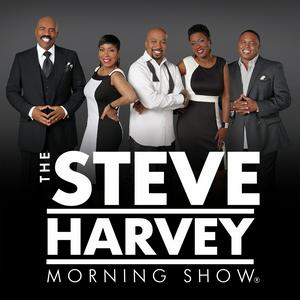
The Steve Harvey Morning Show

iHeartPodcasts
The Steve Harvey Morning Show
Ultimo episodio

4433 episodi

  • The Steve Harvey Morning Show

    Follow Your Passion: Travel nurse building a lucrative CPR business and empowers community health through education.

    09/05/2026 | 28 min
    Listen and subscribe to Money Making Conversations on iHeartRadio, Apple Podcasts, Spotify, www.moneymakingconversations.com/subscribe/ or wherever you listen to podcasts. New Money Making Conversations episodes drop daily. I want to alert you, so you don’t miss out on expert analysis and insider perspectives from my guests who provide tips that can help you uplift the community, improve your financial planning, motivation, or advice on how to be a successful entrepreneur. Keep winning!
    Two-time Emmy and three-time NAACP Image Award-winning television Executive Producer Rushion McDonald interviewed Alaysia Miller.
    A certified nurse practitioner, travel nurse practitioner, and founder of NP Luxe CPR, a Florida-based CPR training company.
    Alaysia discusses her journey from nurse to travel nurse practitioner, how frontline burnout pushed her into entrepreneurship, and why she launched a CPR education business. She explains the financial and lifestyle advantages of travel nursing, the importance of mentorship, the realities of entrepreneurship, and the major CPR survival gap in Black and underserved communities.
    Rushion and Alaysia also dive into leadership, negotiating contracts, building a lucrative CPR business, and empowering community health through education.
    🎯 Purpose of the Interview
    The interview aims to:
    1. Showcase a path to financial freedom through nursing entrepreneurship
    By highlighting travel nurse contracting and CPR instruction as viable wealth‑building vehicles.
    2. Highlight the importance of CPR education in underserved communities
    Especially addressing the survival gap in Black communities due to low CPR literacy.
    3. Encourage aspiring entrepreneurs—especially women and healthcare workers
    By sharing Alaysia’s experiences with mentorship, confidence building, and launching a service-based business.
    4. Educate listeners on the realities of entrepreneurship
    Including time demands, imposter syndrome, and the need for consistency and proper pricing.
    🔑 Key Takeaways 1. Travel Nurse Practitioners Have High Earning Potential
    As a staff NP she would earn $100k per year, but as a travel NP she earned $100k in six months while gaining time freedom and flexibility.
    Travel NP work is paid via 1099, opening the door to tax write-offs, investment flexibility, and entrepreneurial benefits.
    2. Burnout Was the Catalyst for Change
    Working six days a week during COVID and the pressure of commercialized urgent-care systems led to burnout, weight gain, and loss of self. This pushed Alaysia toward traveling, where she worked half the time for double the pay.
    3. CPR Survival Rates Are Lower in Black & Underserved Communities
    Alaysia explains that lack of exposure, knowledge, and basic emergency training leads to significantly lower cardiac survival rates in communities of color.
    She addresses this through her nonprofit We Push Health, which brings CPR and medical education to rural and urban communities.
    4. You Don’t Need to Reinvent the Wheel—Mentorship Is Key
    She learned about mentorship in 2024 and emphasizes that mentors help you avoid costly mistakes and speed up your path.
    “Find someone who is the ideal image of what you want to be and mimic what they do.”.
    5. CPR Businesses Are Lucrative and Accessible
    Almost every industry requires CPR certification:
    Healthcare
    Schools & daycares
    Gyms
    Police & fire departments
    Hotels
    Tattoo studios
    These make CPR instruction a strong side hustle or full-time business, especially for healthcare professionals who already understand the material.
    6. Entrepreneurship Requires Real Work
    Alaysia breaks down the less glamorous side of building a business:
    Imposter syndrome
    The need for consistent marketing
    Pricing confidently
    Long hours initially
    Learning branding, systems, and follow-up
    “You only eat what you kill.”.
    7. Communication and Adaptability Are Leadership Superpowers
    Travel nursing requires walking into unfamiliar environments and leading without overpowering. She emphasizes:
    Reading the room
    Adjusting communication styles
    Delegating the right way
    Being assertive but team-oriented
    “Adaptability is number one.”.
    8. Negotiation Skills Changed Her Entire Career
    She learned to stop undervaluing herself and start negotiating confidently:
    First contract: underpriced
    Second contract: raised rates dramatically
    Uses supply‑and‑demand to justify price increases
    “You miss 100% of the shots you never take.”.]
    🗣️ Notable Quotes On Entrepreneurship
    “If you know how to save a life, don’t you think you know how to run a business?”.
    “You only eat what you kill.”.
    On Burnout
    “I lost myself giving it to a job.”.
    On Community Health
    “They can’t know what they don’t know.”
    “Survival rates for cardiac arrest are significantly lower in communities of color because they lack access to basic emergency skills.”.
    On Mentorship
    “You don’t have to reinvent the wheel to be successful.”
    “Find someone who is the ideal image of what you want to be.”.
    On Negotiation
    “What’s the worst they can say? No.”
    #SHMS #STRAW #BEST
    Support the show: https://www.steveharveyfm.com/
    See omnystudio.com/listener for privacy information.
  • The Steve Harvey Morning Show

    Overcoming the Odds: He highlights how sustainable success comes from mastery of craft, relationship-building, and treating creativity as a business.

    09/05/2026 | 29 min
    Listen and subscribe to Money Making Conversations on iHeartRadio, Apple Podcasts, Spotify, www.moneymakingconversations.com/subscribe/ or wherever you listen to podcasts. New Money Making Conversations episodes drop daily. I want to alert you, so you don’t miss out on expert analysis and insider perspectives from my guests who provide tips that can help you uplift the community, improve your financial planning, motivation, or advice on how to be a successful entrepreneur. Keep winning!
    Two-time Emmy and Three-time NAACP Image Award-winning, television Executive Producer Rushion McDonald interviewed Kurt Farquhar.
    Television & Film Composer, Founder of Fall Crop Productions and True Music Pro
    Notable Credits: The King of Queens, Girlfriends, The Parkers, Being Mary Jane, The Proud Family, The Neighborhood, Black Lightning
    Awards: 10 BMI Awards
    Tenure: 38+ years in television
    Purpose of the Interview
    The purpose of this interview is to educate and inspire creatives, entrepreneurs, and professionals about longevity, adaptability, and wealth-building behind the scenes. Kurt Farquhar’s journey highlights how sustainable success comes from mastery of craft, relationship-building, and treating creativity as a business—not chasing visibility or fame.
    Rushion McDonald uses Kurt’s career as a blueprint for:
    Building mailbox money through residuals
    Staying relevant across decades of industry change
    Monetizing intellectual property
    Leveraging relationships to sustain opportunity
    Core Themes Discussed
    Longevity vs. “getting on”
    Behind-the-scenes success
    Residual income (“mailbox money”)
    Adaptability in changing industries
    Creative originality
    Relationship capital
    Diversifying income through ownership
    Treating art like a business
    Key Takeaways 1. Staying In Is Harder Than Getting In
    While many focus on breaking into the industry, Kurt emphasizes that lasting success requires constant reinvention.
    “The continuing it for the 30-plus years has been way harder than the getting in in the first.”
    Insight: Longevity requires discipline, humility, and evolution.
    2. Behind-the-Scenes Roles Can Be More Sustainable
    Kurt chose composing over performing, allowing him to age into his career rather than age out of it.
    “In television and film… all I’ve got to say is John Williams is in his 90s and still composing.”
    Insight: Choose lanes that allow long-term relevance and recurring income.
    3. Residual Income Is Real Wealth
    Rushion and Kurt discuss “mailbox money”—recurring payments from past work.
    “If you just had the mailbox money for King of Queens, you’d be fine.”
    Insight: True financial freedom comes from owning work that keeps paying.
    4. Adaptability Is Non‑Negotiable
    Kurt has survived massive industry shifts—from analog tape to digital production—by embracing change.
    “Sustain that good idea, change it, polish it up, and mold it for the changing times.”
    Insight: Talent without adaptability becomes obsolete.
    5. Originality Comes From Listening, Not Forcing a Style
    Kurt avoids creative stagnation by serving the story, not his ego.
    “I don’t come in every day trying to force the singular style I’ve done for 38 years.”
    Insight: Longevity depends on collaboration and humility.
    6. Relationships Are Career Currency
    Kurt credits long-term success to consistently showing up for people—before they’re powerful.
    “If you only call someone once you read they’ve got something coming up, it’s already too late.”
    Insight: Relationships built without agenda produce lasting opportunity.
    7. Saying “Yes” Creates Opportunity
    Kurt embraces what he calls the power of yes.
    “I figure I can say yes more than you and end up making more and doing better.”
    Insight: Opportunity favors those who remain open, prepared, and professional.
    8. Ownership Multiplies Creativity Into Business
    Kurt built True Music Pro, a licensing library used across major networks and streaming platforms.
    “I realized companies were licensing more of my music than I was… so I built my own library.”
    Insight: Ownership turns talent into scalable income.
    Notable Quotes
    “The journey to stay in is harder than the journey to get in.”
    “Treat it like a business and it might treat you in kind.”
    “I do my job, I do it the best I can, and I move on to the next one.”
    “Character is character. Relationships matter.”
    “That success doesn’t happen by accident. It happens with care.”
    Overall Impact of the Interview
    This interview serves as a masterclass on creative longevity and wealth-building without celebrity dependency. Kurt Farquhar’s story reframes success as:
    Consistent excellence
    Relationship stewardship
    Business ownership
    Adaptability across generations
    It is especially powerful for:
    Creatives seeking sustainable careers
    Entrepreneurs building IP-based businesses
    Professionals navigating long-term relevance
    Anyone pursuing “quiet wealth” over public fame
    #SHMS #STRAW #BEST
    Support the show: https://www.steveharveyfm.com/
    See omnystudio.com/listener for privacy information.
  • The Steve Harvey Morning Show

    Business Tips: She educates entrepreneurs and business leaders on how to unlock massive, overlooked market opportunities.

    08/05/2026 | 29 min
    Listen and subscribe to Money Making Conversations on iHeartRadio, Apple Podcasts, Spotify, www.moneymakingconversations.com/subscribe/ or wherever you listen to podcasts. New Money Making Conversations episodes drop daily. I want to alert you, so you don’t miss out on expert analysis and insider perspectives from my guests who provide tips that can help you uplift the community, improve your financial planning, motivation, or advice on how to be a successful entrepreneur. Keep winning!
    Two-time Emmy and three-time NAACP Image Award-winning television Executive Producer Rushion McDonald interviewed Jourdan Saunders.
    Founder & CEO of The Resource Key
    Focus: Connecting demand to decision-making in the disability, aging, and healthcare markets
    Purpose of the Interview
    The purpose of this conversation is to educate entrepreneurs and business leaders on how to unlock massive, overlooked market opportunities—specifically within the $23 trillion disability, aging, and healthcare sectors—by improving how companies connect end users and decision-makers (buyers). [JOURDAN SAUNDERS | Txt]
    Jourdan’s mission is to help organizations turn real demand into approved decisions, ensuring critical products and services stay in business and reach the people who need them.
    Core Themes
    Hidden market opportunities in aging and disability sectors
    Buyer vs. user disconnect
    Strategic decision-making in complex markets
    Accessibility and universal design
    Relationship-building and influence
    Long-term product sustainability
    Key Takeaways 1. The Disability & Aging Market Is Massively Undervalued
    Jourdan highlights that this space represents a $23 trillion market, yet many businesses fail to prioritize it because they misunderstand its scale and complexity. [JOURDAN SAUNDERS | Txt]
    Insight: The biggest opportunities often exist where perception and reality don’t match.
    2. The Buyer and User Are Often Not the Same
    Unlike traditional consumer markets, many products (especially in healthcare and disability) must satisfy two audiences:
    The user (patient, senior, student)
    The buyer (insurance company, family member, institution)
    “You have to speak to two different people… the user sometimes is not the buyer.” [JOURDAN SAUNDERS | Txt]
    Insight: Marketing, sales, and product design must address both sides of the decision.
    3. Businesses Fail Because They Don’t Understand Real Demand
    Jourdan emphasizes that companies often jump to marketing before fully understanding the actual barriers and needs of their audience.
    “Before you even advertise… do you even know what it is that you’re offering?” [JOURDAN SAUNDERS | Txt]
    Insight: Deep customer understanding drives conversion—not just visibility.
    4. Accessibility Exists Across Every Industry
    Disability is not a niche—it intersects with every market and life stage, especially as populations age.
    “When you take a step back and really look at how disability shows up in everyday life… there’s opportunity across any industry.” [JOURDAN SAUNDERS | Txt]
    Insight: Inclusive design expands reach and revenue simultaneously.
    5. Relationships Drive Decision-Making
    Jourdan stresses the importance of building relationships with decision-makers early.
    “You need to be able to get to the people making decisions… to get things done.” [JOURDAN SAUNDERS | Txt]
    Insight: Access is as important as strategy in business growth.
    6. Longevity and Lifecycle Thinking Matter
    Products in this space are often used for years—even lifetimes—making sustainability critical.
    Insight: Businesses must think beyond transactions and design for long-term dependency and trust.
    7. The Future Is Converging Markets
    By 2034, seniors will outnumber children in the U.S., accelerating the overlap between aging, healthcare, and disability markets. [JOURDAN SAUNDERS | Txt]
    Insight: Companies that prepare now will dominate future demand.
    Notable Quotes
    “There is something more behind this.” [JOURDAN SAUNDERS | Txt]
    “You have to speak to two different people… the user and the buyer.” [JOURDAN SAUNDERS | Txt]
    “Before you even advertise… do you know what you’re offering?” [JOURDAN SAUNDERS | Txt]
    “There’s opportunity across any industry.” [JOURDAN SAUNDERS | Txt]
    “I want it to already be there… so people aren’t searching after the fact.” [JOURDAN SAUNDERS | Txt]
    Overall Impact of the Interview
    This interview reframes accessibility, aging, and healthcare from being “specialty markets” to essential economic drivers. Jourdan Saunders positions her work as a bridge—ensuring innovative products survive, decisions get approved, and people receive the support they need before it’s too late.
    It serves as a blueprint for:
    Entrepreneurs looking for untapped markets
    Healthcare and tech innovators
    Investors seeking long-term growth sectors
    Companies struggling with stalled deals and unclear demand
    #SHMS #BEST #STRAW
    Support the show: https://www.steveharveyfm.com/
    See omnystudio.com/listener for privacy information.

  • The Steve Harvey Morning Show

    Overcoming the Odds: Friends and strangers told visionary entrepreneurship Universoul Circus would bankrupt him.

    08/05/2026 | 28 min
    Listen and subscribe to Money Making Conversations on iHeartRadio, Apple Podcasts, Spotify, www.moneymakingconversations.com/subscribe/ or wherever you listen to podcasts. New Money Making Conversations episodes drop daily. I want to alert you, so you don’t miss out on expert analysis and insider perspectives from my guests who provide tips that can help you uplift the community, improve your financial planning, motivation, or advice on how to be a successful entrepreneur. Keep winning!
    Two-time Emmy and Three-time NAACP Image Award-winning, television Executive Producer Rushion McDonald interviewed Cedric Walker.
    Interview Purpose
    The purpose of this interview is to highlight visionary entrepreneurship, cultural ownership, and perseverance, using Cedric Walker’s founding of Universoul Circus as a case study in building a purpose‑driven business that uplifts community while achieving long‑term success.
    The conversation emphasizes how research, resilience, cultural authenticity, and belief in a vision can overcome skepticism and systemic barriers. It also positions Universoul Circus as more than entertainment—it is a multigenerational cultural institution rooted in Black excellence, inclusion, and family unity.
    Major Themes & Key Takeaways 1. Vision Comes Before Validation
    Cedric Walker shares that the vision for Universoul Circus came in the early 1990s, long before there was widespread belief that a Black‑owned circus centered on performers of color could succeed. Despite strong skepticism from both Black and white investors, Walker trusted the research, the cultural need, and his instinct.
    Key takeaway: Vision must lead—even when validation comes much later.
    2. Research Turns Ideas Into Reality
    Walker did not rely on inspiration alone. He immersed himself in research, studying Black entertainment history, circus traditions, and global performance art. This foundation allowed him to confidently build a unique, sustainable model rather than copying existing formats.
    Key takeaway: Preparation and research are critical when challenging industry norms.
    3. Cultural Authenticity Is a Competitive Advantage
    Universoul Circus was created to be authentically Black, not as a niche product, but as a universal experience rooted in joy, music, athleticism, and storytelling. Walker emphasizes that authenticity—not adaptation—is what attracts diverse audiences.
    Key takeaway: When you are fully yourself, your work transcends culture and geography.
    4. Family‑Centered Entertainment Fills a Real Need
    A defining goal of Universoul Circus is to create an experience where multiple generations can sit together and all feel seen, engaged, and celebrated. Walker intentionally designed the show so grandparents, parents, and children could enjoy the same experience simultaneously.
    Key takeaway: Businesses that bring families together create lasting emotional value.
    5. Evolution Without Losing Identity
    Over time, Universoul Circus evolved—from including animals to becoming a modern, high‑energy, animal‑free production—adapting to changing laws, audience preferences, and cultural shifts. However, Walker notes that the soul of the circus never changed.
    Key takeaway: Successful brands evolve operationally without abandoning their purpose.
    6. Global Talent, Long‑Term Investment
    Walker details how Universoul Circus sources talent from around the world, including Ethiopia, Cuba, China, and the Caribbean. Performers often undergo years of training and development before appearing in the show, reinforcing Universoul’s commitment to excellence and safety.
    Key takeaway: Excellence requires patience, investment, and a long‑term mindset.
    7. Representation Changes Perception
    Universoul Circus intentionally showcases elite Black performers in spaces where they were historically unseen or undervalued. Walker explains that representation is not symbolic—it reshapes belief and possibility for both audiences and performers.
    Key takeaway: Representation is not aesthetic; it is transformative.
    8. Perseverance Creates Legacy
    Celebrating over 30 years of operation, Universoul Circus stands as proof that staying committed to purpose through adversity leads to longevity. Walker sees the circus as a living legacy and a foundation for future cultural innovation.
    Key takeaway: Longevity is built by staying the course when others doubt the destination.
    Notable Quotes
    “Vision comes to you like that—you have to trust it.”
    “Nobody believed it would work, but I felt it in my gut and in my research.”
    “Our goal was to stay authentically Black—that’s what transcends culture.”
    “We wanted something where a grandmother, a father, and a child could all enjoy the same show.”
    “Nothing you see is by chance. Everything has meaning.”
    “We invested years into these performers before they ever hit our stage.”
    “This is more than a circus—it’s a family reunion under the big top.”
    Overall Message
    Cedric Walker’s interview is a masterclass in cultural entrepreneurship. It demonstrates how creativity, courage, and conviction can transform an idea into an enduring institution. His journey with Universoul Circus reinforces that purpose, preparation, and persistence are the true drivers of success—especially when building something that challenges expectations.
    The conversation ultimately affirms that when a business is rooted in authenticity and community, it can achieve both economic sustainability and cultural impact.
    #SHMS #BEST #STRAW
    Support the show: https://www.steveharveyfm.com/
    See omnystudio.com/listener for privacy information.

  • The Steve Harvey Morning Show

    Brand Building: Discusses how the Morehouse Innovation and Entrepreneurship Center works to scale Black- and Brown-owned businesses.

    08/05/2026 | 24 min
    Listen and subscribe to Money Making Conversations on iHeartRadio, Apple Podcasts, Spotify, www.moneymakingconversations.com/subscribe/ or wherever you listen to podcasts. New Money Making Conversations episodes drop daily. I want to alert you, so you don’t miss out on expert analysis and insider perspectives from my guests who provide tips that can help you uplift the community, improve your financial planning, motivation, or advice on how to be a successful entrepreneur. Keep winning!
    Two-time Emmy and Three-time NAACP Image Award-winning, television Executive Producer Rushion McDonald interviewed Dr. Tiffany Bussey
    Title: Director, Morehouse Innovation and Entrepreneurship Center (MIEC)
    Dr. Tiffany Bussey discusses how the Morehouse Innovation and Entrepreneurship Center works to scale Black- and Brown-owned businesses, close the racial wealth gap, and intentionally connect entrepreneurs and workers to capital, contracts, and emerging industries, particularly in sustainability.
    Purpose of the Interview
    The interview serves to:
    Educate listeners about the systemic barriers facing Black entrepreneurs beyond access to capital.
    Highlight practical solutions—programs, partnerships, and ecosystems—that create real economic outcomes.
    Shift mindsets around entrepreneurship, risk, and opportunity, especially in underserved communities.
    Expose listeners to emerging, high-growth industries (e.g., sustainability, EVs, renewable energy) instead of oversaturated traditional businesses.
    Promote community-based economic ecosystems, particularly the collaboration between Morehouse, Goodwill, and corporate partners.
    Key Themes & Takeaways 1. Entrepreneurship as a Tool for Closing the Wealth Gap
    Dr. Bussey positions entrepreneurship and business ownership as one of the most effective ways to generate long-term wealth in Black communities.
    The Center has supported 400+ scalable, mid-sized businesses, resulting in: 850+ jobs created
    $34M+ in new capital accessed
    $82M+ in new revenue generated

    Key insight: The problem isn’t a lack of capable Black businesses—it’s visibility, access, and opportunity.
    2. “Access to Opportunity” Matters as Much as Capital
    While access to capital dominates the conversation, Dr. Bussey emphasizes access to contracts and decision-makers.
    MIEC programs are designed with opportunity partners (large corporations, general contractors, primes) so participants gain: Exposure to real contracts
    Understanding of supply chains
    Direct relationships with decision-makers

    Takeaway: Capital without revenue and customers won’t sustain a business.
    3. The Three C’s of Business Growth
    Dr. Bussey outlines MIEC’s core framework:
    Capital – Funding and financial resources
    Connections – Two-way, relationship-based networks
    Contracts – Revenue-generating opportunities
    She stresses that connections only matter if relationships are mutual—it’s not enough to “know someone” unless they also understand your value.
    4. Breaking Stereotypes About Black-Owned Businesses
    Dr. Bussey addresses harmful narratives around skill, readiness, and qualifications.
    She highlights intentional strategies to: Prepare businesses before opportunities arise
    Align training and recruitment with future industries
    Counter biases through performance, scale, and visibility

    Key idea: Preparation plus access dismantles bias.
    5. Sustainability = One of the Largest Economic Opportunities
    Dr. Bussey reframes sustainability as an economic opportunity, not just an environmental issue:
    Electric Vehicles: ~$163B industry
    Green Construction: ~$324B industry
    Renewable Energy: ~$952B industry
    Sustainable Agriculture: ~$20B industry
    She urges listeners to stop defaulting to oversaturated businesses (e.g., nightclubs) and instead pursue industries that are expanding rapidly and globally.
    6. Workforce Development + Business Development Must Align
    Goodwill provides free job training, certifications, and even stipends for individuals.
    Morehouse trains businesses that can hire those workers, creating a full economic loop.
    This ecosystem addresses two major barriers simultaneously: Human capital
    Business readiness

    Takeaway: Economic equity requires aligned systems, not isolated programs.
    7. Entrepreneurship Is Rewarding—but Not Romantic
    Dr. Bussey demystifies entrepreneurship:
    It’s high-risk, exhausting, and statistically likely to fail early.
    Failure is part of the process, but historical and financial realities make risk harder for Black entrepreneurs.
    Ownership remains critical despite these challenges.
    Key message: Entrepreneurship is powerful, but it must be supported intentionally.
    Notable Quotes
    “Entrepreneurship and small businesses are one of the pathways to closing the racial income inequality gap.”
    “We don’t just provide technical assistance for technical assistance’s sake—this is about creating real opportunity.”
    “Capital dominates the conversation, but contracts are equally important.”
    “People don’t buy products or services. They buy solutions.”
    “We have to stop thinking only about what we feel we have access to.”
    “Sustainability is not one industry—it’s multiple trillion-dollar opportunities.”
    “Entrepreneurship is the most rewarding and the most fatiguing thing you’ll ever do.”
    Overall Impact
    The interview functions as both a masterclass and a call to action:
    For entrepreneurs: Think bigger, pursue scalable industries, and prepare for opportunity.
    For communities: Build ecosystems, not silos.
    For institutions and corporations: Inclusion requires intentional design.
    Dr. Tiffany Bussey presents a practical, data-backed roadmap for inclusive economic development—centered on ownership, access, and readiness.
    #STRAW #SHMS #BEST
    Support the show: https://www.steveharveyfm.com/
    See omnystudio.com/listener for privacy information.

Altri podcast di Cultura e società

Su The Steve Harvey Morning Show

Start your day with laughs, love, and real talk from Steve Harvey and his hilarious crew Shirley Strawberry, Carla Ferrell, Nephew Tommy, and Junior on the #1 morning radio show in America. Prank calls, life advice, celebrity guests, and nonstop energy. Follow, favorite, and subscribe now so you never miss a moment! Steve Harvey brings his unmatched charisma and wisdom to mornings across the country, mixing comedy, culture, and connection like no one else. Whether you need a laugh, a lift, or a little perspective, The Steve Harvey Morning Show delivers it all. Join millions who tune in every day, and make Steve and the crew part of your morning routine!
Sito web del podcast

Ascolta The Steve Harvey Morning Show, Le mani sulla città - Come la ‘ndrangheta si è presa Milano e molti altri podcast da tutto il mondo con l’applicazione di radio.it

Scarica l'app gratuita radio.it

  • Salva le radio e i podcast favoriti
  • Streaming via Wi-Fi o Bluetooth
  • Supporta Carplay & Android Auto
  • Molte altre funzioni dell'app

The Steve Harvey Morning Show: Podcast correlati