
Niente pubblicità. Più Prime.
Niente pubblicità. Più Prime.
Niente pubblicità. Più Prime.
Niente pubblicità. Più Prime.
Il podcast inizia in
- 0 sec.
Code World Models for General Game Playing
Transformers Learn to Implement Multi-step Gradient Descent with Chain of Thought
Task Descriptors Help Transformers Learn Linear Models In-Context
Equivalence of Context and Parameter Updates in Modern Transformer Blocks
Learning without training: The implicit dynamics of in-context learning

























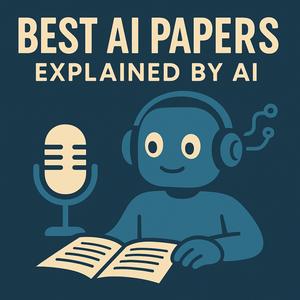

Best AI papers explained
 Italia