PodcastBambini e famigliaThe Curious Kidcast

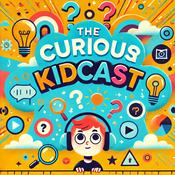
The Curious Kidcast

Andy Irving
The Curious Kidcast
Ultimo episodio

65 episodi

  • The Curious Kidcast

    Do Cats, Lions and Tigers Understand each other? | Animal facts for kids

    01/04/2026 | 9 min
    In this episode of The Curious Kidcast, host Charlie dives deep into the science of animal communication to find out whether cats, lions, and tigers can actually understand each other.
    This episode is packed with fun facts about animal communication, the feline family, body language in big cats, and even whether cats from different countries around the world speak the same language. It is a brilliant episode for curious kids aged 7 to 11, perfect for science learning at home, homeschool nature study, family car journeys, or just satisfying that brilliant, never-ending curiosity your child carries everywhere.
    What Your Child Will Learn
    This episode introduces kids to real science concepts in a fun, accessible, and laugh-out-loud way. By the end of the episode, young listeners will be able to:
    Explain what the feline family is and which animals belong to it
    Understand how cats, lions, and tigers use body language, sound, and scent to communicate
    Describe what a slow blink means in cat communication
    Explain why cats from different countries can still understand each other
    Understand the difference between species-specific signals and universal animal communication
    Answer fun quiz questions about animal science with growing confidence
    Key Science Topics Covered
    The Feline Family
    Cats, lions, and tigers all belong to the biological family Felidae, commonly called the feline family. This shared ancestry means they have a lot of physical and behavioural traits in common, including sharp claws, strong hunting instincts, excellent night vision, and overlapping communication systems. Understanding this helps children build foundational knowledge in biology, taxonomy, and the natural world.
    Do Cats From Different Countries Understand Each Other?
    A standout section of this episode explores whether a cat from England would understand a cat from Japan or Canada. The answer is a resounding yes. Domestic cats are all the same species and use the same core set of signals regardless of geography. This connects to big ideas in biology around species identity, universal behaviour, and the difference between learned habits and instinctive communication.
    Why This Episode Is Great for Homeschoolers and Families
    The Curious Kidcast is designed to make science and nature irresistibly engaging for children aged 7 to 11. This episode on feline communication ticks a wide range of curriculum boxes, including animal biology, ecosystems, classification of living things, and communication in the natural world. It also encourages children to ask questions about everyday life, like wondering why your cat behaves the way it does, and to turn those observations into genuine scientific curiosity.
    About The Curious Kidcast
    The Curious Kidcast is a fun, facts-filled science and nature podcast for children aged 7 to 11. Every episode starts with a real question sent in by a real kid, and host Charlie investigates the answer with plenty of humour, surprising science, and an end-of-episode quiz. Episodes are screen-free, family-friendly, and designed to make learning feel like an adventure. The Curious Kidcast is perfect for curious kids, busy parents, homeschool families, and anyone who believes that asking big questions is always a great idea.
    Subscribe and never miss an episode.
    If your child has a question they would love Charlie to investigate, head to curiouskidcast.com and send it in. You can also find The Curious Kidcast on Spotify, Apple Podcasts, and wherever you listen to podcasts.
  • The Curious Kidcast

    Why are bubbles always round? | Science for kids explained

    25/03/2026 | 12 min
    Ever watched a bubble float past your nose and thought, "Hang on, why is that round?" In this episode of The Curious Kidcast, your host Charlie dives deep into one of the most brilliant questions a curious kid can ask. Packed with fun facts, gentle laughs, real science and everyday examples from nature, this is family learning at its best. Whether you are a kid, a parent, a homeschooling family or just someone who never quite got a proper answer to this question, you are in exactly the right place.
    In this episode you will learn:
    What a bubble actually is and how it forms
    What surface tension means in simple, fun language
    Why a sphere is the most efficient shape in nature
    How air pressure and the soap film work together
    Why shaped wands still make round bubbles
    How bubble science connects to raindrops and everyday nature
    What minimal surfaces are and why scientists actually care about soap films
    Episode Summary
    This kids science podcast episode starts with a brilliant question from Priya, a listener from Birmingham, England, who was blowing bubbles through a straw in her living room when it suddenly hit her: why are they always round. Charlie takes that question and turns it into a fun, fact filled journey through physics, nature and the hidden maths that shapes the world around us.
    Kids discover that bubbles are round because of a force called surface tension, which pulls the thin soap film inward while the trapped air inside pushes outward. When these forces balance perfectly in every direction, the shape that uses the least surface area and the least energy is always a sphere. The episode uses real life comparisons, silly observations and easy examples to make sure the science sticks.
    Along the way, there are fun digressions about water strider insects walking on ponds, why the middle seat on a packed bus is a terrible experience for bubbles and people alike, and why being scientifically lazy is sometimes the most correct thing you can do. It is the kind of episode that sparks dinner table conversations and garden experiments in equal measure.
    Science Concepts Covered
    Surface tension and why water molecules are extremely clingy
    Spheres and minimal surface area as a geometric and physical principle
    Energy efficiency in natural systems
    Air pressure and how it balances with surface tension inside a bubble
    Soap chemistry and why plain water does not make good bubbles
    Minimal surfaces and how mathematicians and engineers use soap films
    Nature connections including raindrops, water droplets and foam
    Why Kids and Families Love The Curious Kidcast
    The Curious Kidcast is a science and nature podcast built around the questions real kids actually ask. Every episode takes a single brilliant question and answers it properly, with real facts, fun storytelling and plenty of comedy. It is designed to make kids feel like their curiosity matters, and to give parents and homeschooling families a reliable, entertaining and genuinely educational listen they can enjoy together.
    Episodes cover science, nature, the human body, animals, space, everyday physics and much more. If your child has a question they would love to hear answered on the show, you can submit it directly on the website.
    Have a Question for Charlie
    No question is too silly, too weird or too random on this show. If your child has been wondering about something and cannot get a satisfying answer, send it in. It might just become the next episode. Visit curiouskidcast.com to submit your question and subscribe so you never miss an episode.
    If you are listening on a podcast app, leaving a review really does help other curious kids and families find the show. Share this episode with a friend, a classmate, a parent or anyone who has ever looked at a bubble and wondered why it is round.
    Keywords: science for kids, educational podcast, homeschooling, family learning, kids podcast, fun facts, nature science, parenting, curious kids, surface tension, bubble science
  • The Curious Kidcast

    Are there other earths out there? | Amazing Space trivia for kids

    18/03/2026 | 13 min
    What if there was another planet, somewhere far out in space, that looked just like Earth? What if it had oceans, mountains, clouds, and maybe even its own version of pizza? In this episode of The Curious Kidcast, your host Charlie tackles one of the biggest questions curious kids ask: are there other Earths out there?
    What Your Child Will Learn
    What scientists mean when they talk about "another Earth"
    What an exoplanet is and why they are so exciting
    Why liquid water is one of the most important ingredients for life
    What the Goldilocks Zone is and why it matters
    Real exoplanets scientists have discovered, including Kepler-452b and TRAPPIST-1
    How scientists find planets using the transit method and the wobble method
    What biosignatures are and how future telescopes might detect life
    Why the universe is probably too big for Earth to be completely unique
    Episode Highlights
    Why a year on Kepler-452b is slightly longer than on Earth, which means waiting even longer for Christmas
    A star system called TRAPPIST-1 that has seven Earth-sized planets orbiting the same star
    Why "Earth-like planet" headlines can be a little sneaky, and what scientists actually know
    The wobble method, possibly the greatest name in all of science
    A three-question fun quiz to test what your kids have learned
    Perfect For
    Curious kids aged 7 to 11
    Families who love learning together on car journeys, walks, or at home
    Homeschool science lessons on space, astronomy, and the solar system
    Parents looking for safe, funny, and genuinely educational content
    Teachers looking for a fun supplement to KS2 science topics
    Anyone who has ever looked at the night sky and wondered "is anyone else out there?"
    Episode Quiz Questions
    At the end of every episode, Charlie runs a fun multiple choice quiz. This episode's questions cover:
    What do scientists call planets outside our solar system?
    What is the nickname for the "just right" distance from a star?
    How does the transit method work?
    Can your child get all three right? Listen and find out.
    Fun Facts From This Episode
    Scientists have discovered more than 6,000 exoplanets outside our solar system
    On some planets, it rains molten iron
    The Goldilocks Zone is the region around a star that is not too hot and not too cold for liquid water
    Kepler-452b is often called Earth's cousin and takes 385 days to orbit its star
    TRAPPIST-1 has seven planets orbiting the same star, some in the habitable zone
    The Milky Way contains hundreds of billions of stars, many of which have their own planets
    Keywords and Topics Covered
    kids science
    exoplanets
    space for kids
    homeschool science
    family podcast
    are there other earths
    Goldilocks Zone
    Kepler-452b
    TRAPPIST-1
    alien life for kids
    fun science facts
    nature and science
    educational podcast
    learning for kids
    curious kids
    parenting
    KS2 science
    biosignatures
    transit method
    wobble method

    Got a question you'd like Charlie to answer?
    Head to curiouskidcast.com and send it in. It could be about space, animals, the human body, food, weather, or why adults always say "we'll see" when they clearly mean no. We want to hear from you.
    About The Curious Kidcast
    The Curious Kidcast is a fun, funny, and properly researched science and nature podcast for kids aged 7 to 11. Each episode takes a real question asked by a real child and turns it into an audio adventure packed with facts, comedy, and a short quiz. It is completely safe for kids, loved by parents, and the perfect companion for families who love learning together.
    New episodes are released weekly. Subscribe so you never miss one, and if your child has a burning question about the world, the universe, or anything in between, visit curiouskidcast.com to send it in.
  • The Curious Kidcast

    What if you were swallowed by a whale, could you survive inside?

    11/03/2026 | 11 min
    What if a mouth the size of a school bus opened beneath you in the ocean and, WHOOOMP, you were inside a whale. Could you survive in there. This week Charlie dives deep into one of the wildest questions ever sent into the show, and the answers are even more surprising than you think.
    About This Episode
    In this episode, Charlie explores the science behind whale anatomy, finds out which whale could theoretically swallow a human and why it almost certainly never would, and investigates a famous 1891 sea legend that most historians think was made up entirely for newspaper headlines.
    Along the way we discover just how staggeringly big blue whales really are, learn about the deep-sea battles between sperm whales and giant squid, and hear about the real-life lobster diver who ended up inside a whale's mouth in 2021 and lived to tell the tale. It is science, nature, history, and just a little bit of comedy all mixed together, which is exactly what The Curious Kidcast is about.
    Key Facts Covered in This Episode
    Blue Whale Fast Facts
    The largest animal that has ever lived on Earth, bigger than any dinosaur
    Can grow up to 30 metres long, about the same as three buses parked end to end
    Can weigh around 150 tonnes, heavier than 25 elephants
    Its tongue alone can weigh as much as an entire elephant
    Can scoop up around 70,000 litres of water in a single gulp
    Throat is only about the size of a grapefruit, because they eat tiny krill
    Filters food through comb-like structures called baleen
    Sperm Whale Fast Facts
    Has a much larger throat than a blue whale, large enough for a human to technically fit through
    Can dive more than 2,000 metres below the surface, deeper than four Eiffel Towers stacked up
    Hunts squid and fish in the deep, pitch-black ocean
    Does not eat humans, we are simply not part of their diet
    Often found with round scars from giant squid suction cups after deep-sea battles
    Why You Could Not Survive Inside a Whale's Stomach
    Almost no oxygen inside the stomach, you would pass out very quickly
    Powerful stomach acids designed to dissolve fish and squid
    Complete darkness, extreme warmth, and an indescribably bad smell
    What Kids Will Learn
    This episode is a brilliant entry point into marine biology and ocean science for curious kids. Alongside the comedy and storytelling, listeners come away understanding the difference between baleen and toothed whales, how filter feeding works, why animal size does not always equal danger, and how scientists use physical evidence like scars to learn about behaviour they cannot directly observe. For homeschooling families, this episode pairs well with topics on marine ecosystems, food chains, animal adaptation, and scientific scepticism when evaluating historical claims.
    Something to Think About
    At the end of the episode, Charlie poses a bonus question to think about: whales are mammals just like us, which means they need to breathe air. So how do they sleep in the ocean without drowning.
    Science for Kids
    Nature
    Ocean
    Whales
    Marine Biology
    Fun Facts
    Family Podcast
    Homeschooling
    Learn
    Parenting
    Kids Ages 7-11
    Animals
    Education
    Got a big, weird, wonderful question you want answered on The Curious Kidcast? Maybe something about space, animals, history, or how things work. Send it in and it could be the next episode.
    You can also subscribe on all major podcast platforms so you never miss an episode.
    The Curious Kidcast  ·  curiouskidcast.com  ·  Science, nature and fun facts for curious kids aged 7–11  ·  Hosted by Charlie
  • The Curious Kidcast

    When Will We Get Flying Cars? | Curious Questions from Curious Kids!

    04/03/2026 | 13 min
    What if your morning school run meant lifting off from your driveway, soaring above the traffic, and landing at school in minutes. In this episode, Charlie answers the big question: when will flying cars actually exist. From the world's first attempt in 1917 to electric flying taxis already being tested in Dubai today, this episode is packed with science, laughs, and a quiz to test how much your curious kid has learned.
    What Your Family Will Learn
    This episode is a brilliant companion for homeschool science lessons, long car journeys, or bedtime listening. By the end, kids aged 7 to 11 will be able to explain the core science and history of flying cars in their own words.
    ✓   Why lifting a heavy car off the ground is so difficult (physics of flight)
    ✓   The four main types of flying car and how each one works
    ✓   Real companies building real flying vehicles right now
    ✓   Why safety, power, and air traffic rules all have to be solved first
    ✓   A realistic timeline for when flying cars might arrive in our lives
    ✓   How flying cars could save lives in emergencies and help remote communities
    Flying cars have been a dream for more than a century. The very first attempt, the Curtiss Autoplane, was built in 1917 and mostly just hopped along the ground. Since then, inventors have tried hundreds of designs. The idea was even immortalised in the classic 1960s cartoon The Jetsons, which showed an entire futuristic city of airborne vehicles. The year 2000 came and went without them, but the dream, and the engineering effort, has never stopped.
    The Science Behind the Challenge
    Charlie breaks down the four big problems engineers are working to solve. First, weight: cars are thousands of kilograms heavy and lifting that requires enormous power. Second, energy: flying uses far more fuel or battery than driving, and running out mid-air is not an option. Third, safety: every computer, sensor, and backup system must work perfectly every time. Fourth, air traffic: thousands of flying vehicles over a city need a whole new kind of management system, much like the one already used for commercial aircraft, but far more complex.
    The Timeline
    Experts estimate flying taxis could be operating in major cities by around 2040. Private flying cars affordable to families may follow by 2050 or beyond. Rules, infrastructure, battery technology, and public trust all need to develop in parallel. A child who is eight years old today could well be riding a flying taxi to work in their twenties.

    Homeschool & Classroom Ideas
    This episode pairs naturally with science topics on forces, flight, energy, and the future of transport. Here are some simple activities to extend the learning after listening.
    Paper aeroplanes: Experiment with wing shapes and weights to explore lift and drag.
    Design challenge: Draw or build a model of your own flying car and explain how it would work.
    Map activity: Find Dubai, Birmingham, Slovakia, and Germany on a world map and discuss what connects them to today's episode.
    Debate: Should flying cars be allowed over cities. What rules would your child put in place.
    Timeline: Create a visual timeline from 1917 to 2050 and plot flying car milestones on it.
    Got A Question For The Curious Kidcast?
    Every episode starts with a question from a real curious kid. If your child has something they have always wondered about, we want to hear it. Their question could be our next episode.
    And if you enjoyed this episode, please share it and subscribe wherever you listen to podcasts.

Altri podcast di Bambini e famiglia

Su The Curious Kidcast

The Curious Kidcast is a fun and educational podcast for kids aged 7 to 11 who love exploring science, nature, and curious questions about the world. Each episode answers fascinating questions kids ask—like “Why is the sky blue?”, “Do fish sleep?”, and more! Perfect for parents and families looking for an entertaining kids’ science podcast full of fun facts, discovery, and learning adventures. Tune in for engaging stories, easy explanations, and exciting explorations of the weird and wonderful things kids wonder about.
Sito web del podcast

Ascolta The Curious Kidcast, Storie per bambini – il podcast di racconti per bimbi dai 2 ai 5 anni e molti altri podcast da tutto il mondo con l’applicazione di radio.it

Scarica l'app gratuita radio.it

  • Salva le radio e i podcast favoriti
  • Streaming via Wi-Fi o Bluetooth
  • Supporta Carplay & Android Auto
  • Molte altre funzioni dell'app