

Ascolta questo podcast gratuitamente nell'applicazione: Scarica gratuitamente dall'App Store
radio.it
Sleep timer
Radio preferite
168 episodi
When Should You Help Your Toddler - and When Should You Wait? Ep 168
08/09/2026 | 39 minWhen your toddler is struggling - with a zipper, a shoe, climbing onto something - how do you know if you should step in or wait?
In this episode, early child development specialist and speech-language pathologist Erin Hyer (nearly 40 years working with toddlers and the families raising them) breaks down the difference between productive struggle and genuine overwhelm - and gives you a simple question to ask in the moment: is my child still available for learning?
You'll learn:
Why your toddler's brain actually needs some struggle to grow (and where that principle comes from)
How to tell productive frustration apart from real overwhelm - before it escalates
The one question to ask instead of "do I help or not": what's the smallest amount of support that helps my child succeed?
This episode also connects back to two ideas from earlier in the series: episode 166's Model, Shape, Practice, Fade framework, and episode 167 on what actually teaches toddlers to talk.
Erin closed her clinical practice a few years ago to do this instead - walk alongside parents before a small struggle becomes a bigger one.
If something in this episode brings a specific moment with your child to mind, bring it to a free Clarity Call - a complementary 20-minute conversation to sort through what's happening and figure out your next step.
🔗 Book a Clarity Call: CLICK HERE
🌐 www.HyerLearning.com
📧 contact@HyerLearning.com
📱 @erin.hyer
DISCLAIMER:
This podcast is for educational purposes only and is not a substitute for medical advice, diagnosis, or treatment. Always consult your pediatrician or a qualified health provider with questions about your child’s development or health. The views shared are based on Erin Hyer’s professional experience and are intended to support informed parenting, not to replace individual consultation or care. Every child and family is unique — please use your discretion and consult trusted professionals when making decisions for your child.Want Your Toddler to Talk More? Don't Practice Words Ep 167
01/09/2026 | 31 minWhat if the most important part of your child learning to talk happens before he ever says a single word?
Most moms don't start thinking seriously about speech until they're counting words: 18 months, 20 months, two years old.
But talking is not the beginning of language development. Words arrive after months of listening, watching, babbling, gesturing, imitating, taking turns, experimenting with sounds, and learning that communication gets another human being to respond.
In this episode, I share a simple moment from a mothers' group that captures this beautifully. One nine-month-old baby was happily filling the room with a giant “AHHH!” Instead of treating it as noise, I joined her - and expanded what she was already doing. Within minutes, three babies were watching, listening, experimenting, and trying new sounds.
That is how learning happens.
We’ll talk about why language grows through participation, not performance, why questions like “What's this?” and “Can you say ball?” can easily become testing, and how ordinary moments throughout your day give your baby hundreds of opportunities to practice real communication.
I’ll also walk you through my Model → Shape → Practice → Fade framework and show you how it applies from babbling all the way into words and early phrases.
You don't need more speech drills.
You need to recognize what your child is already giving you — and know how to build from there.
FREE RESOURCE: The Top 10 Essential Skills Every Baby Needs Before Talking
Find the free guide in the show notes and learn what to watch for long before you're worried about word counts.
Because long before the words arrive, your child is already learning how to talk.
------------------------------
Helpful links:
▶ Watch Talking Toddlers on YouTube: Click HERE
📘 Download Erin’s free guide: 10 Essential Skills Before Talking
💬 Learn about parent coaching or schedule a Clarity Call:
CLICK HERE TO CONNECT
🌿 Visit Hyer Learning:
www.HyerLearning.com
=========================
DISCLAIMER:
This podcast is for educational purposes only and is not a substitute for medical advice, diagnosis, or treatment. Always consult your pediatrician or a qualified health provider with questions about your child’s development or health. The views shared are based on Erin Hyer’s professional experience and are intended to support informed parenting, not to replace individual consultation or care. Every child and family is unique — please use your discretion and consult trusted professionals when making decisions for your child.Are You Accidentally Teaching Your Toddler to Whine? Ep 166
25/08/2026 | 42 minWhining is one of the most common - and frustrating - phases of toddlerhood. But often, it doesn’t become a pattern because a child is “bad” or manipulative. It becomes a pattern because it works.
In this episode, Erin Hyer, speech-language pathologist and early child development specialist, explains why toddlers whine, why “use your words” is often too vague for very young children, and how parents can begin replacing whining with clearer, more effective communication.
This conversation is not about punishment, shame, or demanding more maturity than a toddler actually has. It’s about understanding how young children learn, recognizing what they are developmentally capable of, and knowing how to guide them with calm, simple, intentional support.
Erin walks through the difference between whining as a learned pattern and whining as a child’s best available communication in the moment. She also shares a practical framework parents can begin using right away: model, shape, practice, and fade.
If you’ve started noticing more whining lately — or you want to prevent it from becoming your toddler’s default way of communicating — this episode will help you understand the why behind the behavior and what your role is in shaping something better.
Because the little years really are the big years.
------------------------------
Helpful links:
▶ Watch Talking Toddlers on YouTube: Click HERE
📘 Download Erin’s free guide: 10 Essential Skills Before Talking
💬 Learn about parent coaching or schedule a Clarity Call:
CLICK HERE TO CONNECT
🌿 Visit Hyer Learning:
www.HyerLearning.com
Educational and coaching information only. This episode is not a substitute for an individual speech-language, developmental, behavioral, or medical evaluation.7 Everyday Habits That Interfere With How Your Toddler Learns Ep 165
18/08/2026 | 57 minDo you jump in the second your baby struggles? Wipe her face after every bite? Keep the TV or a podcast running because the house feels too quiet?
These are ordinary, loving habits — but sometimes our instinct to help, clean, entertain, or keep things moving can quietly take away the very experiences our babies and toddlers need to grow.
In this episode, Erin Hyer, speech-language pathologist and early child development specialist, walks through 7 loving habits that can slow your child’s development — and explains what is happening underneath each one.
You’ll learn why it matters to:
give your child time to struggle and problem-solve
prioritize floor time over too much container time
protect quiet so language can develop
let babies explore food without constant wiping and interruption
give toddlers enough time to process and respond
allow boredom and child-led play
follow your child’s attention instead of constantly redirecting it
This is not about guilt or doing everything perfectly.
It’s about noticing the small patterns that fill your child’s day — and knowing when to step in, when to wait, and when a few extra seconds of space may be exactly what development needs.
Sometimes slowing down is exactly what gives your child enough room to do the growing.
🔗 GRAB YOUR COMPANION GUIDE HERE
Episode 162 SHARED ATTENTION: CLICK HERE
Helpful links:
▶ Watch Talking Toddlers on YouTube: Click HERE
📘 Download Erin’s free guide: 10 Essential Skills Before Talking
💬 Learn about parent coaching or schedule a Clarity Call:
CLICK HERE TO CONNECT
🌿 Visit Hyer Learning:
www.HyerLearning.com
Educational and coaching information only. This episode is not a substitute for an individual speech-language, developmental, behavioral, or medical evaluation.
Because the little years are the big years.Why Your Toddler Won’t Pay Attention — And What Gets in the Way Ep 164
11/08/2026 | 1 h 12 minWhat is stealing your toddler’s attention?
If your child seems constantly distracted, overly active, emotionally reactive, or unable to stay with one activity for very long, the answer may be more complicated than simply “they need to learn to focus.”
In this episode of Talking Toddlers, Erin looks at four powerful influences shaping a young child’s developing attention: predictable daily rhythms, restorative sleep, screens and overstimulation, and meaningful play and participation.
You’ll learn why attention is not something we can demand from a toddler, why being still in front of a screen is not the same as developing healthy attention, and how sleep, family rhythms, real-life responsibilities, and open-ended play all influence a child’s ability to regulate, learn, communicate, and stay engaged.
Erin also shares why she believes we need to look much more carefully at the environment surrounding a child before quickly labeling problems with attention or behavior. A developing brain has a history—and patterns of sleep, stimulation, movement, connection, and participation begin long before a child reaches school age.
Most importantly, this is not about blaming parents or creating another list of things to worry about. It is about helping you recognize how much influence you already have through the ordinary rhythms of home life.
Because attention is not built by repeatedly telling a toddler to “pay attention.”
It grows through thousands of everyday experiences where a child is rested enough, regulated enough, interested enough, and involved enough to remain present.
And when attention grows, so do learning, connection, participation, and language.
Helpful links:
▶ Watch Talking Toddlers on YouTube: Click HERE
📘 Download Erin’s free guide: 10 Essential Skills Before Talking
📞 Book a Clarity Call with Erin — Click here and let's talk.
🌿 Visit Hyer Learning:
www.HyerLearning.com
Educational and coaching information only. This episode is not a substitute for an individual speech-language, developmental, behavioral, or medical evaluation.
Altri podcast di Bambini e famiglia
 Educare con calmaBambini e famiglia, Educazione dei figli
 CattivoniBambini e famiglia, Istruzione per bambini
 Le Storie del Gatto Blu | Fiabe raccontate ai bambiniBambini e famiglia, Racconti per ragazzi
 Favole nel traffico - Fiabe, favole e audiostorie - Podcast per bambini e famiglieBambini e famiglia
 Mamma DilettanteBambini e famiglia, Cultura e società, Educazione dei figli, Salute e benessere
 Mamme a nudo - Dialoghi onesti sull'essere mamma!Bambini e famiglia, Educazione dei figli
 Storie per bambini – il podcast di racconti per bimbi dai 2 ai 5 anniBambini e famiglia
 Fiabe in CarrozzaBambini e famiglia, Educazione dei figli, Racconti per ragazzi
 Fiabe per BambiniBambini e famiglia
Podcast di tendenza in Bambini e famiglia
 The Montessori Notebook podcast :: a Montessori parenting podcast with Simone DaviesBambini e famiglia, Educazione dei figli, Istruzione per bambini, Scolastico
 Parenting & You With Dr. ShefaliBambini e famiglia, Educazione dei figli
 Historinhas da BíbliaBambini e famiglia, Cristianesimo, Istruzione per bambini, Racconti per ragazzi, Religione e spiritualità
 The PedsDocTalk Podcast: Child Health, Development & Parenting—From a Pediatrician MomBambini e famiglia, Educazione dei figli, Medicina, Salute e benessere
 Respectful Parenting: Janet Lansbury UnruffledBambini e famiglia, Educazione dei figli
 Happy MumBambini e famiglia, Cultura e società, Diari, Educazione dei figli
 OrientamentoBambini e famiglia, Corsi, Istruzione per bambini, Scolastico
- CattivoniBambini e famiglia, Istruzione per bambini
 Good Inside with Dr. BeckyAutomiglioramento, Bambini e famiglia, Cultura e società, Educazione dei figli, Relazioni interpersonali, Scolastico
 Fiabe per bambini - Audio storieBambini e famiglia, Racconti per ragazzi
 Two Parents & A PodcastBambini e famiglia, Cultura e società, Educazione dei figli, Relazioni interpersonali
 Who, When, Wow!Bambini e famiglia, Istruzione per bambini
- Fiabe per BambiniBambini e famiglia
 Das Geheimnis – Musikalische Rätsel und Krimis zum MitratenBambini e famiglia, Racconti per ragazzi
Su Talking Toddlers
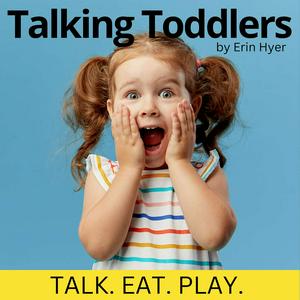
Calm, developmentally grounded guidance for moms of babies and toddlers.As a mom of a baby or toddler, it can feel like everyone has an opinion - and very few answers that actually make things clearer. The noise is loud. The pressure is real. And the uncertainty can be exhausting.Talking Toddlers is a podcast for moms who want calm, trustworthy, developmentally grounded guidance - without fear, guilt, or unrealistic expectations.I’m Erin Hyer, a licensed speech-language pathologist with nearly 35 years of experience supporting young children and their families. I’ve spent my career on the floor with toddlers, partnering with parents, consulting with early educators, and training graduate students to understand how children truly grow, learn, and communicate - through relationships, everyday routines, and meaningful language experiences.This podcast breaks down how the young brain learns, why certain behaviors or challenges show up, and how parents can gently support development before small concerns become bigger ones. I believe parents are in a powerful position — not to do more, but to understand more.Each episode offers:Practical, real-life strategies you can use during everyday routinesGentle explanations of the why behind toddler behavior and developmentSupportive conversations that help you feel less alone and more confidentMy goal is simple: to help moms feel empowered and toddlers feel supported - so learning, communication, and connection can grow naturally at home.New episodes of Talking Toddlers are released weekly. This is a space for clarity, connection, and courage - where moms come to slow down, trust themselves, and support their child’s development with confidence.
Sito web del podcastAscolta Talking Toddlers, Educare con calma e molti altri podcast da tutto il mondo con l’applicazione di radio.it
Scarica l'app gratuita radio.it
- Salva le radio e i podcast favoriti
- Streaming via Wi-Fi o Bluetooth
- Supporta Carplay & Android Auto
- Molte altre funzioni dell'app
Scarica l'app gratuita radio.it
- Salva le radio e i podcast favoriti
- Streaming via Wi-Fi o Bluetooth
- Supporta Carplay & Android Auto
- Molte altre funzioni dell'app

Talking Toddlers
Scansione il codice,
scarica l'app,
ascolta.
scarica l'app,
ascolta.
 Italia