
Ascolta questo podcast gratuitamente nell'applicazione: Scarica gratuitamente dall'App Store
radio.it
Sleep timer
Radio preferite
56 episodi
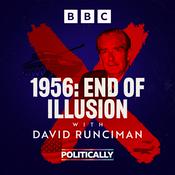
1956: End of Illusion: 2. Oil
02/11/2026 | 14 minThe American presidential election in November 1956 coincided with two of the greatest crises of the postwar era: Suez and Hungary.
In July of that year, the Suez Canal had been nationalised by Egypt’s President Nasser. It provoked alarm and outrage in Britain and France, and it led to a joint Anglo-French-Israeli invasion of Egypt that in turn produced an international outcry.
Meanwhile, in October an uprising in Hungary against Soviet rule prompted an invasion by the Red Army and a brutal campaign of repression.
This series is about the interplay of these three overlapping dramas – the Suez crisis, the Hungarian revolution and the American presidential election – and their consequences for the world. Between them these events shattered the illusions of the postwar world: about British power, about Soviet tolerance of dissent, about American commitment to democracy, about European solidarity, about the future of the Middle East and about the power of international institutions.
Seventy years on David Runciman explores how these events in late 1956 represent a watershed in twentieth-century history.
Today: why the Suez Canal mattered and how President Nasser triggered British and French fears.
On 26th July 1956, almost four years to the day since he seized power in a military coup, Gamal Abdel Nasser, the President of Egypt, informed a crowd of 100,000 people in Cairo’s Liberation Square that he was nationalising the Suez Canal.
Nasser’s action prompted a diplomatic, political and ultimately military crisis that would cost a British prime minister his job and his reputation. It also exposed how, in an age increasingly hungry for the oil that was transported through the canal, the old European powers feared the waning of their authority and with it their prosperity. The Suez canal had been acquired by Britain in the course of building its global empire. Would its loss signal the end of Britain’s imperial illusions?
Producer: Martin Williams1956: End of Illusion: 1. Election Day
02/11/2026 | 14 minThe American presidential election in November 1956 coincided with two of the greatest crises of the postwar era: Suez and Hungary.
In July of that year, the Suez Canal had been nationalised by Egypt’s President Nasser. It provoked alarm and outrage in Britain and France and it led to a joint Anglo-French-Israeli invasion of Egypt that in turn produced an international outcry. Meanwhile, in October an uprising in Hungary against Soviet rule prompted an invasion by the Red Army and a brutal campaign of repression.
This series is about the interplay of these three overlapping dramas – the Suez crisis, the Hungarian revolution and the American presidential election – and their consequences for the world. Between them these events shattered the illusions of the postwar world: about British power, about Soviet tolerance of dissent, about American commitment to democracy, about European solidarity, about the future of the Middle East and about the power of international institutions.
Seventy years on David Runciman explores how these events in late 1956 represent a watershed in twentieth-century history.
The US Presidential election took place on 6th November. The sitting president Dwight D Eisenhower was seeking re-election on a platform promising “peace and prosperity.” But he faced a dilemma.
At midnight, British and French paratroopers had landed at the Suez Canal and were engaged in hand-to-hand fighting with the local Egyptian population. At the same time Soviet tanks and soldiers were fighting pitched battles with Hungarian civilians on the streets of Budapest.
Britain was America’s closest ally. The USSR was America’s fiercest foe.
How could Eisenhower support a British invasion whilst condemning a Soviet one?
Producer: Martin Williams1956: End of Illusion: Trailer
30/10/2026 | 0 minThe American presidential election in November 1956 coincided with two of the greatest crises of the postwar era: Suez and Hungary.
In July of that year, the Suez Canal had been nationalised by Egypt’s President Nasser. It provoked alarm and outrage in Britain and France and it led to a joint Anglo-French-Israeli invasion of Egypt that in turn produced an international outcry. Meanwhile, in October an uprising in Hungary against Soviet rule prompted an invasion by the Red Army and a brutal campaign of repression.
This series is about the interplay of these three overlapping dramas – the Suez crisis, the Hungarian revolution and the American presidential election – and their consequences for the world. Between them these events shattered the illusions of the postwar world: about British power, about Soviet tolerance of dissent, about American commitment to democracy, about European solidarity, about the future of the Middle East and about the power of international institutions.
Seventy years on David Runciman explores how these events in late 1956 represent a watershed in twentieth-century history.Reflections: Series 4: Caroline Lucas
27/07/2026 | 28 minThe former Green Party leader speaks to James Naughtie about her years in Parliament, and how it feels to see her party thrive just as she stands down.
In fourteen years, Caroline Lucas never held ministerial office and so had to find other ways to exercise power and influence. She discusses working with others, listening to people you disagree with, and getting arrested for your beliefs.
Producers: Giles Edwards and Najiba Feroz.Reflections: Series 4: Jeremy Hunt
20/07/2026 | 28 minThe former Chancellor reflects with James Naughtie on tough choices and political resurrection.
Jeremy Hunt held four Cabinet jobs - including almost six years as Health Secretary, and then Foreign Secretary under Theresa May. After he was defeated by Boris Johnson in their battle for the Conservative leadership, he thought his ministerial career was over, only to be called back by Liz Truss after her mini-budget.
In this episode of Reflections he discusses all that with James Naughtie, as well as a famous radio moment the two shared.
Producers: Giles Edwards and Joel Massey.
Altri podcast di Notizie










Podcast di tendenza in Notizie

















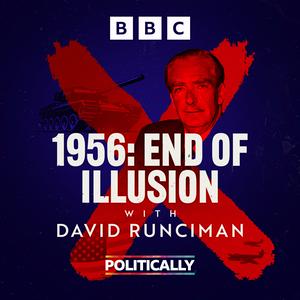
Su Politically
Politically is BBC Radio 4's home for insightful, inside takes on how politics and power really work.
Step into a world steeped in ambition and intrigue... a world that demands tough decisions and delicate compromises.
And let those who've walked the corridors of power reveal how they believe them best navigated, through the frank and illuminating series you'll find in this feed.
Sito web del podcastAscolta Politically, Non hanno un amico e molti altri podcast da tutto il mondo con l’applicazione di radio.it
Scarica l'app gratuita radio.it
- Salva le radio e i podcast favoriti
- Streaming via Wi-Fi o Bluetooth
- Supporta Carplay & Android Auto
- Molte altre funzioni dell'app
Scarica l'app gratuita radio.it
- Salva le radio e i podcast favoriti
- Streaming via Wi-Fi o Bluetooth
- Supporta Carplay & Android Auto
- Molte altre funzioni dell'app

Politically
Scansione il codice,
scarica l'app,
ascolta.
scarica l'app,
ascolta.
Politically: Podcast correlati
 Italia

