Ascolta questo podcast gratuitamente nell'applicazione: Scarica gratuitamente dall'App Store
radio.it
Sleep timer
Radio preferite
The Autoimmune Wellness Podcast
Mickey Trescott of Autoimmune Wellness
Ultimo episodio
98 episodi
Navigating Health Information Online with Dr. Guillermo Ruiz (Ep 101)
19/10/2026 | 53 minEpisode 101: Navigating Health Information Online with Dr. Guillermo Ruiz
Health information has never been easier to access—and somehow, it’s never felt harder to know what to trust. Between new research, expert opinions, personal stories, social media, supplement claims, and the latest wellness trends, it can be difficult to separate what’s plausible, what’s promising, and what’s actually been demonstrated.
In this episode of the Autoimmune Wellness Podcast, Mickey Trescott is joined by Dr. Guillermo Ruiz, a naturopathic physician who practices naturopathic endocrinology with a focus on metabolic health. His work centers on bringing an evidence-based approach to naturopathic and integrative medicine while remaining curious about emerging ideas.
Together, they explore how to navigate the gray areas of health information without becoming either overly skeptical or too quick to embrace the latest trend. They discuss how to evaluate health claims, why individual context matters, the difference between anecdotes and evidence, and how to think about risk when experimenting with diets, supplements, medications, and emerging therapies.
In this episode, you'll learn:
Why having access to more health information doesn’t necessarily make health decisions easier
Why individual biology and context can make one-size-fits-all health advice misleading
How social media can turn useful health strategies into universal recommendations
Why layering multiple restrictive diets or wellness strategies can create more problems
How to look beyond a compelling headline to understand what a study actually found
Why emerging treatments and supplements require weighing potential benefits against potential risks
How personal stories can provide useful clues without being the same as scientific evidence
Why “natural” doesn’t automatically mean safe—and prescription medications aren’t automatically more dangerous
Red flags to watch for in online health content, including absolute claims, cure language, and lack of nuance
How to approach personal health experiments with clearer guardrails
Why food, movement, sleep, and other foundational habits should come before chasing the latest health trend
Resources:
Follow Dr. Guillermo Ruiz: @3030strong
Contact Dr. Ruiz: guillermo@3030strong.com
Dr. Ruiz Practice: Go Health
Episode Timeline:
00:00 – How do we know what health information to trust?
02:20 – Introducing Dr. Guillermo Ruiz
04:32 – Why navigating health information online is so challenging
17:56 – Evaluating health headlines, studies, and products
29:29 – How to navigate personal stories and anecdotes
34:12 – The hidden risks of supplements and herbal medicine
40:31 – Red flags in online health content
44:32 – How to approach personal experimentation with caution
50:39 – Wrap-up and where to follow Dr. RuizAIP Community Q4 Update: Events, Advocacy & Research (Ep 100)
12/10/2026 | 38 minEpisode 100: AIP Community Q4 Update — Research, Advocacy & Community
Autoimmune wellness doesn’t happen in isolation. It’s shaped by the research being published, the advocacy happening on behalf of patients, and the communities that help turn information into something meaningful in everyday life.
In this Q4 Community Update—and the 100th episode of the Autoimmune Wellness Podcast—Mickey Trescott catches up on some of the developments happening across the autoimmune landscape, with a focus on research, advocacy, and community.
First, immunologist and AIP Certified Coach Sybil Cooper, PhD, joins Mickey to discuss a newly published qualitative study exploring the experiences of people with rheumatoid arthritis who participated in an AIP intervention. They look beyond symptom outcomes to explore what it was actually like to implement AIP, the challenges participants faced, what kinds of support helped, and what their diets looked like one year later.
Next, Jaime Hartman joins Mickey to recap the Autoimmune Association’s Hope Journey Walk, where Team AIP participated in Washington, DC, Michigan, and virtually around the country. They discuss the importance of showing up as a community, raising awareness, and connecting AIP with the broader autoimmune research and advocacy landscape.
Finally, Jamie-Nicole Martin, founder and CEO of the AIP BIPOC Network, shares updates on the organization’s work supporting people navigating changes to insurance, medication, and food benefits, along with community outreach, an autoimmune and menopause research project, and plans to expand access to resources in the year ahead.
Together, these conversations show how research, advocacy, and community intersect—and why all three matter for people living with autoimmune disease.
In this episode, you’ll learn:
What qualitative research can teach us about the real-world experience of following AIP
What participants in the rheumatoid arthritis AIP study found most challenging
What happened when researchers followed the RA participants one year later
How Team AIP participated in the Autoimmune Association’s Hope Journey Walk
Why connecting the AIP community with broader autoimmune advocacy and research matters
How the AIP BIPOC Network is helping people navigate changing insurance, pharmacy, and food benefits
What Jamie-Nicole’s autoimmune and menopause research project is exploring
Why community resources need to evolve as people move through different stages of life with autoimmune disease
Resources:
Exploring Participant Experiences With the Autoimmune Protocol Diet in Rheumatoid Arthritis: A Longitudinal Qualitative Study
Autoimmune Association – Hope Journey Walk, research, advocacy, and patient support
AIP BIPOC Network
AIP Certified Coach Program & Practitioner Directory
Episode Timeline:
00:00 – Introduction to the Q4 Community Update and Episode 100
01:56 – Research update with Sybil Cooper, PhD
03:00 – Understanding qualitative vs. quantitative research
05:20 – Challenges participants experienced implementing AIP
08:10 – The role of professional, household, and peer support
10:40 – What participants were eating one year later
13:15 – Reintroductions, long-term success, and lessons for the AIP community
15:50 – Jaime Hartman: Hope Journey Walk & Team AIP
17:20 – What the Hope Journey Walk was like
20:00 – Why Team AIP’s presence matters
22:40 – Community connection and the broader autoimmune movement
26:36 – Jamie-Nicole Martin: AIP BIPOC Network update
27:30 – Navigating changes to benefits and healthcare access
29:30 – Autoimmune disease and menopause research
31:00 – Community outreach and the Abilities Expo
33:00 – Connecting people with resources throughout the autoimmune journey
34:45 – What’s next for the AIP BIPOC Network
36:02 – Episode 100 reflections and wrap-upADHD, Women’s Health, and Autoimmune Disease with Dr. Jolene Brighten (Ep 99)
05/10/2026 | 52 minEpisode 99: ADHD, Women’s Health, and Autoimmune Disease with Dr. Jolene Brighten
What if the brain fog, overwhelm, forgetfulness, trouble focusing, or emotional intensity you’ve been blaming on hormones or autoimmune disease has another layer to it?
In this episode of the Autoimmune Wellness Podcast, Mickey Trescott is joined by hormone expert, nutrition scientist, and bestselling author Dr. Jolene Brighten for a conversation about ADHD through the lens of women’s hormones, brain health, and autoimmune disease.
Together, they explore why ADHD can look different in women and why so many women aren’t diagnosed until later in life. They discuss how ADHD symptoms can shift throughout the menstrual cycle and become especially challenging during perimenopause, as well as the complex relationship between hormones, inflammation, the gut, and the brain. Dr. Brighten also shares her perspective on hormone replacement therapy for women with ADHD, practical ways to support the microbiome, and simple strategies for making nutrition, movement, and daily life more ADHD-friendly.
In this episode, you'll learn:
Why ADHD often looks different in women and can go undiagnosed for decades
What’s happening in the ADHD brain beyond problems with attention
How estrogen, progesterone, and the menstrual cycle can influence ADHD symptoms
Why perimenopause may reveal ADHD that was previously masked or well-compensated
What women with ADHD should know about hormone replacement therapy
What we know about the relationship between ADHD, inflammation, and autoimmune disease
How gut health and food sensitivities may interact with ADHD symptoms
Practical strategies for nutrition, movement, and reducing overwhelm with ADHD
Resources:
Book: ADHD and Women by Dr. Jolene Brighten
ADHD and Women resources and bonuses: drbrighten.com/adhdinwomen
Podcast: The Dr. Brighten Show
Follow Dr. Jolene Brighten: @drjolenebrighten
Episode Timeline:
00:00 – ADHD, hormones, and autoimmune disease
01:59 – Introducing Dr. Jolene Brighten
04:10 – How ADHD presents in women
06:48 – What is going on in an ADHD brain?
11:19 – How ADHD symptoms change throughout the menstrual cycle
16:42 – How perimenopause affects ADHD
24:57 – How HRT can affect the ADHD brain
33:44 – The relationship between autoimmune disease and ADHD
37:58 – How to “microdose your microbiome”
43:12 – Food sensitivities and ADHD
45:54 – How to tackle overwhelm with ADHD
49:40 – Wrap-up and closingFood Sensitivity Testing: What Tests Can and Can't Tell You (Ep 098)
28/09/2026 | 33 minEpisode 98: Food Sensitivity Testing: What Tests Can and Can’t Tell You
Food sensitivity tests promise something incredibly appealing: send in a sample, receive a personalized list of reactive foods, and skip the uncertainty of elimination and reintroduction. But can these tests actually tell you which foods are causing your symptoms?
In this episode of the Autoimmune Wellness Podcast, Mickey Trescott takes a closer look at the science behind commercial food sensitivity testing, including IgG panels, MRT, ALCAT, and other commonly marketed approaches. She explains the important difference between a test being able to measure something in the body and that measurement actually being clinically useful.
Mickey also explores what it means for a diagnostic test to be properly validated, why major allergy organizations recommend against IgG food sensitivity testing, and why feeling better after following test results doesn’t necessarily prove that the test accurately identified your problem foods. Finally, she shares fascinating emerging research into food reactions that conventional testing may not yet capture—and explains why systematic elimination and reintroduction remain the most useful tools for building a personalized diet.
In this episode, you'll learn:
What IgG food sensitivity tests actually measure—and why a positive result doesn’t necessarily indicate a harmful reaction
How MRT, ALCAT, and other food sensitivity tests work and where the evidence falls short
The difference between analytical validity, clinical validity, and clinical utility
Why feeling better after following test results doesn’t necessarily prove the test accurately identified your problem foods
Why elimination and systematic reintroduction remain the best way to identify individual food tolerance
What emerging research may tell us about food reactions conventional testing doesn’t capture
Why unnecessary food restriction can have nutritional, financial, and quality-of-life consequences
How to think about past food sensitivity test results without dismissing your own experience
Resources:
Episode 54: A Deep Dive Into the AIP Reintroduction Process
The Autoimmune Protocol: theautoimmuneprotocol.com
Research on confocal laser endomicroscopy and food-related reactions in IBS (Study 1 and Study 2)
Episode Timeline:
00:00 – Can food sensitivity tests really identify problem foods?
02:59 – IgG food sensitivity testing
07:16 – MRT, ALCAT, and other food sensitivity tests
12:31 – What does it mean for a test to be validated?
16:22 – But what if the test worked for me?
19:28 – Why elimination and reintroduction remain the gold standard
23:10 – Emerging research into food reactions we can’t yet test for
26:52 – Reframing food sensitivity testing
31:33 – Wrap-up and closingIntegrative Rheumatology: Bridging Medicine, Nutrition & Lifestyle with Dr. Micah Yu (Ep 97)
21/09/2026 | 31 minEpisode 97: Integrative Rheumatology: Bridging Medicine, Nutrition & Lifestyle with Dr. Micah Yu
For many people living with autoimmune disease, seeing a rheumatologist can bring up a lot of uncertainty—especially if you want to incorporate nutrition and lifestyle alongside conventional medical care.
In this episode of the Autoimmune Wellness Podcast, Mickey Trescott is joined by Dr. Micah Yu, a quadruple board-certified physician specializing in rheumatology, internal medicine, integrative medicine, and functional medicine. Dr. Yu also lives with autoimmune arthritis himself, giving him a unique perspective as both physician and patient.
Together, they explore what integrative rheumatology actually looks like, why conventional medicine and lifestyle don't have to be an either/or choice, and how patients can build a healthcare team that supports the full picture of autoimmune health. They also discuss how to prepare for a rheumatology appointment, when medications may be necessary, and how nutrition and lifestyle can work alongside medical treatment.
In this episode, you'll learn:
How Dr. Yu's experience with gout and spondyloarthritis shaped his approach to medicine
What rheumatologists actually treat and why they often serve as "detectives" for complex cases
Common misconceptions about rheumatologists, nutrition, and lifestyle medicine
Why time constraints within conventional healthcare can make complex autoimmune care challenging
What integrative and functional rheumatology looks like in practice
Why medication and lifestyle interventions don't have to be mutually exclusive
How to prepare for a rheumatology appointment and make the most of limited time
Why tracking symptoms, medications, supplements, and your health history can help your physician
How patients and their prescribing providers can approach medication changes when health improves
Why building a multidisciplinary healthcare team can be valuable for autoimmune disease
Resources:
Dr. Lifestyle: https://drlifestyle.org
My Autoimmune MD: https://myautoimmunemd.com
Social Media: @MyAutoimmuneMD
Podcast: Autoimmune Alchemy
Episode Timeline:
00:00 – Why rheumatology and lifestyle medicine don't have to be either/or
02:15 – Introducing Dr. Micah Yu
03:41 – Dr. Yu's personal journey with autoimmune arthritis
07:40 – Rheumatology 101: What does a rheumatologist do?
10:15 – Common misconceptions about rheumatology
16:15 – What integrative and functional rheumatology looks like
19:40 – How to get the most out of a rheumatology appointment
22:02 – Combining medication with diet and lifestyle
25:27 – Hope for people living with autoimmune disease
27:34 – Dr. Yu's advice for building a healthcare team
28:22 – Wrap-up and where to follow Dr. Yu
Altri podcast di Automiglioramento








Podcast di tendenza in Automiglioramento








Su The Autoimmune Wellness Podcast
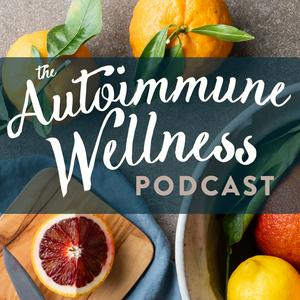
The Autoimmune Wellness Podcast is brought to you by Mickey Trescott, MSc., a functional nutritionist, chef, and author of three best-selling books: The Autoimmune Paleo Cookbook, The Autoimmune Wellness Handbook, and The Nutrient-Dense Kitchen. After personally navigating life with Hashimoto’s disease and celiac disease, Mickey is passionate about empowering others to take charge of their health. She is the creator of the AIP Certified Coach Practitioner Training Program and co-founder of Autoimmune Wellness, a platform dedicated to helping people find a path to healing using the Autoimmune Protocol (AIP). Her approach blends evidence-based principles from both natural and conventional medicine to give those with autoimmune disease their best chance at a vibrant, healthy life.
This podcast was originally co-hosted with Angie Alt, NTC, CHC, who helped launch the show and contributed significantly to its early success through her advocacy and personal story of living with endometriosis, lichen sclerosis, and celiac disease.
For more information on the Autoimmune Protocol (AIP), visit autoimmunewellness.com.
Sito web del podcastAscolta The Autoimmune Wellness Podcast, Il Podcast di PsiNel e molti altri podcast da tutto il mondo con l’applicazione di radio.it
Scarica l'app gratuita radio.it
- Salva le radio e i podcast favoriti
- Streaming via Wi-Fi o Bluetooth
- Supporta Carplay & Android Auto
- Molte altre funzioni dell'app
Scarica l'app gratuita radio.it
- Salva le radio e i podcast favoriti
- Streaming via Wi-Fi o Bluetooth
- Supporta Carplay & Android Auto
- Molte altre funzioni dell'app
The Autoimmune Wellness Podcast
Scansione il codice,
scarica l'app,
ascolta.
scarica l'app,
ascolta.
The Autoimmune Wellness Podcast: Podcast correlati
 Italia