

Ascolta questo podcast gratuitamente nell'applicazione: Scarica gratuitamente dall'App Store
radio.it
Sleep timer
Radio preferite
652 episodi
Karline McLain, "Living with Gandhi: Experiments in Utopia" (Association for Asian Studies, 2026)
24/09/2026 | 42 minMahatma Gandhi was an anticolonial activist, lawyer, and politician. Less famously, but no less importantly, he was also a back-to-the-land farmer, a founder of communes, and a seeker of utopia. Living with Gandhi: Experiments in Utopia tells the story of everyday life at four of Gandhi's communities in India and South Africa. It explores who lived at each community alongside Gandhi, the experiments they undertook in the shared pursuit of universal wellbeing, and the connections that were forged between daily life and larger socio-political issues such as racial inequality, caste reform, and anticolonial activism. The need to simplify life and focus on the greater good is no less urgent now than it was in Gandhi's time. Reading about Gandhi's communities allows us to think about a range of topics that can help us to formulate our own conception of the good life, including how to spend our finite time together on this earth; how the boundaries of inclusion and exclusion operate in our daily lives; and whether or to what extent self-sacrifice is necessary for universal wellbeing.
Online Archive: here
Hosted by Simplecast, an AdsWizz company. See pcm.adswizz.com for information about our collection and use of personal data for advertising.James D. Ryan, "The Upanisads as They Are: Brhadaranyaka, Chandogya, Aitareya, Taittiriya, Kausitaki" (Bloomsbury, 2026)
17/09/2026 | 43 minThese Upanisads (c. 800-300 BCE) are almost always read from the point of view of the later Vedantins, but they do not share in the neatly tailored characteristics of the mature Vedantic philosophies, representing, instead, divergent, variegated and even conflicting narratives. In The Upanisads as They Are (Bloomsbury, 2026) the author focuses on the earliest of these Upanisads: Brhadaranyaka, Chandogya, Aitareya, Taittiriya, Kausitaki. These Upanisads are read “as they are,” emphasizing aspects of these texts that are often completely overlooked, among them: their Vedic approach to contradiction, their frequent acceptance of means other than gnostic knowledge of or veneration of atman/brahman as a means for liberation, their positing of entities/realities other than atman or brahman as totalistic, and their frequent depiction of the human body or embodied human as a microcosm of or in identity with the universe. In course, the interpretations of the Upani?adic view, the Vedantic view, for each of these Upani?ads, of Sa?karacarya (c. 800 CE) and Ramanujacarya (c. 1100 CE), as primary examples in the range of Upani?adic interpreters, will be examined and often refuted.
Hosted by Simplecast, an AdsWizz company. See pcm.adswizz.com for information about our collection and use of personal data for advertising.Sanjay Joshi, "Brahmins of the Himalaya: Upper-Caste Ways of Belonging, 1850-1950" (SUNY Press, 2026)
10/09/2026 | 37 minUses the everyday histories of Brahmin clans, communities, and families in a prominent small town in the Indian Himalaya to challenge the assumption that only grand metanarratives such as colonialism and nationalism matter. This everyday history of clans, communities, and elite families in Almora, a prominent town in the Indian Himalaya, puts questions of belonging at the heart of an expansive examination of elite Hinduism. Studying a mountainous region sometimes considered marginal within Indian history, Sanjay Joshi explores critically important mainstream concerns via attention to the periphery in Brahmins of the Himalaya: Upper-Caste Ways of Belonging, 1850-1950 (SUNY Press, 2026). Revealing the connections between two meanings of "belonging"--one as a source of identity, the other indicating possession--he addresses large questions: What is the idea of belonging among upper-caste Hindus? How do their ideas of belonging and community change over time? And to what effect? Refusing to conflate the ordinary and everyday with the trivial, Joshi challenges the frequent assumption that only metanarratives such as colonialism and nationalism matter. His exploration of big issues incorporates a plea for attention to the local and the quotidian as equally essential for a proper historical understanding. In addition to state and institutional archives, Joshi draws on unconventional and previously untapped sources: novels, poetry, local-language newspapers, and over six hundred family papers, including rare examples of women's writing within family contexts.
Support our show by becoming a premium member! https://newbooksnetwork.supportingcast.fm/indian-religionsSanjay Joshi, "Brahmins of the Himalaya: Upper-Caste Ways of Belonging, 1850-1950" (SUNY Press, 2026)
10/09/2026 | 35 minUses the everyday histories of Brahmin clans, communities, and families in a prominent small town in the Indian Himalaya to challenge the assumption that only grand metanarratives such as colonialism and nationalism matter. This everyday history of clans, communities, and elite families in Almora, a prominent town in the Indian Himalaya, puts questions of belonging at the heart of an expansive examination of elite Hinduism. Studying a mountainous region sometimes considered marginal within Indian history, Sanjay Joshi explores critically important mainstream concerns via attention to the periphery in Brahmins of the Himalaya: Upper-Caste Ways of Belonging, 1850-1950 (SUNY Press, 2026). Revealing the connections between two meanings of "belonging"--one as a source of identity, the other indicating possession--he addresses large questions: What is the idea of belonging among upper-caste Hindus? How do their ideas of belonging and community change over time? And to what effect? Refusing to conflate the ordinary and everyday with the trivial, Joshi challenges the frequent assumption that only metanarratives such as colonialism and nationalism matter. His exploration of big issues incorporates a plea for attention to the local and the quotidian as equally essential for a proper historical understanding. In addition to state and institutional archives, Joshi draws on unconventional and previously untapped sources: novels, poetry, local-language newspapers, and over six hundred family papers, including rare examples of women's writing within family contexts.
Hosted by Simplecast, an AdsWizz company. See pcm.adswizz.com for information about our collection and use of personal data for advertising.Tatjana Kochetkova and Anway Mukhopadhyay eds., "Transhumanism and Divine Humanity in Global Traditions" (Routledge, 2026)
03/09/2026 | 32 minAmid global dialogue on the nature of human enhancement, this book traces humanity's pursuit of self-transcendence and enhancement from ancient times to the present, as reflected in diverse traditions across the globe. Transhumanism and Divine Humanity in Global Traditions (Routledge, 2026) examines how the term "transhuman" can move beyond its scientific and technological origins by linking it to ideas, symbols, and practices of transcending human limits found in Asian and global religions and philosophies, including spiritual practices. Ultimately, the book argues that many religions in Asia and beyond emphasise the desire to transcend human limits, addressing life enhancement both spiritually and physically, and advancing a philosophy of self-transcendence that embraces the physical nature of human existence. By bridging perspectives from scholars of Indic spirituality, Buddhist tantric, and transhumanist philosophical discourse, the book facilitates the ability for mutual understanding, and will be of use to researchers studying philosophy of religion, Asian philosophy, the philosophy of science, and philosophical anthropology. Those working in the fields of posthumanism and transhumanism studies will also find the volume of use.
Support our show by becoming a premium member! https://newbooksnetwork.supportingcast.fm/indian-religions
Hosted by Simplecast, an AdsWizz company. See pcm.adswizz.com for information about our collection and use of personal data for advertising.
Altri podcast di Induismo
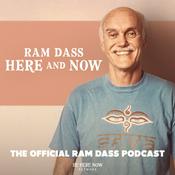 Ram Dass Here And NowCultura e società, Induismo, Religione e spiritualità
- New Books in Indian ReligionsInduismo, Religione e spiritualità
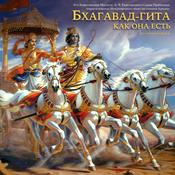 Бхагавад-Гита как Она есть (без комментариев)Induismo, Religione e spiritualità, Spiritualità
 Gita For Daily LivingInduismo, Religione e spiritualità
 Mantra, Kirtan and Stotra: Sanskrit ChantsCultura e società, Filosofia, Induismo, Musica, Religione e spiritualità
 Vedanta Talks - Swami SarvapriyanandaInduismo, Religione e spiritualità
Podcast di tendenza in Induismo
Su New Books in Indian Religions
This podcast is a channel on the New Books Network. The New Books Network is an academic audio library dedicated to public education. In each episode you will hear scholars discuss their recently published research with another expert in their field.
Discover our 150+ channels and browse our 28,000+ episodes on our website: newbooksnetwork.com
Subscribe to our free weekly Substack newsletter to get informative, engaging content straight to your inbox: https://newbooksnetwork.substack.com/
Follow us on Instagram and Bluesky to learn about more our latest interviews: @newbooksnetwork
Support our show by becoming a premium member! https://newbooksnetwork.supportingcast.fm/indian-religions
Sito web del podcastAscolta New Books in Indian Religions, Ram Dass Here And Now e molti altri podcast da tutto il mondo con l’applicazione di radio.it

Scarica l'app gratuita radio.it
- Salva le radio e i podcast favoriti
- Streaming via Wi-Fi o Bluetooth
- Supporta Carplay & Android Auto
- Molte altre funzioni dell'app
Scarica l'app gratuita radio.it
- Salva le radio e i podcast favoriti
- Streaming via Wi-Fi o Bluetooth
- Supporta Carplay & Android Auto
- Molte altre funzioni dell'app

New Books in Indian Religions
Scansione il codice,
scarica l'app,
ascolta.
scarica l'app,
ascolta.
New Books in Indian Religions: Podcast correlati

 Italia