Ascolta questo podcast gratuitamente nell'applicazione: Scarica gratuitamente dall'App Store
radio.it
Sleep timer
Radio preferite
2372 episodi
How Ten Canoes made cinema history
20/10/2026 | 9 minIn 2006, Ten Canoes made Australian cinema history. It became the first feature film performed entirely in Aboriginal languages and the first to bring a traditional Yolngu story to the screen.
Shot in the remote swamplands of Arnhem Land, the production relied on old anthropological photographs, clan languages and ancestral hunting knowledge to recreate life before European settlement.
For the cast, many of whom had never acted before, the experience was transformative. One of them was Frances Dulibing, chosen unexpectedly by director Rolf de Heer to play Nolingo, the jealous second wife at the centre of the story.
Filming meant confronting crocodile infested waters, performing in traditional clothing, and speaking the language rhythms of her own clan.
Frances tells Ashley Byrne how stepping into her ancestors’ world — and seeing it later on a cinema screen — became an emotional moment for her community, and how the film carried her from the swamps of Arnhem Land to red carpets in Paris. A Made in Manchester production.
Witness History is a short BBC World Service podcast about history that takes you inside big moments from the past through first-hand testimony and archive. Each weekday, in around nine minutes, we revisit one moment that helped shape the world and hear it through the voice of someone who was there. Scientists, artists, campaigners, soldiers, leaders and everyday people tell their true stories.
When you subscribe to Witness History, you’ll be taken inside turning points in world affairs from West Africa’s fight back against Boko Haram in 2015 to the behind-closed-doors talks that led to the US-Cuba “thaw” and the surprise announcement of restored relations.
You’ll discover what it was like to experience disasters and how people recovered from them, including the Tabasco floods in Mexico, Portugal's worst train disaster, and the huge clean-up after the Chernobyl nuclear disaster.
You’ll explore culture and ideas too: Sweden’s Expedition Robinson, often credited as the first modern reality TV game show; the friendship between The Beatles’ George Harrison and Indian sitarist Ravi Shankar; and the night a tiger attack brought Las Vegas superstars Siegfried and Roy’s show to a sudden end.
And if you’re curious about inventions, we’ll tell you how air fryers, BlackBerry, YouTube, Alexa, GPS, superglue, the shopping cart (shopping trolley) and bubble tea were created.
If you’re new to Witness History, the appeal is simple: real voices, one strong true story, and a fresh way to understand today through events from history – all in the time it takes to enjoy a cup of tea or a walk around the block. Join millions of BBC World Service podcast listeners around the globe and enjoy the insight, context and detail Witness History will bring you.
(Photo: The cast of Ten Canoes including Frances Dulibing (centre). Credit: Simon Fergusson/Getty Images)Gerald Durrell's mission to save species from extinction
19/10/2026 | 10 minIn 1959, British conservationist and author Gerald Durrell opened the gates to a zoo with one clear aim - to save endangered species from extinction.
Gerald had grown up fascinated by the natural world and had spent years travelling across the globe, collecting animals for major zoos in the United Kingdom.
It was during these trips that he saw just how quickly the animals he loved were disappearing. He witnessed habitats being destroyed and species being pushed to extinction.
Then came his idea of a zoo that would do more than simply display animals; it would protect and breed endangered species, in the hope of one day releasing them back into the wild.
But first he needed the money. Encouraged by his eldest brother, Gerald turned to writing, releasing bestselling books including My Family and Other Animals, which brought his childhood adventures in Corfu to millions of readers around the world.
In 1959, he finally opened Jersey Zoological Park. Amelia Cox tells his story through the BBC Archive.
Witness History is a short BBC World Service podcast about history that takes you inside big moments from the past through first-hand testimony and archive. Each weekday, in around nine minutes, we revisit one moment that helped shape the world and hear it through the voice of someone who was there. Scientists, artists, campaigners, soldiers, leaders and everyday people tell their true stories.
When you subscribe to Witness History, you’ll be taken inside turning points in world affairs from West Africa’s fight back against Boko Haram in 2015 to the behind-closed-doors talks that led to the US-Cuba “thaw” and the surprise announcement of restored relations.
You’ll discover what it was like to experience disasters and how people recovered from them, including the Tabasco floods in Mexico, Portugal's worst train disaster, and the huge clean-up after the Chernobyl nuclear disaster.
You’ll explore culture and ideas too: Sweden’s Expedition Robinson, often credited as the first modern reality TV game show; the friendship between The Beatles’ George Harrison and Indian sitarist Ravi Shankar; and the night a tiger attack brought Las Vegas superstars Siegfried and Roy’s show to a sudden end.
And if you’re curious about inventions, we’ll tell you how air fryers, BlackBerry, YouTube, Alexa, GPS, superglue, the shopping cart (shopping trolley) and bubble tea were created.
If you’re new to Witness History, the appeal is simple: real voices, one strong true story, and a fresh way to understand today through events from history – all in the time it takes to enjoy a cup of tea or a walk around the block. Join millions of BBC World Service podcast listeners around the globe and enjoy the insight, context and detail Witness History will bring you.
(Photo: Gerald Durrell. Credit: Chris Ridley/Radio Times/Getty Images)Manchester City’s inflatable banana craze
17/10/2026 | 10 minn the late 1980s and early 1990s, Manchester City supporters became famous for an unusual sight on the terraces: inflatable bananas. What began as a light-hearted joke soon turned into one of the most memorable fan crazes in English football.
Uma Doraiswamy tells the story of football, terrace culture and one of the game’s most unlikely symbols. She speaks to former Manchester City striker Imre Varadi, whose name became intertwined with the phenomenon and also hears from Dr Gary James, a lifelong City supporter who was among the first to embrace the fruity craze.
Together they recall how thousands of the inflatable fruits appeared on the terraces, why the trend caught on, and how it became part of Manchester City’s history. They also reflect on the humour, loyalty and sense of community that defined football fandom before the Premier League era.
Eye-witness accounts brought to life by archive and testimony. Sporting Witness is for those fascinated by sporting history. We take you to the events that have shaped the sports world through the eyes of the people who were there. For nine minutes, you become a fan in the stands as we take you back in time to examine memorable victories and agonising defeats from all over the world. You’ll hear from people who have achieved sporting immortality, or those who were there as incredible sporting moments unfolded.
Recent episodes explore the forgotten football Women’s World Cup, the plasterer who fought a boxing legend, international football’s biggest ever beating and the man who swam the Amazon river. We look at the lives of some of the most famous F1 drivers, tennis players and athletes as well as people who’ve had ground-breaking impact in their chosen sporting field, including: the most decorated Paralympian, the woman who was the number 1 squash player in the world for nine years, and the first figure skater to wear a hijab. You can learn all about fascinating and surprising stories, such as the tennis player who escaped the Nazis, how a man finally beat a horse in a race, and how the FIFA computer game was created.
(Photo: Football fans at Manchester City match with inflatable bananas. Credit: Glenn Copus/ANL/Shutterstock)Declaring chimpanzees an endangered species
16/10/2026 | 10 minIn 1990, after years of campaigning by activists, including Dr Jane Goodall, chimpanzees were declared endangered for the first time.
The apes had been classed as threatened since 1976, but their situation hadn’t improved.
Dr Ron Nowak led the team who wrote the new regulations, working with Dr Goodall to change the chimpanzees’ classification.
He's been recalling that period with Tim O’Callaghan.
Witness History is a short BBC World Service podcast about history that takes you inside big moments from the past through first-hand testimony and archive. Each weekday, in around nine minutes, we revisit one moment that helped shape the world and hear it through the voice of someone who was there. Scientists, artists, campaigners, soldiers, leaders and everyday people tell their true stories.
When you subscribe to Witness History, you’ll be taken inside turning points in world affairs from West Africa’s fight back against Boko Haram in 2015 to the behind-closed-doors talks that led to the US-Cuba “thaw” and the surprise announcement of restored relations.
You’ll discover what it was like to experience disasters and how people recovered from them, including the Tabasco floods in Mexico, Portugal's worst train disaster, and the huge clean-up after the Chernobyl nuclear disaster.
You’ll explore culture and ideas too: Sweden’s Expedition Robinson, often credited as the first modern reality TV game show; the friendship between The Beatles’ George Harrison and Indian sitarist Ravi Shankar; and the night a tiger attack brought Las Vegas superstars Siegfried and Roy’s show to a sudden end.
And if you’re curious about inventions, we’ll tell you how air fryers, BlackBerry, YouTube, Alexa, GPS, superglue, the shopping cart (shopping trolley) and bubble tea were created.
If you’re new to Witness History, the appeal is simple: real voices, one strong true story, and a fresh way to understand today through events from history – all in the time it takes to enjoy a cup of tea or a walk around the block. Join millions of BBC World Service podcast listeners around the globe and enjoy the insight, context and detail Witness History will bring you.
(Photo: Chimpanzees in Gombe National Park, Tanzania. Credit: Universal Images Group via Getty Images)When Dian Fossey was murdered
15/10/2026 | 10 minIn 1985, American gorilla expert Dian Fossey was murdered in her cabin at the research station she established in the mountains of Rwanda.
Lucy Burns spoke to Kelly Stewart in 2013 who worked alongside Dian for 10 years in Volcanoes National Park.
(Photo: Dian Fossey in 1983. Credit: Peter Breining/San Francisco Chronicle/Getty Images)
Witness History is a short BBC World Service podcast about history that takes you inside big moments from the past through first-hand testimony and archive. Each weekday, in around nine minutes, we revisit one moment that helped shape the world and hear it through the voice of someone who was there. Scientists, artists, campaigners, soldiers, leaders and everyday people tell their true stories.
When you subscribe to Witness History, you’ll be taken inside turning points in world affairs from West Africa’s fight back against Boko Haram in 2015 to the behind-closed-doors talks that led to the US-Cuba “thaw” and the surprise announcement of restored relations.
You’ll discover what it was like to experience disasters and how people recovered from them, including the Tabasco floods in Mexico, Portugal's worst train disaster, and the huge clean-up after the Chernobyl nuclear disaster.
You’ll explore culture and ideas too: Sweden’s Expedition Robinson, often credited as the first modern reality TV game show; the friendship between The Beatles’ George Harrison and Indian sitarist Ravi Shankar; and the night a tiger attack brought Las Vegas superstars Siegfried and Roy’s show to a sudden end.
And if you’re curious about inventions, we’ll tell you how air fryers, BlackBerry, YouTube, Alexa, GPS, superglue, the shopping cart (shopping trolley) and bubble tea were created.
If you’re new to Witness History, the appeal is simple: real voices, one strong true story, and a fresh way to understand today through events from history – all in the time it takes to enjoy a cup of tea or a walk around the block. Join millions of BBC World Service podcast listeners around the globe and enjoy the insight, context and detail Witness History will bring you.
Altri podcast di Cultura e società







Podcast di tendenza in Cultura e società







Su Witness History
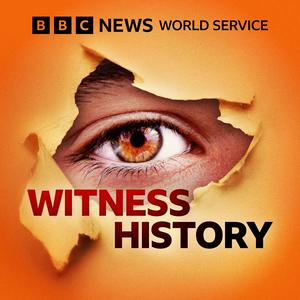
Witness History is a short BBC World Service podcast about history that takes you inside big moments from the past through first-hand testimony and archive. Each weekday, in around nine minutes, we revisit one moment that helped shape the world and hear it through the voice of someone who was there. Scientists, artists, campaigners, soldiers, leaders and everyday people tell their true stories.
When you subscribe to Witness History, you’ll be taken inside turning points in world affairs, from West Africa’s fight back against Boko Haram in 2015, to the behind-closed-doors talks that led to the US-Cuba “thaw” and the surprise announcement of restored relations.You’ll discover what it was like to experience disasters and how people recovered from them, including the Tabasco floods in Mexico, Portugal's worst train disaster, and the huge clean-up after the Chernobyl nuclear disaster.You’ll explore culture and ideas too: Sweden’s Expedition Robinson, often credited as the first modern reality TV game show; the friendship between The Beatles’ George Harrison and Indian sitarist Ravi Shankar; and the night a tiger attack brought Las Vegas superstars Siegfried and Roy’s show to a sudden end.And if you’re curious about inventions, we’ll tell you how air fryers, BlackBerry, YouTube, Alexa, GPS, superglue, the shopping cart (shopping trolley) and bubble tea were created.If you’re new to Witness History, the appeal is simple: real voices, one strong true story, and a fresh way to understand today through events from history – all in the time it takes to enjoy a cup of tea or a walk around the block. Join millions of BBC World Service podcast listeners around the globe and enjoy the insight, context and detail Witness History will bring you.
Sito web del podcastAscolta Witness History, Sandro Pertini, il tempo vissuto e molti altri podcast da tutto il mondo con l’applicazione di radio.it
Scarica l'app gratuita radio.it
- Salva le radio e i podcast favoriti
- Streaming via Wi-Fi o Bluetooth
- Supporta Carplay & Android Auto
- Molte altre funzioni dell'app
Scarica l'app gratuita radio.it
- Salva le radio e i podcast favoriti
- Streaming via Wi-Fi o Bluetooth
- Supporta Carplay & Android Auto
- Molte altre funzioni dell'app
Witness History
Scansione il codice,
scarica l'app,
ascolta.
scarica l'app,
ascolta.
Witness History: Podcast correlati
 Italia