Ascolta questo podcast gratuitamente nell'applicazione: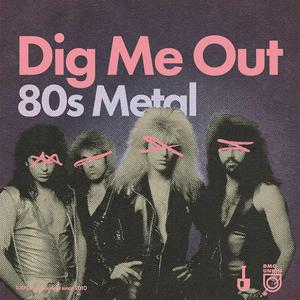 Scarica gratuitamente dall'App Store
radio.it
Sleep timer
Radio preferite
Dig Me Out: 70s & 80s Metal
Beyond the hits—exploring the albums, bands, and moments that shaped the heavy 70s & 80s metal
Ultimo episodio
51 episodi
Nothing But a Good Time… or Cold War Therapy?
20/01/2026 | 1 h 10 minWhat if the “dumb party metal” you grew up with turned out to be one of the sharpest mirrors of 1980s America? In this episode of Dig Me Out: 80s Metal, we sit down with author, professor, and 80s tribute-band guitarist Jesse Kavadlo to talk about his new book Rock of Pages: The Literary Tradition of 1980s Heavy Metal and why those songs about girls, demons, and good times were actually wrestling with nuclear fear, censorship, and what it meant to grow up under the Cold War.
Jesse walks us through how 80s metal lyrics connect to classic literature, from Def Leppard reimagining Genesis and Paradise Lost to Metallica and Ozzy Osbourne grappling with existential dread, addiction, and the possibility of global annihilation. We dig into the PMRC hearings and satanic panic, the way MTV videos turned escapism into literal chains and magic portals, and how Stranger Things surprisingly nails the mix of danger and freedom that metal kids actually felt in the 80s. Along the way, we talk subculture vs. streaming-era playlists, why Dio and Iron Maiden might be the true heirs of Romantic poetry, and how heavy metal may have nudged the Cold War toward its end at the Moscow Music Peace Festival.
If you care about 80s heavy metal, the MTV era, or just love thinking about how songs work under the hood, this episode is for you. Fans of Iron Maiden, Metallica, Ozzy Osbourne, Van Halen, Mötley Crüe, Poison, Bon Jovi, Dio, and even Steel Panther’s parody universe will hear this music in a new way. And if you’re into how culture and politics collide in sound—think the way punk, hip-hop, or grunge carried the anxieties of their eras—you’ll find a lot to chew on here too.
Episode Highlights
0:00 – Intro / Setting the stage
How Jesse went from Brooklyn club stages and opening for Danger Danger to a PhD in literature and an 80s tribute band in St. Louis, and why 80s metal still gets written off as “by and for dummies” while Dylan and Kendrick win major literary prizes.
5:12 – Are 80s metal lyrics actually literature?
Cassette liner notes, goofy rhymes, and serious themes: Jesse breaks down how synecdoche, personification, metaphor, and symbolism show up in songs by Def Leppard, Metallica, and Twisted Sister.
12:45 – PMRC, Tipper Gore, and the fight over teenage imagination
We revisit the 1985 PMRC hearings, Dee Snider’s testimony, and why “Under the Blade” and “Suicide Solution” say more about adult panic than teen corruption.
20:30 – Cold War metal: Bon Jovi to Nuclear Assault
How videos like Bon Jovi’s “Runaway” and songs by Metallica, Ozzy, Megadeth, and Nuclear Assault carried nuclear anxiety, class conflict, and apocalyptic dread beneath all the hairspray.
28:10 – Escapism, fantasy, and why Dio matters
From Dungeons & Dragons to Iron Maiden and Dio, we explore metal’s love of magic, fantasy, and portals as a deeply human response to a world that often felt unlivable.
36:40 – MTV, chains, and the magic door
We unpack the visual language of 80s metal videos: breaking out of asylums and prisons, falling through mirrors, and what it meant to “escape to the concert” once metal hit the mainstream.
45:05 – Outsiders selling millions of records
Why metal fans still felt like misfits even as the music dominated MTV, and how that outsider identity overlaps with the way readers and writers see themselves.
52:30 – Van Halen, class struggle, and 1984
From “Running with the Devil” and “Jump” to “Hot for Teacher,” we look at David Lee Roth’s working-class storytelling, school-as-prison imagery, and the eerie resonance of naming an album 1984 in the synth-drenched futureshock of the mid-80s.
1:01:10 – Cowboys, Road Warriors, and the end of the world
How metal videos borrowed from Escape from New York, The Road Warrior, and cowboy mythology to build a visual language of lawless survival and American ruggedness.
1:09:45 – W.A.S.P., Nine Inch Nails, and moving the line
What it means that W.A.S.P.’s “Animal (F*** Like a Beast)” got pulled from shelves while “Closer” became a critical darling, and how censorship lines shifted from the 80s to the 90s.
1:18:20 – White Lion, Living Colour, and the politics hiding in band names
We get into White Lion’s unexpected political conscience, the uncomfortable optics of Pride, and how Living Colour wore their politics more explicitly.
1:25:40 – How to listen differently after Rock of Pages
Jesse explains how he hopes readers (and listeners) revisit 80s metal: with streaming open, videos queued up, and an ear tuned to metaphor, context, and the way these songs helped kids survive their era.
1:33:50 – What’s next and where to find the book
Jesse hints at possible 90s projects and shares where to find Rock of Pages through Bloomsbury, indie bookstores, and the usual suspects.
If this conversation makes you want to pull your old cassettes out of the box (or at least re-open your 80s metal playlist), don’t stop here.
Dive into the full archive of 70s & 80s metal episodes, history-of-the-band deep dives, and mixtapes at digmeoutpodcast.com.
Join the DMO Union for bonus episodes, new release reviews, polls, and our private Discord community at dmounion.com.
Subscribe, leave a review, and share this episode with the friend who still swears 80s metal was “just for fun.” Let’s prove, once and for all, that the music that raised us was doing a lot more than just partying.
This is a public episode. If you'd like to discuss this with other subscribers or get access to bonus episodes, visit www.digmeoutpodcast.com/subscribe46% of Our Community Voted for This Leafhound Album—Here’s Why They Were Right
06/01/2026 | 53 minWhat if Led Zeppelin had a long-lost twin that nobody remembers? In this episode of Dig Me Out, we unearth Leafhound’s 1971 proto-metal masterpiece Growers of Mushroom—an album that had all the ingredients for greatness but somehow slipped through the cracks of rock history . With a Robert Plant-caliber vocalist, Jimmy Page-inspired guitar tones, and riffs heavy enough to rival Black Sabbath, Leafhound created one of the most compelling “what if?” stories in early 70s heavy rock .
Born from the remains of Black Cat Bones—the band that spawned Free’s Paul Kossoff and Simon Kirk, plus Foghat’s Rod Price—Leafhound emerged with vocalist Peter French and a sound that captured the raw, blues-drenched fury of the era . Released on Decca Records in 1971, Growers of Mushroom represents that crucial moment when heavy rock was still finding itself, experimenting with psychedelic tangents, folk influences, and proto-metal darkness before the genre lines were drawn .
In this deep dive, hosts Jason, Tim, and Chip explore why this album works so well sonically while examining its fatal flaw: great performances without truly memorable songs . We discuss the album’s massive guitar tones, the Plant-inspired vocal howls, and those adventurous moments where Leafhound breaks from the Zeppelin/Sabbath template to explore jazzy, psychedelic, and Southern rock territories . From the buzzing intensity of “Freelance Fiend” to the eight-minute odyssey of “Work My Body,” this is an album that demands attention—even if it never quite delivers the knockout punch .
If you love Led Zeppelin, Black Sabbath, Mountain, Cactus, Atomic Rooster, or Deep Purple, this episode is essential listening. We’re diving deep into the Heavy 70s—that glorious era of custom vans, tinted sunglasses, and amps cranked to the point of speaker destruction .
Episode Highlights
0:00 – Intro & “Freelance Fiend”
Overview of Leafhound’s place in 1971 heavy rock, the band’s origins in Black Cat Bones, and why this album won our December 70s Rock poll with 46% of the vote .
2:15 – The Album Poll Results
Breaking down the four albums in contention: Armageddon (1975), Leafhound’s Growers of Mushroom (1971), Bloodrock (1970), and Toad (1971), plus community reactions from our Metal Union members .
6:45 – Band History: From Black Cat Bones to Leafhound
How Paul Kossoff and Simon Kirk left to form Free, Rod Price departed for Foghat, and vocalist Peter French assembled a new lineup that would record two albums before dissolving .
13:30 – What Works: The Led Zeppelin DNA
Analyzing the lead singer/lead guitarist dynamic, the Plant-inspired vocal howls, the Leslie West guitar tones, and that stripped-down 70s performance-based intensity .
15:25 – “Freelance Fiend”
The album’s killer opening track with its razor-sharp buzz, cowbell, and Mountain-style riffing .
18:05 – “Drown My Life in Fear”
The album’s standout moment—a bass-driven, Sabbath-influenced doom track with slide guitar textures and Robert Plant-caliber vocals .
22:47 – The Zeppelin Comparisons
Why this album sounds like the Creed to Led Zeppelin’s Pearl Jam—familiar DNA, different execution .
24:30 – “Work My Body”
An eight-minute journey featuring jazzy blues guitars, multiple structural shifts, and an unexpected organ-driven finale that recalls Deep Purple .
29:00 – “With A Minute to Go”
Breaking down the song’s direct lift of the cadence from Led Zeppelin’s “What Is and What Should Never Be” .
35:59 – What Doesn’t Work: The Missing Hooks
Honest conversation about why great guitar tones and performances aren’t enough without memorable choruses and compelling songwriting .
40:15 – “Stray” & The Sabbath Influence
How Leafhound shifts between Zeppelin-inspired blues rock and Black Sabbath’s minor-key doom throughout the album .
44:00 – Recording & Production
Discussing those massive, fuzzy 70s guitar tones—how they achieved speaker distortion, fuzz pedals, and that buzzing quality unique to early heavy rock .
53:22 – The Aftermath: What Happened Next
Peter French’s move to Atomic Rooster and Cactus, the band’s 2004 reunion, and the 2022 expanded reissue of Growers of Mushroom .
58:10 – “Growers of Mushroom”
The album’s trippy, psychedelic title track that evokes the Amboy Dukes and late-60s acid rock .
1:02:00 – Final Verdict & Album Rankings
Where Growers of Mushroom stands among other 70s heavy rock discoveries, and whether this album deserves cult classic status or remains a well-executed footnote .
Join the Conversation
Love discovering forgotten heavy rock? Subscribe to Dig Me Out and join the Metal Union at digmeoutpodcast.com to vote on future albums, access bonus episodes, and connect with our private Discord community . Keep the show ad-free and help us uncover more Heavy 70s gems by becoming a Patreon member at dmounion.com .
Got a 70s deep cut we need to cover? Drop us a suggestion—we’re always hunting for the next Leafhound .
This is a public episode. If you'd like to discuss this with other subscribers or get access to bonus episodes, visit www.digmeoutpodcast.com/subscribeIs Living Colour’s Vivid the Most Underrated Guitar Album of the 80s?
20/12/2025 | 1 h 2 minLiving Colour’s Vivid: When Rock Refused to Play by the Rules
What happens when a jazz-trained guitar virtuoso teams up with a Broadway-bound singer, adds Mick Jagger as producer, and sets out to demolish the color lines that 1980s radio had drawn around rock music? You get Vivid, Living Colour’s 1988 debut that kicked down every door with “Cult of Personality” and then refused to play by anyone’s rules.
This is an album that proved Black musicians could dominate every corner of rock, from shredding metal to funk grooves to social commentary. It reached number six on the Billboard 200, sold two million copies, and launched a Grammy-winning single that still sounds ahead of its time. If you love the genre-blending creativity of Fishbone, the fearless experimentation of Prince, or the socially conscious hard rock of Rage Against the Machine, this episode explores an essential album that changed what rock could be.
Vivid isn’t just a great debut album. It’s the story of the Black Rock Coalition, Vernon Reid’s grassroots movement to challenge the segregation creeping into New York’s rock venues and radio stations. At a time when rock stations stopped playing James Brown next to the Rolling Stones, Living Colour asked: why? They answered with an album that opened for the Rolling Stones’ Steel Wheels tour, appeared on Headbangers Ball, and influenced everyone from Tom Morello to the entire alt-metal movement of the ’90s.
Episode Highlights
0:00 – Intro
The final community-voted album of 2025. Vivid wins with 62% of the Patreon vote.
3:30 – Personal Connections
Chip shares his 1989 encounter with Living Colour at a Cleveland record store, where Corey Glover spontaneously sang a song about his date.
12:00 – Album Facts
Released May 2, 1988. Produced by Ed Stasium and Mick Jagger. Features Chuck D and Flavor Flav on “Funny Vibe.” Charted globally and appears on every major “greatest metal albums” list.
21:00 – Vernon Reid’s Guitar Mastery
Jay explores Reid’s creative dominance as guitarist and primary songwriter. His riff writing sounds more like the ’90s than 1988, and nearly every melodic hook is guitar-driven.
32:00 – The Black Rock Coalition
Vernon Reid’s mission to fight radio segregation and get Black rock musicians back into venues and onto rock radio.
38:00 – The Beatles as Inspiration
The band intentionally created a diverse, non-cohesive album that could work at any party for any crowd, from metal fans to funk lovers.
50:00 – Genre Debates: Metal or Not?
Who cares? The album won metal awards and hosted Headbangers Ball, but more importantly, it used heavy riffs to expose listeners to funk, R&B, and social commentary they wouldn’t have heard otherwise.
1:03:00 – “Cult of Personality”
Deep analysis of one of rock’s most iconic opening tracks and why it set an impossible standard.
1:08:00 – “I Want to Know” and “Open Letter (To a Landlord)”
How the album moves from poppy hooks to six-minute epics that shift between R&B, funk, and aggressive rock.
1:22:00 – “Memories Can’t Wait”
The Talking Heads cover that provides breathing room and showcases smart song selection.
1:35:00 – Production Issues
The reverb-heavy ‘80s drums that sometimes work against the band’s raw creativity.
1:55:00 – Vernon Reid’s Influence
Tom Morello’s clear debt to Reid’s unconventional guitar techniques and willingness to let the instrument do unexpected things.
2:07:00 – Social Commentary
Living Colour sang about gentrification and displacement when most metal bands were singing about nothing heavier than Saturday night.
2:28:00 – Final Ratings
The crew debates production, diversity, and nostalgic attachment.
Join the Metal Union
Subscribe at digmeoutpodcast.com and join the Metal Union at dmounion.com to vote on future albums, unlock bonus episodes, and join our private Discord community where real music discussions happen every day.
This is a public episode. If you'd like to discuss this with other subscribers or get access to bonus episodes, visit www.digmeoutpodcast.com/subscribeMotörhead’s Ace of Spades: The Bar Band That Accidentally Redefined Heavy
07/12/2025 | 56 minMotörhead - Ace of Spades: The Bar Band That Redefined Metal (Whether They Liked It Or Not)
What happens when you salvage a beaten‑up classic from the graveyard? You discover why Motörhead’s Ace of Spades remains one of the most influential rock albums of all time—even if Lemmy himself refused to call it metal.
Recorded in six weeks during the summer of 1980 and unleashed that October, Ace of Spades is 36 minutes of raw, boogie‑infused rock and roll cranked up to 11. On this episode of Dig Me Out: 80s Metal, hosts Jason Ziad, Tim Minneci, and Chip Midnight resurrect this second‑chance poll winner to explore why this album sounds like nothing else—and why that matters.
The classic lineup of Lemmy Kilmister, “Fast” Eddie Clarke, and Phil “Philthy Animal” Taylor weren’t trying to invent metal. They were channeling Chuck Berry, ZZ Top, and Thin Lizzy through a blown amp, adding a danceable swing that inspired everyone from Metallica and Slayer to The Hellacopters and New Bomb Turks. This is the sound of a band that knew exactly what they did well and executed it with surgical precision—even when they got sick of playing “Ace of Spades” every night.
If you love early Van Halen, AC/DC, the Ramones, or the New Wave of British Heavy Metal, this episode is for you. We break down how Lemmy’s voice became the second guitar, why Eddie Clarke’s playing is criminally underrated, and what it means when an album charts everywhere from Sweden to Greece but barely makes a dent in the U.S.
Episode Highlights
00:00 – Intro: Why this listener‑suggested album almost didn’t happen
01:38 – The “second chance poll” rescue mission and how Testament won the first round
05:42 – Chip’s legendary three‑question interview with Lemmy (spoiler: he left to “freshen his drink”)
10:09 – Album history: recorded August–September 1980, produced by Vic Maile (Hendrix, Zeppelin, Clapton)
14:25 – Lemmy’s time in Hawkwind, The Damned, and as Jimi Hendrix’s roadie
17:29 – (We Are) The Road Crew – Why Lemmy’s tribute to roadies still makes crew members cry
18:20 – The “Ace of Spades” legend: Why Lemmy sang “eight of spades” for years and nobody noticed
19:02 – What Works: Jay breaks down the 70s swing, boogie‑rock energy, and danceable aggression
25:14 – Fast and Loose – The ZZ Top‑meets‑Motörhead shuffle that proves this is rock and roll
27:07 – How Motörhead influenced thrash, punk, and 90s action rock (Hellacopters, New Bomb Turks)
31:54 – The Chase Is Better Than the Catch – The Van Halen‑inspired riff that almost wasn’t
34:18 – Eddie Clarke’s guitar genius: Why “Fast” Eddie is the secret weapon of this album
37:58 – What Doesn’t Work: Aged lyrics, formulaic moments, and why Lemmy’s voice is an acquired taste
42:34 – Why fade‑outs are the album’s worst decision
48:53 – Final Verdicts: Worthy Album, Better EP, or Decent Single?
55:37 – Gavin Reed gets credit for suggesting this album (and arguing with Jay about whether it’s metal)
Keep the Conversation Going
This album came back from the dead because a listener like you suggested it. What record deserves a second chance? What forgotten classic or underrated gem should we dig out next?
Join the Metal Union at digmeoutpodcast.com suggest and vote on future albums. Paid subscribers get access to bonus episodes covering 70s rock, 80s metal, and 2000s rock, plus new release reviews and our private Discord community where the debates never stop.
Pick an album and join us on the podcast at dmounion.com.
For Jason, Chip, and Tim—thanks for digging with us. We’ll see you next time on Dig Me Out: 80s Metal.
This is a public episode. If you'd like to discuss this with other subscribers or get access to bonus episodes, visit www.digmeoutpodcast.com/subscribeWhat If Queensrÿche Only Made This One Record?
22/11/2025 | 54 minBefore Operation: Mindcrime, there was this.
Queensrÿche’s 1984 debut The Warning is the album that almost didn’t happen—at least not the way the band intended. While they were touring Japan, EMI executives remixed and completely rearranged their progressive metal masterpiece without permission, burying the band’s weirdest, most ambitious material deeper in the tracklist. But even with corporate interference, The Warning stands as a pivotal moment in metal history: a Seattle band crafting something that sounded like nothing else in 1984, blending Iron Maiden gallops with Genesis-level prog complexity and Jeff Tate’s otherworldly operatic vocals.
In this episode, we break down why this debut matters—not just as a stepping stone to Mindcrime and Empire, but as a document of a band discovering their identity in real time. We debate whether it’s a hidden gem or a rough draft, explore the label drama that reshaped the album’s sequence, and dive into the tracks that reveal Queensrÿche’s DNA: from the Maiden-esque power of “Deliverance” to the robotic sci-fi weirdness of “NM 156.” This is Double-A ball before the majors—you can see the talent, hear the potential, and witness five musicians isolated in Seattle creating something that would change progressive metal forever.
If you love Iron Maiden, Judas Priest, Fates Warning, or Dream Theater, this episode is for you.
Episode Highlights
0:00 – Intro: Poll results and how The Warning won the Metal Union vote
5:23 – Album context: Queensrÿche in 1984—Seattle isolation and the progressive metal blueprint
12:45 – “Deliverance” – The opening track that wasn’t supposed to open the album
18:32 – The EMI remix controversy: How the label rearranged the album while the band toured Japan
24:15 – “NM 156” – The weird, jazzy, robotic prog odyssey that terrified record executives
31:40 – Jeff Tate’s voice at 24: Operatic range, theatrical character work, and why he’s more than just “metal Bruce Dickinson”
38:50 – “Take Hold of the Flame” – The anthem that hints at Operation: Mindcrime
44:20 – Geography matters: Why being in Seattle (not L.A.) saved this band from breaking up
51:10 – “Road to Madness” – Epic ambition or forced prog? Debating the 10-minute closer
58:30 – The verdict: EP, worthy album, or rough draft? The hosts cast their votes
1:03:15 – What comes next: Rage for Order, Mindcrime, and the evolution into metal immortality
Join the Conversation
This album won because you voted for it. Now it’s your turn again—what 80s metal album should we break down next? Head to digmeoutpodcast.com to join the Metal Union, vote on future episodes, access bonus content, and join our private Discord community. Keep the show ad-free and help us dig deeper at dmounion.com.
Subscribe, rate, and review wherever you listen to podcasts. Got a deep cut we need to cover? Drop your suggestions in the comments or hit us up on social media.
This is a public episode. If you'd like to discuss this with other subscribers or get access to bonus episodes, visit www.digmeoutpodcast.com/subscribe
Altri podcast di Musica
 Joe T Vannelli "Slave To The Rhythm"Musica
 SUPERNOVAMusica, Cultura e società, Film e TV, Cinema: interviste, Musica: interviste
 Pezzi: dentro la musicaTempo libero, Musica, Cultura e società
 Breve storia eretica della Musica ClassicaMusica, Storia della musica
 PRISMATICMusica
 SUPERNOVAMusica, Cultura e società, Film e TV, Cinema: interviste, Musica: interviste
 Defected RadioMusica
 ErasMusica, Storia della musica
 Note di storiaMusica, Storia della musica
 SuonA Tipo BeneMusica
Podcast di tendenza in Musica
 Nature Sounds Oasis | Relaxing Nature Sounds For Sleep, Meditation, Relaxation Or Focus | Sounds Of Nature | Sleep Sounds, Sleep Music, Meditation Sounds, Ocean Waves, Rain, White Noise & MoreSalute e benessere, Bambini e famiglia, Musica
 Broken Record with Rick Rubin, Malcolm Gladwell, Bruce Headlam and Justin RichmondMusica, Cultura e società
 Gianluca GazzoliMusica
 Let's Ask Taylor SwiftMusica, Religione e spiritualità, Musica: approfondimenti, Storia della musica, Spiritualità
 Tutto nel mondo è burlaMusica
 Let There Be HouseMusica
 FUORI DALLA BOLLAMusica, Musica: interviste
 Diritto per Mezz'OraMusica
 Sticky Notes: The Classical Music PodcastArte, Musica, Arti dello spettacolo
 The Martin Garrix ShowMusica
 Let's Talk About SexMusica
 YourClassical Daily DownloadMusica, Musica: approfondimenti
 Fedde Le Grand - Darklight SessionsMusica
 Metalitalia PodcastMusica
 Resident by Hernan CattaneoMusica
 CYB3RPVNK RadioMusica
 il Riff di Marco MengoniMusica, Cultura e società, Musica: approfondimenti
 Paul van Dyk's VONYC Sessions PodcastMusica
 Clapcast from ClaptoneMusica
 Dj Shinski New MixesMusica
 The Joe Budden PodcastMusica
 Deep Sunset House and Progressive Podcast - The Melodic Sessions by Prototype 202Musica
- Note di storiaMusica, Storia della musica
 Chicane Presents Sun:SetsMusica
 Chill Out SessionMusica
 Nora En Pure - Purified RadioMusica
 adessocapiamoMusica
 Студия Владимира МатецкогоMusica, Cultura e società, Musica: approfondimenti, Diari
- Joe T Vannelli "Slave To The Rhythm"Musica
Su Dig Me Out: 70s & 80s Metal
J, Chip, and Tim dig into the heavy rock and metal that defined two decades—from Black Sabbath and Led Zeppelin’s pioneering riffs to Mötley Crüe’s sonic excess, the unsung heroes, and the stories behind it all. One album at a time. Let’s relive the magic. www.digmeoutpodcast.com
Sito web del podcastAscolta Dig Me Out: 70s & 80s Metal, Joe T Vannelli "Slave To The Rhythm" e molti altri podcast da tutto il mondo con l’applicazione di radio.it
Scarica l'app gratuita radio.it
- Salva le radio e i podcast favoriti
- Streaming via Wi-Fi o Bluetooth
- Supporta Carplay & Android Auto
- Molte altre funzioni dell'app
Scarica l'app gratuita radio.it
- Salva le radio e i podcast favoriti
- Streaming via Wi-Fi o Bluetooth
- Supporta Carplay & Android Auto
- Molte altre funzioni dell'app

Dig Me Out: 70s & 80s Metal
Scansione il codice,
scarica l'app,
ascolta.
scarica l'app,
ascolta.
 Italia